
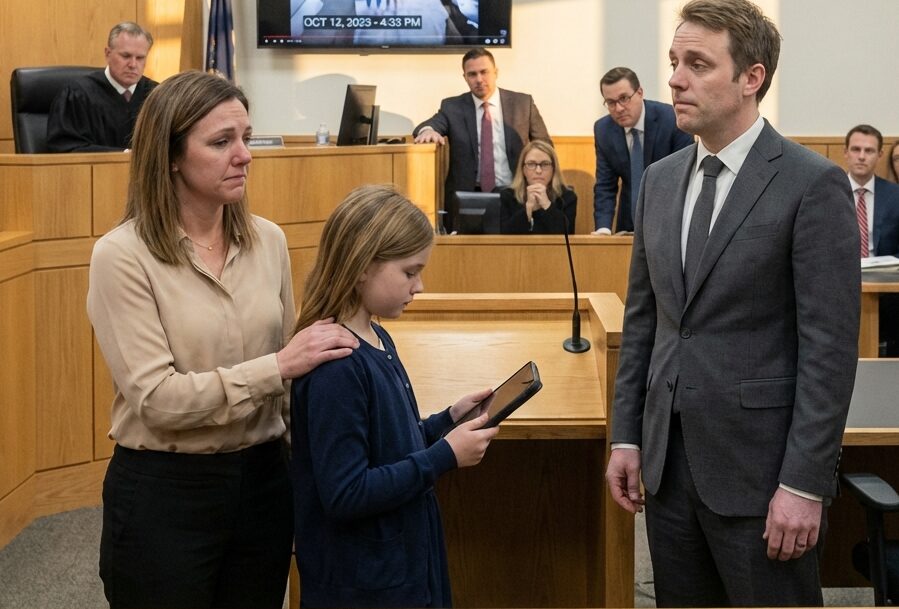
I walked into the courtroom believing silence was my safest option. By the time the hearing began, my entire life as a parent felt reduced to legal phrases and carefully chosen words that barely resembled reality. My daughter Harper sat beside me, small in the stiff chair, her feet not even touching the floor. I never wanted her there, but her father insisted it would “prove the truth.” As accusations filled the room, I realized how easily years of quiet sacrifice could be rewritten as failure—and how powerless I felt watching it happen.
The lawyers spoke confidently about schedules, stability, and conflict, painting a version of my life that felt unfamiliar. I wanted to explain the long nights balancing bills, the careful choices made so Harper could feel safe and unaware of stress. But courtrooms don’t measure effort or intention; they measure composure. So I stayed still, trusting that truth has a way of surfacing, even as the judge’s neutral expression made me feel invisible. Then, without warning, Harper shifted beside me.
She raised her hand. Her voice was gentle but steady as she asked the judge if she could show something on her tablet. The room froze. Her father objected, but Harper stood anyway, explaining she had saved a video she’d been told not to share. In that moment, I understood something profound: my daughter had been observing everything, quietly and carefully. The judge allowed the video, and my fear turned into something else entirely—respect for her courage.
What played on the screen wasn’t dramatic. It was ordinary moments stitched together: broken promises, tense conversations, repeated reminders to keep things “private.” No single clip told the whole story, but together they revealed a pattern that words alone never could. When the screen went dark, the courtroom stayed silent. The judge thanked Harper for her honesty, acknowledging that truth often arrives without force or drama.
That day didn’t fix everything, and it didn’t erase the past. But it changed the direction of the case—and the way I saw my daughter. She wasn’t just caught between two adults. She was a witness, a quiet moral presence who understood more than anyone realized. Sometimes, the most powerful truths aren’t argued or defended. They’re simply spoken—softly, bravely, and at exactly the right moment.