
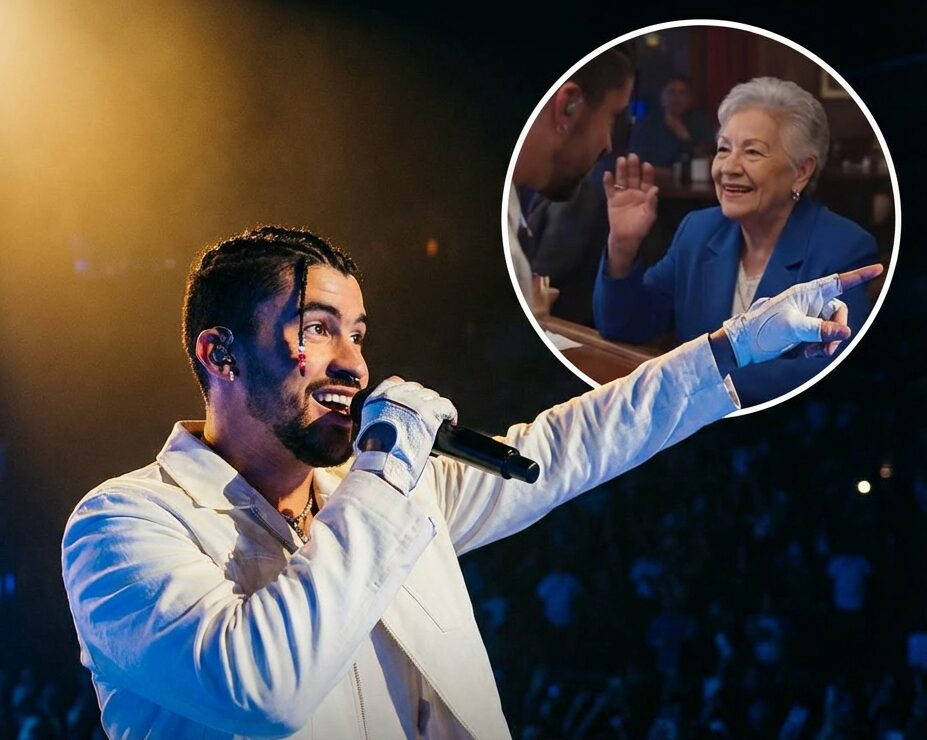
From the first beat to the final visual, Bad Bunny’s Super Bowl LX halftime show felt less like a concert and more like a carefully staged statement. Within hours of the performance, the NFL’s official upload surged into the millions of views, confirming what viewers already sensed in real time: this was not a routine halftime appearance. The choreography, lighting, and cinematic pacing pulled audiences into a story that unfolded layer by layer, keeping fans glued to the screen and wondering what would happen next.
One of the most talked-about moments came when cameras repeatedly focused on a sharply dressed couple woven into the performance. What initially looked like artistic staging turned into a genuine surprise when it was revealed that the pair were actually married onstage during halftime. The couple had originally invited Bad Bunny to their wedding, but instead, he reversed the roles—turning the world’s biggest sporting stage into their ceremony. It was a rare blend of spectacle and intimacy that caught viewers completely off guard.
The surprises didn’t stop there. Brief appearances by Lady Gaga and Ricky Martin sent social media buzzing, while familiar faces like Pedro Pascal and Jessica Alba were spotted inside the playful “La Casita” set. Another moment sparked intense debate online when Bad Bunny handed his Grammy Award to a child onstage. Some viewers read it as a political statement, while others saw it as symbolic—a nod to his younger self and a message about dreaming big. ESPN later clarified the child was an actor, but the ambiguity had already fueled widespread discussion.
As the show closed, a billboard reading “The only thing more powerful than hate is love” summed up the tone of the performance—and set off reactions well beyond the stadium. Among them was sharp criticism from Donald Trump, who publicly condemned the show’s language, choreography, and message. Love it or criticize it, Bad Bunny’s halftime performance became more than entertainment. It turned into a cultural flashpoint—one that sparked debate, emotion, and conversation long after the final note faded.