
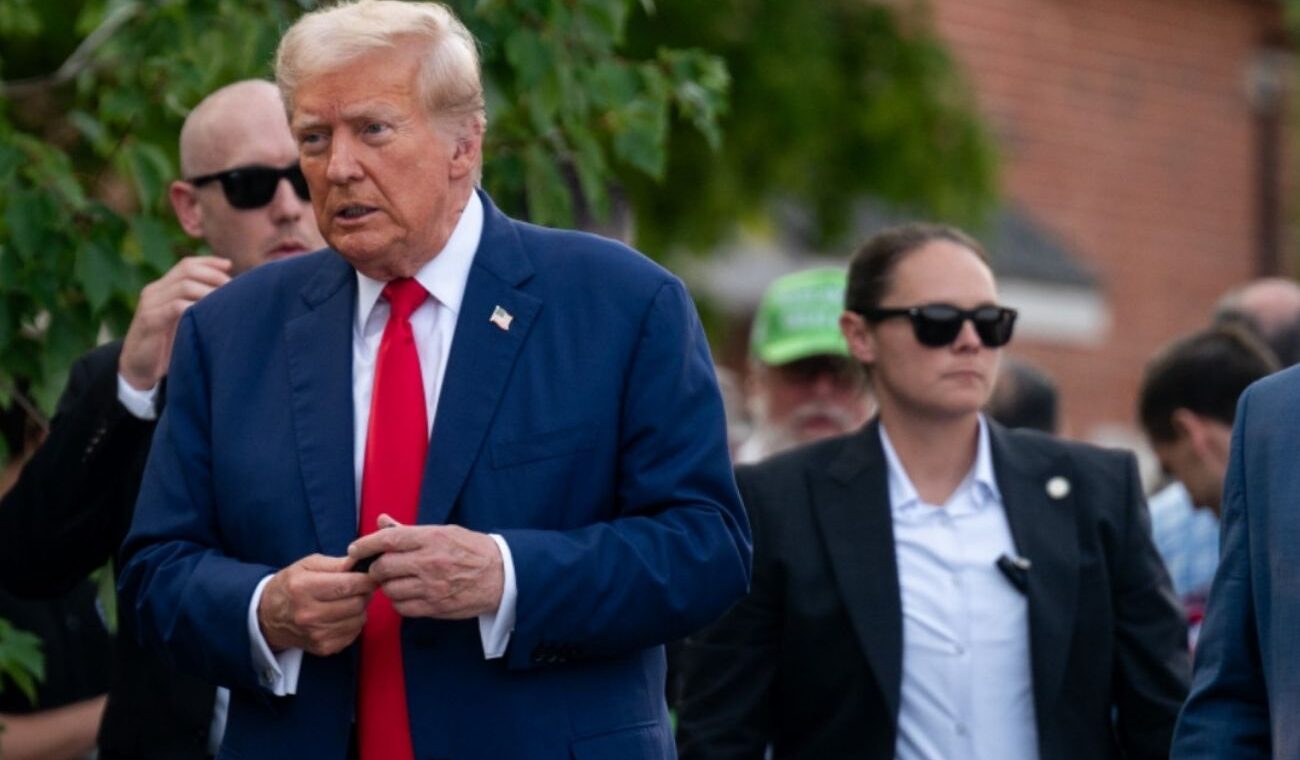
The U.S. Secret Service has announced that it is increasing its security posture around Mar-a-Lago and other federally protected locations as tensions escalate following the joint U.S.–Israeli military offensive against Iran.
In a public statement, the agency said it is closely monitoring developments in the Middle East and coordinating with federal and local law enforcement partners.
“The U.S. Secret Service is actively monitoring the situation in Iran and remains in close coordination with our federal and local partners,” the agency said. “The agency’s protective model is designed to be adaptable to meet the needs of the current security environment and ensure the continued safety of our protectees, protective sites, and the surrounding communities.”
The announcement comes after a dramatic expansion of hostilities overseas, including U.S. and Israeli strikes targeting Iranian military and leadership sites. Iranian Supreme Leader Ayatollah Ali Khamenei was reportedly killed in the initial wave of attacks. Since then, Iran has launched retaliatory missile and drone strikes against U.S. and Israeli targets in the region.
While U.S. officials have not cited any specific domestic threats tied to the overseas operations, federal agencies traditionally adjust protective measures during periods of heightened geopolitical instability—particularly when current or former presidents are involved in major military decisions.
The Secret Service declined to discuss specific protective steps for operational security reasons but indicated that the public may notice an increased law enforcement presence near sites under federal protection.
“While we do not discuss our specific protective measures for operational security reasons, the public may notice an increased law enforcement and federal presence around U.S. Secret Service protected sites,” the agency stated. “Any temporary traffic or pedestrian impacts will be communicated by our local law enforcement partners.”
Mar-a-Lago, President Donald Trump’s private club and residence in Palm Beach, Florida, is among the locations protected by the Secret Service. The property has long been considered a high-profile security site, particularly when Trump is present.
The heightened posture follows a security breach at Mar-a-Lago earlier this month that ended in gunfire.
In the early morning hours of February 23, an armed man entered the secure perimeter of the property and was shot and killed after refusing commands to drop his weapon, according to authorities.
The incident occurred around 1:30 a.m. as Trump was at the White House.
Palm Beach County Sheriff Ric Bradshaw said the man entered through the north gate as a vehicle was exiting. He was confronted by two Secret Service agents and a Palm Beach County sheriff’s deputy.
“He was ordered to drop those two pieces of equipment that he had with him,” Bradshaw said at a press conference, referring to a gas can and a shotgun. “At which time he put down the gas can, raised the shotgun to a shooting position.” The agents and deputy then “fired their weapons to neutralize the threat.”
The man was identified by the FBI as 21-year-old Austin Tucker Martin of North Carolina. Authorities said his family had reported him missing earlier that morning. Investigators believe he bought the shotgun while driving south, and they later found a box for the weapon in his vehicle.
Officials have not yet identified a motive. The breach marked the latest in a series of security incidents involving the president.
During the 2024 campaign, Trump survived two assassination attempts. In one case, authorities spotted a man aiming a rifle through shrubbery near Trump’s West Palm Beach golf club before he came into view.
A Secret Service agent opened fire, leading to the conviction and life sentence of the suspect, Ryan Routh.
In a separate incident at a campaign rally in Butler, Pennsylvania, a gunman fired eight shots before being killed by a Secret Service counter sniper; one rally attendee was killed.
The recent Mar-a-Lago perimeter breach, combined with escalating military action abroad, has prompted federal authorities to take additional precautions.

