
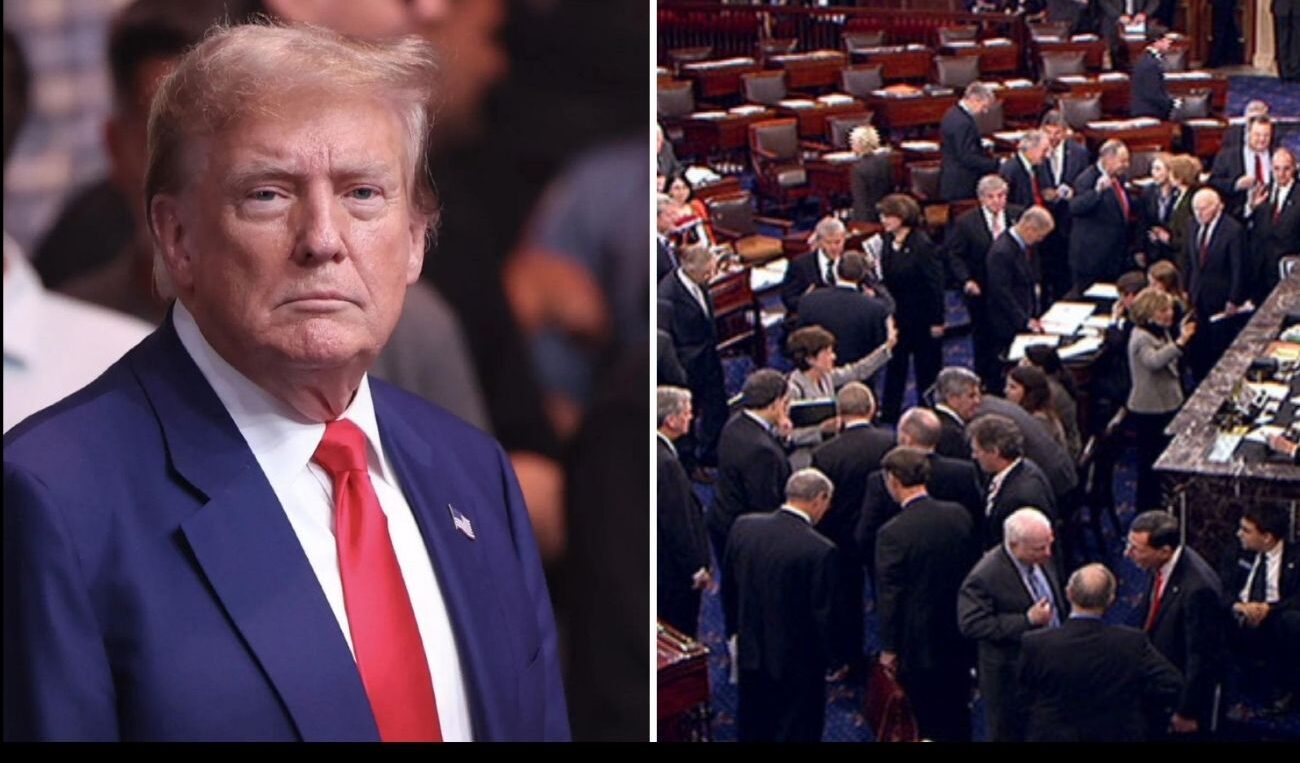
Senate Republicans on Wednesday blocked a resolution that sought to limit President Donald Trump’s authority to conduct military operations in Iran. The resolution, introduced by Sen. Tim Kaine, D Va., aimed to require congressional approval for continued military action.
The Senate rejected the measure after days of speculation about whether Republicans would join Democrats in rebuking the president, Fox News reported. The vote followed a lobbying push by the Trump administration to rally support for Operation Epic Fury.
Administration officials held multiple briefings with lawmakers to explain the military campaign. Only Sen. Rand Paul, R Ky., voted in favor of the resolution among Republicans. Sen. Jon Fetterman, D Pa., was the only Democrat who voted against the measure.
Democrats argued that Trump’s actions bypassed Congress’s constitutional authority over military force, undermining the legislative branch’s role in decisions regarding military engagement and accountability.
“It’s time for the president to keep promises, not break them,” Kaine said before the vote. “That’s why I’m so glad that we’re going to put everybody on the record … Nobody gets to hide and give the president an easy pass or an end run around the Constitution.”
Democrats also raised concerns that the administration might send U.S. ground troops into Iran.
“They refuse to take off the table the insertion of ground troops,” Sen. Chris Murphy, D Conn., said. “This is going to make the operations in Libya look like child’s play.”
Sen. Josh Hawley, R Mo., said he would oppose Kaine’s resolution. Hawley said deploying ground troops would require congressional approval.
“I’ve always said that committing ground troops would be something I think would require immediate congressional authorization, but that doesn’t appear to be on the immediate horizon,” Hawley said.
Senate Minority Leader Chuck Schumer, D N.Y., said the administration had not presented a clear strategy for the conflict.
Republicans argued that Trump acted within his constitutional authority as commander in chief.
Sen. Lindsey Graham, R S.C., said the War Powers Act represented “an unconstitutional shift of authority from the president.”
Graham said Congress retains the power to limit military action by restricting funding.
“We don’t need 535 commanders in chief,” Sen. Markwayne Mullin, R Okla., said during debate.
Republican senators held a private meeting on Tuesday to discuss the military campaign and the upcoming vote.
Lawmakers later attended a briefing with Secretary of State Marco Rubio, CIA Director John Ratcliffe, Joint Chiefs of Staff Chairman Gen. Dan “Raizin” Caine, and Secretary of War Pete Hegseth.
A source familiar with the discussion said some Republicans were frustrated with Kaine’s repeated attempts to limit Trump’s war powers, particularly in light of the recent resolutions introduced that they believe undermine the President’s authority to act decisively in military matters.
Senate Majority Whip John Barrasso, R Wyo., said Kaine had introduced five war powers resolutions since Trump returned to office.
“These resolutions have been used only 11 times in 50 years. The senator from Virginia alone accounts for nearly half of them. Yet Senator Kaine introduced zero war powers resolutions when Barack Obama and Joe Biden were president,” Barrasso said.
Rubio told reporters after a Senate briefing that the administration had complied with the War Powers Act.
Rubio said the administration believes the law is unconstitutional but that congressional leaders were notified ahead of the strikes.
Rubio also addressed the decision to launch Operation Epic Fury.
“If you tell the President of the United States that if we don’t go first, we’re going to have more people killed and more people injured, the president is going to go first,” Rubio said.
“That’s what he did. That’s what the president will always do,” Rubio said.
U.S. forces have struck more than 2,000 targets in Iran during the operation. The strikes have focused on Iran’s air defenses and missile capabilities.
Six U.S. service members have been killed during the operation. Nearly 50 Iranian leaders have also been killed.
At least 1,045 people have died across Iran since the strikes began, according to the Iranian government.