
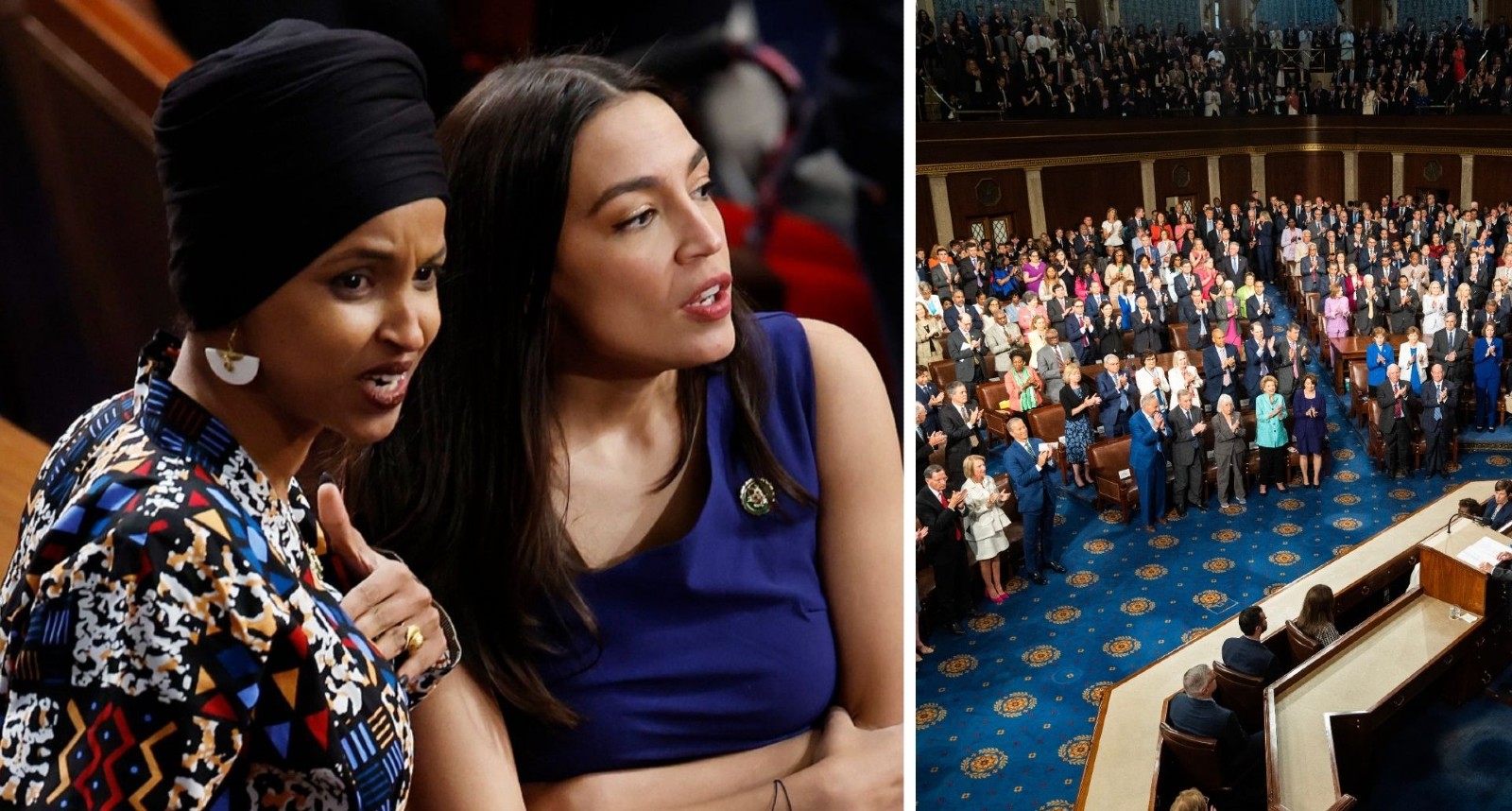
The Republican-controlled House of Representatives passed legislation aimed at limiting the Taliban’s funding from international governments and NGOs. Tennessee Republican Rep. Tim Burchett, who proposed the legislation, stated on the House floor that Afghans opposing Taliban rule have informed him that international funding is being channeled to the government.
The No Tax Dollars for Terrorists Act (H.R. 260) states that the United States’ foreign policy is to “oppose the provision of foreign assistance by foreign countries and nongovernmental organizations to the Taliban, particularly those countries and organizations that receive United States-provided foreign assistance.”
“According to them, nearly all of the cash aid sent to Afghanistan ends up in the hands of the Taliban,” Burchett stated. “Mr. Speaker, they will hate us for free. We do not need to give them hard-earned American tax dollars.”
The Act mandates the Secretary of State to design a strategy within 180 days to deter foreign governments and organizations from assisting the Taliban, to find methods to support Afghan women and former US military partners, and to provide a series of reports to Congress on aid to Afghanistan.
Rep. Jonathan Jackson (D-Ill.) acknowledged the measure’s bipartisan support, but chastised the Trump administration for its lack of clarity over its plans in Afghanistan.
“There is not a consensus about what the Trump administration is doing on Afghanistan, because they won’t tell us,” Jackson stated. “We urgently need more information and assurances from the Trump administration about their priorities in Afghanistan and now Iran.”
The measure passed the House by voice vote with no objections. It will now move to the Senate for final approval.
Earlier this week, the House passed a significant housing bill aimed at addressing the nation’s shortage of affordable homes.
The House passed a bipartisan bill, the Housing for the 21st Century Act, to increase the supply of affordable housing.
This development sets the stage for some political negotiations ahead. Previously, in October, the Senate passed its own bipartisan legislation as part of a broader package, but that was removed from the final bill. Now, the Senate is considering a stand-alone bill called the ROAD to Housing Act.
Ultimately, both chambers must agree on a final version of a housing bill that will also receive support from President Donald Trump, the Washington Post reported.
The legislation addresses a major concern for Americans. According to a survey conducted by the Pew Research Center in late January, over 62% of adults are “very” concerned about the cost of housing, which ranks just behind the cost of healthcare (71%) and the price of food and consumer goods (66%).
The House’s legislation represents a significant step forward, although it won’t instantly solve a crisis that has developed over time and will require a gradual resolution, according to David M. Dworkin, president and CEO of the National Housing Conference, a nonprofit organization focused on affordable housing.
“We got into this crisis one unit at a time, and we will get out of it the same way—one unit at a time—through a range of coordinated strategies that expand supply, reduce costs, and improve access to affordable homes,” Dworkin said in a statement celebrating the passage of the legislation.
Among its provisions are funding for affordable housing developments, grants for infrastructure that supports new residential construction, and reforms designed to unlock private investment in housing markets. Lawmakers also included changes intended to encourage denser, mixed-use development in areas long restricted by zoning laws.
Also, the House bill aims to address potential roadblocks in construction activities by streamlining the review process mandated by the National Environmental Policy Act (NEPA). It specifically exempts certain housing-related projects from lengthy reviews, creating categorical exclusions for smaller-scale initiatives.
Additionally, the bill puts an end to redundant environmental assessments, allowing housing projects that have already received approval through one federal assistance program to bypass another review, as long as the project’s scope, scale, and location remain largely the same.
“Finally, the bill envisions a future of more manufactured housing by again changing some of the requirements related to this type of construction that might address the availability of affordable housing,” Fast Company reported.

