
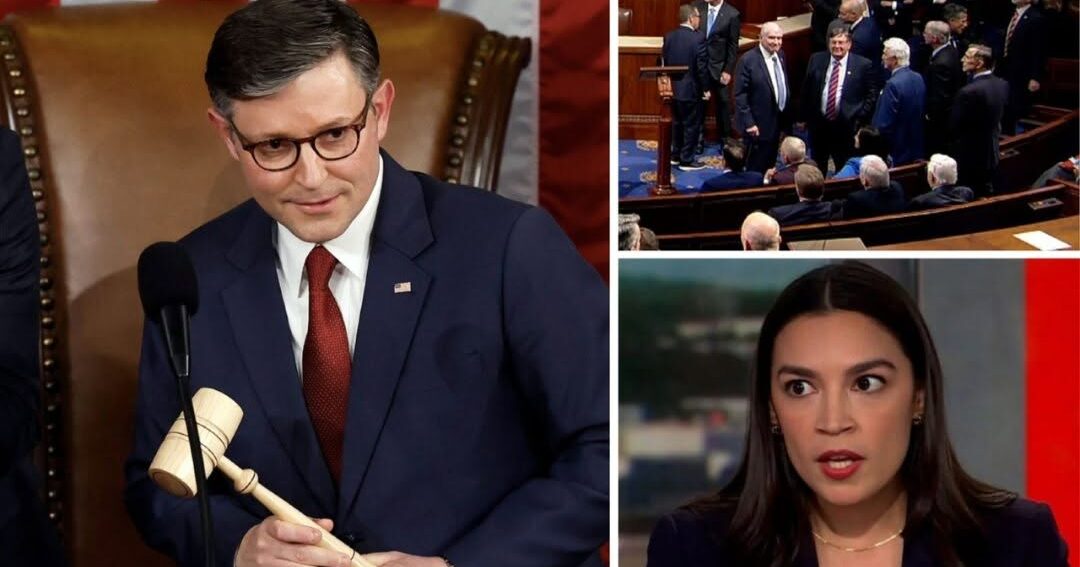
The House on Wednesday passed a measure aimed at combatting what appears to be widespread fraud among federally funded state Medicare and Medicaid programs, though most Democrats voted against it.
A vote of 211-200 passed the Stopping Fraudulent Payments Act, with all Republicans supporting it along with just six Democrats.
If passed by the Senate and signed into law, the bill would give the U.S. Treasury the authority to halt and return payments flagged for fraud risks.
The measure follows the House Reform and Oversight Committee’s investigation into extensive fraud across multiple state social welfare programs, especially in Democrat-controlled Minnesota.
The Committee issued an extensive report earlier this week detailing the fraud there.
In a statement in support of the bill, committee Chairman James Comer (R-Ky.) said that the federal government loses hundreds of billions of dollars every year in fraudulent payments across all programs and operations.
“We are facing a national emergency of fraud in federal programs that is impacting all Americans,” he began.
“According to the Government Accountability Office, the federal government is estimated to lose between $233 and $521 billion annually to fraud across all federal programs and operations,” Comer continued.
“Earlier this week, we exposed how criminals stole $9 billion in Minnesota’s social services programs while senior state officials, including Governor Walz and Attorney General Ellison, did nothing to stop it,” the Kentucky GOP leader went on.
“This is just the tip of the iceberg,” he said. “Whether in Minnesota, California’s hospice system, or Medicaid waiver programs in Ohio or New York, one thing is clear: fraudsters will keep stealing taxpayer dollars until they are stopped.”
The congressional report released Monday alleges that top Minnesota officials, including Walz and Ellison, ignored repeated warnings about widespread fraud in federally funded social service programs and retaliated against state employees who attempted to sound the alarm.
The 205-page report contends that state leaders had both the authority and the information needed to halt questionable payments and remove fraudulent providers from government programs but failed to do so.
Investigators estimate that fraud tied to a state-administered nutrition program cost taxpayers roughly $300 million and identified as much as $9 billion in additional Medicaid payments that warrant further scrutiny, CBS News reported.
“Minnesota Governor Tim Walz and Attorney General Keith Ellison are responsible for one of the most stunning oversight failures this Committee has ever examined,” Comer said a the time the report was released.
“Billions of dollars were stolen because Minnesota state leaders turned a blind eye to rampant fraud and retaliated against state employees who dared to raise concerns,” he added.
In addition, Comer sent a letter to Vice President JD Vance, who heads up the White House Task Force to Eliminate Fraud that was established by President Trump.
Comer asked the VP to review Minnesota’s social services programs dating back to 2019.
On social media, Vance said he took the highly unusual step of referring the allegations made in the committee’s report to the Justice Department for possible prosecution.
“If state officials in Minnesota or anywhere else in the country facilitated fraud or looked the other way while this theft was happening, if they actively prevented state and federal officials from stopping fraud and bringing fraudsters to justice, or if they intimidated and harassed whistleblowers who courageously tried to shine a light on this problem, they must be held accountable,” Vance wrote.
Several people – most of them of Somali descent – have been arrested and prosecuted in association with the Feeding Our Future program.
Federal investigators have found that tens of millions of taxpayer dollars were going to fake organizations that were nothing more than storefronts with addresses.
“Congress must take further action to stop fraud before it happens,” Comer said before the vote on the anti-fraud bill.
“The Stopping Fraudulent Payments Act adds critical safeguards to ensure federal payments go to the right recipient in the right amount before funds are awarded or disbursed,” he added.

