
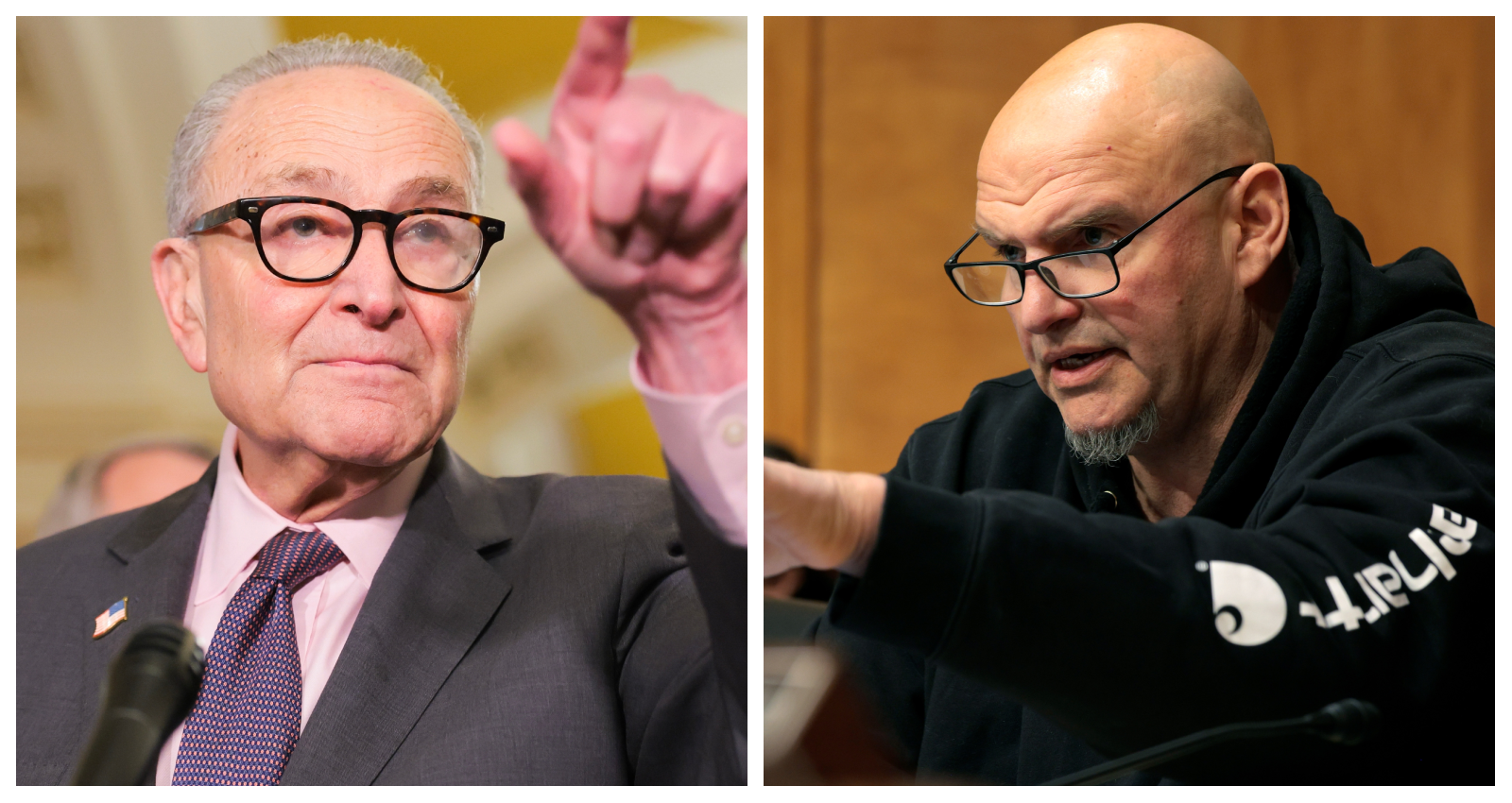
Sen. John Fetterman sharply criticized Maine Democratic Senate nominee Graham Platner during a television interview Friday, questioning why members of his own party have embraced the controversial candidate while making clear he still will not support Republican Sen. Susan Collins.
Appearing on Fox News’ “The Ingraham Angle,” the Pennsylvania Democrat condemned Platner’s personal controversies and suggested Democrats would react much differently if he were a Republican.
“If he was a Republican, how would Democrats describe him?” Fetterman asked.
“And the descriptions would be accurate for all of those things. They would declare that this guy is a degenerate.”
Fetterman specifically referenced allegations involving Platner’s personal life and his now-covered Totenkopf tattoo, which Platner has said he did not realize was associated with Nazi symbolism when he originally got it.
“You know, he cheats on his wife and he has Nazi tattoos,” Fetterman said.
“We’re the party of pearl-clutching, and now we’ve embraced it because, well, we don’t have a choice.”
Platner secured the Democratic nomination for U.S. Senate in Maine earlier this week and will face longtime Republican incumbent Susan Collins in November.
His campaign has been overshadowed by multiple controversies that have emerged over the past several months.
Among them is the Totenkopf skull tattoo that Platner later covered with a Celtic design and an image of a dog after claiming he learned of its historical association with Nazism under Hitler.
Platner has also faced criticism over old online comments, reports of sexually explicit text messages exchanged with multiple women while married, and allegations surrounding his personal conduct.
His wife, Amy Gertner, reportedly disclosed the existence of some of those messages to a campaign staffer conducting opposition research in anticipation of political attacks.
During the interview, Fetterman suggested some Democrats are overlooking the controversies simply because Platner is their party’s nominee.
“You can excuse all this because he’s got a D after his name,” Fetterman said. “But he’s not even a Democrat.”
Despite his criticism, Fetterman rejected any suggestion that he would support Collins in the general election.
Host Laura Ingraham asked whether he would campaign for the Republican senator if requested.
“No, of course not,” Fetterman replied. “No, no. I mean, I am a Democrat. Senator Collins, we have different views.”
Collins is seeking a sixth term representing Maine and remains one of the Senate’s most prominent moderate Republicans.
She has frequently broken with members of her own party on key votes while also maintaining support from many Republican voters in the state.
The Maine race is expected to be one of the most closely watched Senate contests of the 2026 election cycle.
Republicans currently hold a 53-47 majority in the Senate. Democrats would need to gain four seats in November to reclaim control of the chamber.
Platner’s nomination has drawn national attention because of the controversies surrounding his candidacy and concerns among some Democrats about his electability.
Republicans have seized on the issues as they prepare for the general election campaign, while some Democratic figures have defended Platner or emphasized his military service and claims of personal growth.
Fetterman’s remarks represent one of the strongest public criticisms of Platner from a sitting Democratic senator since the Maine primary concluded.
Although he made clear he remains committed to supporting Democratic candidates generally, his comments highlighted divisions within the party over whether Platner’s past conduct should disqualify him from serving in the Senate.
The Pennsylvania senator ultimately drew a distinction between criticizing his party’s nominee and endorsing the Republican alternative, saying his disagreement with Collins’ policy positions remains unchanged despite his concerns about Platner, The Tampa Free Press reported.
The exchange underscored the difficult balancing act some Democrats face as they attempt to defend vulnerable Senate seats while confronting controversies surrounding their own candidates heading into the fall campaign.

