
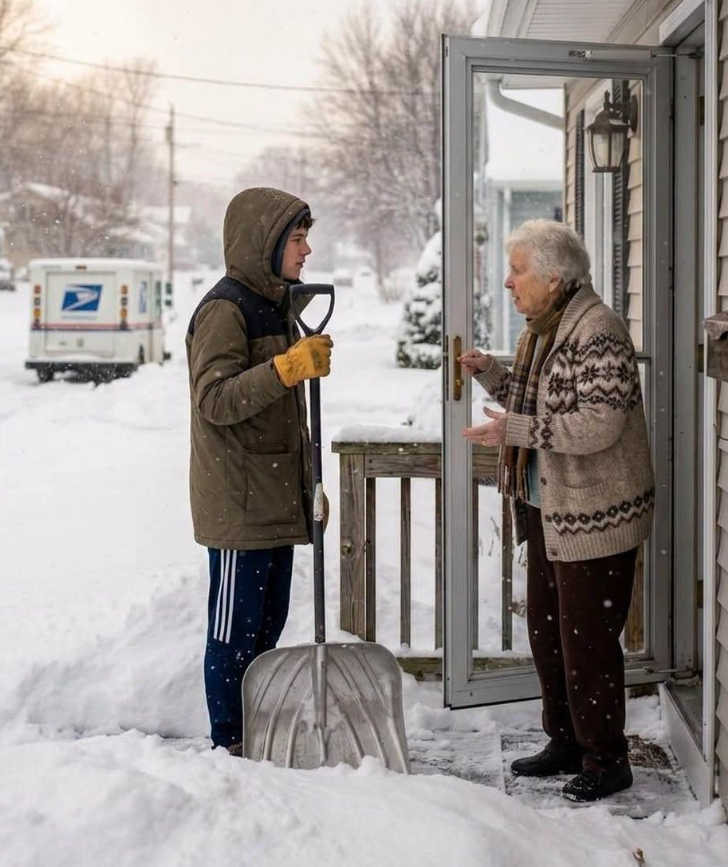
On the fourth day of a powerful winter storm, a sixteen-year-old neighbor named Malik knocked on my door with a snow shovel over his shoulder and asked a question that changed everything: “Why does the mail carrier keep skipping your house?” At 81, I lived alone and assumed the weather was responsible for the missing deliveries. My furnace was struggling, my heart medication was running low, and my son Gary had brushed off my concerns, telling me to stay warm and drink tea. But Malik wasn’t convinced. He spoke with the mail carrier and returned with surprising news. My mail hadn’t been delayed—it had been officially forwarded to a post office box I had never requested. Even more unsettling, the forwarding request had been submitted just days after I mentioned during a family dinner that I was expecting a $47,000 insurance settlement check. Suddenly, what seemed like an inconvenience felt like something much more serious.
As I thought back over the past few months, little moments began to fit together. Gary had become unusually interested in my finances, asking detailed questions about how the settlement would arrive and when it was expected. Around the same time, my driver’s license had mysteriously disappeared, though we never found it despite searching the house together. Meanwhile, I had stopped receiving not only bank statements but also important pharmacy reminders and other essential mail. Malik’s aunt, who had years of experience working with postal services, urged me not to confront anyone before reporting the issue through the proper channels. Investigators quickly confirmed that someone had filed a fraudulent change-of-address request using my identity. They explained that redirecting another person’s mail and using their identity for financial gain were serious offenses that required immediate investigation. For the first time in weeks, I felt that someone was finally listening.
The investigation moved quickly. Officials discovered that the missing driver’s license had been used to rent the post office box where my mail had been redirected. They also learned that my insurance settlement had already been deposited into a different bank account before I ever knew it had arrived. Fortunately, most of the money was located before it disappeared, and the financial institution immediately froze the remaining funds while the investigation continued. Additional evidence showed that confidential information about my insurance claim had been accessed without authorization before the check was mailed, allowing those responsible to know exactly when to expect it. As more facts came to light, the funds were returned, my mailing address was restored, and new protections were added to my financial accounts to help prevent anything similar from happening again. Most importantly, my medications began arriving regularly once more, giving me peace of mind after weeks of uncertainty.
When everything was finally resolved, my son called and tried to explain his actions, saying he had intended to make things right eventually. I quietly told him that asking for help would always have been easier than taking something that wasn’t his. That conversation marked a turning point in my life. I updated my legal documents, strengthened every safeguard around my finances, and surrounded myself with people who had shown genuine kindness without expecting anything in return. Malik continued clearing my walkway after every snowfall, refusing payment each time. Instead, I found another way to thank him by helping support his dream of attending college one day. Looking back, I realized the greatest lesson had nothing to do with money. Family isn’t defined only by shared history. Sometimes, it’s the person who notices an empty mailbox, asks one thoughtful question, and stays long enough to help make things right.

