
The text came through while dried blood was still on my cheek and the emergency room lights were burning above me. Can’t leave lunch with Charlotte right now. Her ex is stalking her. Call an Uber. Sorry, babe. I stared at my cracked phone screen, trying to make the words turn into something less cruel. My shoulder had just been forced back into place, my ribs felt like glass, and nurses kept asking who they could call for me. My husband Tyler was only ten minutes away, sitting inside the Sterling Room with another woman. I typed one word back with my good hand: Okay. He didn’t know it yet, but that single word ended our eight-year marriage.
That morning, I had made him breakfast the same way I always did: two eggs, three strips of bacon, wheat toast, and coffee in the travel mug he never remembered to wash. I had a twelve-hour shift at Riverside General Pharmacy and a dinner that night where I was supposed to receive a five-year service award. Tyler had promised he would try to come, but Thursday had become Charlotte Thomas day. Charlotte was his college friend with a white BMW, wealthy parents twenty minutes away, a therapist, and somehow a fresh emergency every week. For six months, Tyler had spent long lunches with her at the Sterling Room, where the bill was never under $180. He said she was fragile, that her ex Marcus frightened her, and that she trusted him more than anyone. I had started to feel less like his wife and more like the practical woman who kept the house running while he played hero somewhere else.
By late afternoon, rain had turned the streets slick and gray, and I was driving toward the conference dinner when a pickup blew through the intersection at Fifth and Madison. The impact crushed the driver’s side of my car and shoved metal into places metal should never be. Paramedics cut me out while Officer Janet Morrison, a familiar face from my pharmacy counter, leaned into the ambulance and asked who she should contact. I said Tyler because eight years of marriage had trained my mouth to answer before my heart could object. The hospital called him three times. I texted him myself, explaining the accident, the ER, the injuries, and the fact that I needed him. Then his answer arrived, and I realized he had not misunderstood my emergency at all—he had chosen not to come.
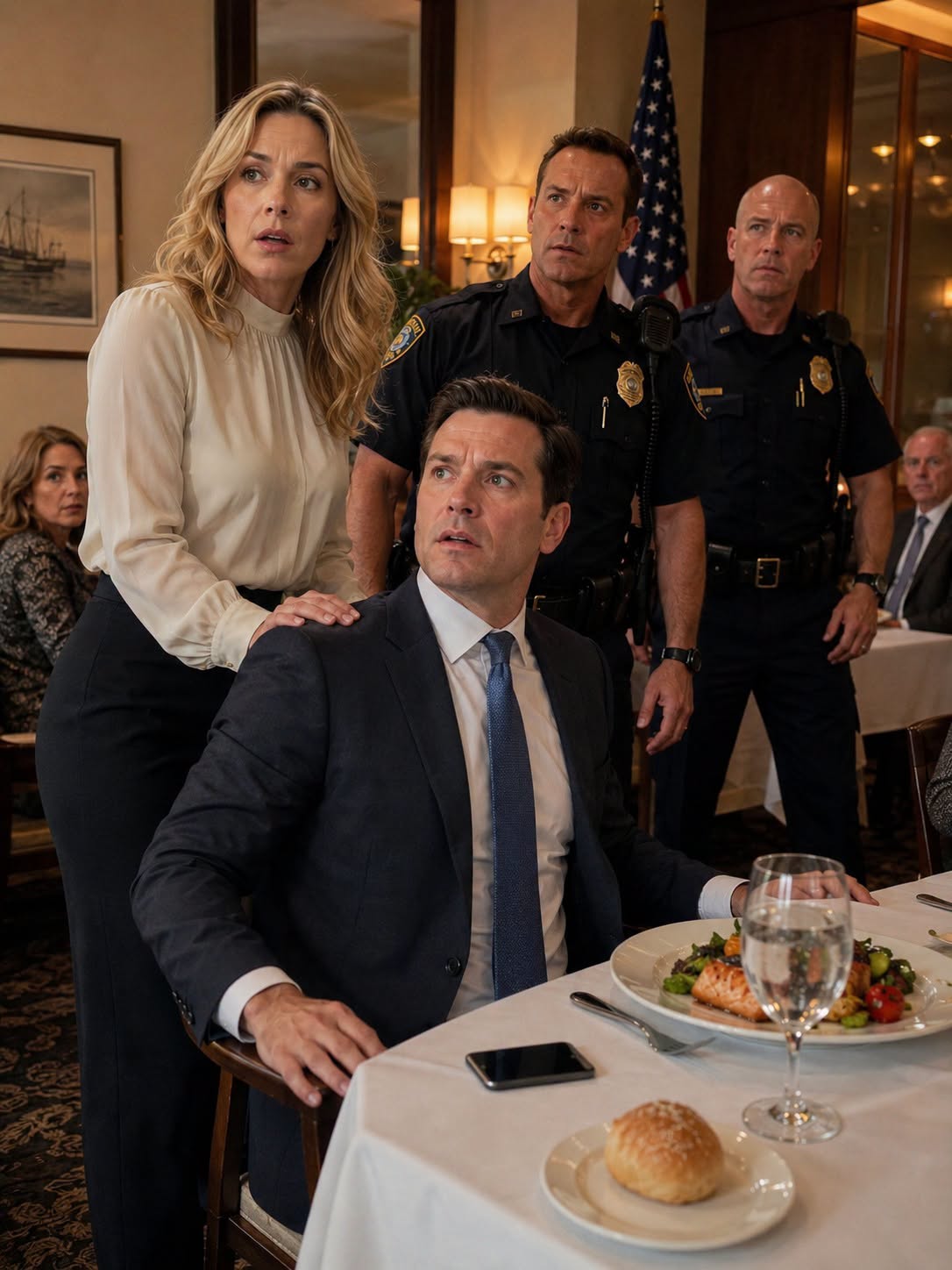
Officer Morrison returned to my bedside after Tyler’s calls went straight to voicemail, and I told her exactly where to find him: usual table, window seat, Sterling Room, Thursday lunch with Charlotte. I did not scream, cry, or beg. I simply asked if someone could notify my husband in person, since he seemed confused about the seriousness of the situation. Less than an hour later, Tyler’s messages came fast: apology first, excuse second, accusation third. He said sending police to the restaurant was unnecessary and dramatic. Then Charlotte messaged me herself, horrified, saying Tyler had told her I exaggerated for attention and was probably trying to manipulate him. That screenshot went straight to my brother David, who called a locksmith, a moving company, and an attorney friend before I even left the hospital. By the next morning, my locks were changed, Tyler’s belongings were packed into sixty-three labeled boxes, and my insurance paperwork, mortgage documents, and separate investment records were sitting in a folder for court. David’s lawyer made sure every item tied to our home, estate plans, and shared accounts was documented, not out of revenge, but because I was finally treating my life like something worth protecting.
Tyler came for his boxes with his mother on Saturday afternoon, looking stunned that I had not waited around to be talked out of my own pain. Through the doorbell camera, I watched him carry out eight years in twenty-two minutes: watches, golf trophies, suits, wedding photos, and the expensive espresso machine he insisted was an investment in our mornings. He looked into the camera once, and for the first time, I saw understanding on his face. Not enough to change anything, but enough to prove he knew what he had done. Months later, his apologies arrived, then his excuses, then his requests for counseling, but I filtered every message into the trash. My shoulder healed, the scars faded, and my townhouse became mine in a way it had never been before—mismatched plates, soft pillows, quiet evenings, and no one making me feel small for wanting to be chosen. One Thursday afternoon, while sunlight crossed my living room and a cup of tea cooled beside my book, David texted to ask how I was doing. I looked around at the peaceful life I had built from the wreckage and typed back the truth: for the first time in years, I was genuinely fine.