
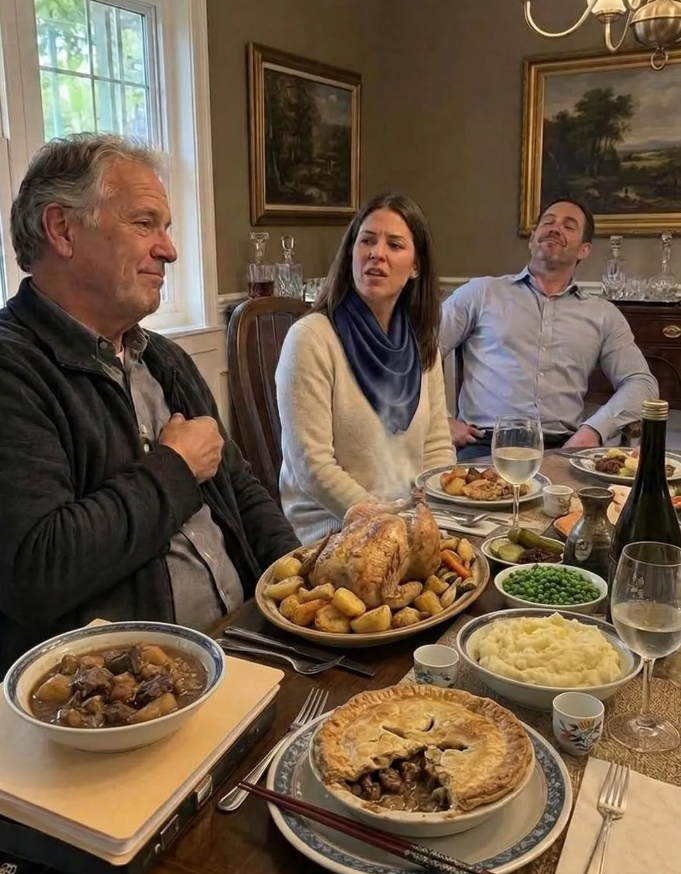
The dining room went silent as I placed the sixth property deed beside the untouched steaks. Sarah’s hand froze around her wineglass, while her husband, Michael, stared at the papers as though the numbers might disappear if he blinked hard enough. Three weeks earlier, they had laughed when I told them my factory pension would be just under $1,000 a month. Now a financial statement showing a trust worth more than $10 million rested between us. Every house listed in the folder was fully paid off and registered in my name. Michael opened his mouth twice before any sound came out. They had spent years treating me like a helpless old man, and they were finally discovering how little they actually knew about me.
I had worked at the same manufacturing plant for 41 years, but that paycheck was never my only source of income. After my wife died, I raised Sarah through her teenage years while operating a small logistics company during evenings and weekends. I bought my first rental property at 34, added five more over the next three decades, and used nearly every dollar of profit to pay down debt or make another investment. Doris Hartley, my financial adviser since Sarah was in middle school, helped me build a diversified trust that quietly grew past $10 million. I still drove a 14-year-old truck, clipped grocery coupons, and repaired things instead of replacing them because simple habits had carried me through difficult years. Meanwhile, Sarah and Michael had lived in my home for nearly three years after his sales job ended and her divorce settlement disappeared. During that time, I paid $8,200 for her divorce attorney, $4,500 toward a replacement car, and $12,000 for Michael’s failed food-delivery business, along with medical bills, credit-card balances, groceries, and household expenses they gradually stopped contributing toward.
The trouble began one Friday evening when Sarah asked exactly how much retirement income I would receive. When I answered honestly, she laughed and said I could never survive on such a small pension. Michael leaned back in his chair and calmly announced that I had two choices: remain in my own house as their cook and cleaner, or move out and discover how far $1,000 would take me. I waited for my daughter to object, but she lowered her eyes and allowed him to continue. Over the next few weeks, assisted-living brochures appeared on the kitchen counter, Michael suggested selling my truck, and both of them encouraged me to find a part-time job. Neither asked about my savings, my company, or the properties I had managed for decades. Instead, they built an entire future around my supposed poverty, never realizing that I was quietly preparing one final dinner—and the folder beside my plate would overturn every assumption they had made.
I laid out the deeds first, followed by tax records, rental statements, and the trust summary from Doris’s office. I explained that every property was free of mortgage debt, properly insured, and managed through a separate business account. My attorney had updated the estate plan six months earlier, and no court, creditor, or relative had any claim against the houses or the trust. Michael suddenly began talking about misunderstandings and family cooperation, but I stopped him and opened a second folder containing every financial rescue I had provided. Page after page documented the car payment, the legal fees, the business investment, the household insurance, and the debts I had settled without demanding repayment. Sarah began crying before I reached the middle. “I never realized how much you did,” she whispered. I told her the truth as gently as I could: she had not realized because she had stopped counting, and help that was once appreciated had slowly become something she believed she deserved.
The next morning, I told them they still had to move out within 60 days—not as punishment, but because our arrangement had damaged all three of us. Michael found steady work with a regional distribution company, and Sarah returned to the medical administration program she had abandoned two years earlier. I helped with one security deposit, then stepped back and allowed them to pay their own bills, manage their own setbacks, and build their own future. Two years later, they invited me to the modest three-bedroom home they had purchased without asking me for money. Near the front door hung a photograph taken on the day they left my house, with a plaque beneath it reading, “The day we stopped depending on others and started building our own future.” Sarah later handed me a letter thanking me not for the trust or the properties, but for finally refusing to rescue her. My money may someday become part of her inheritance, but the confidence she earned after leaving my home is the one thing no document, debt, or market downturn can ever take away.

