
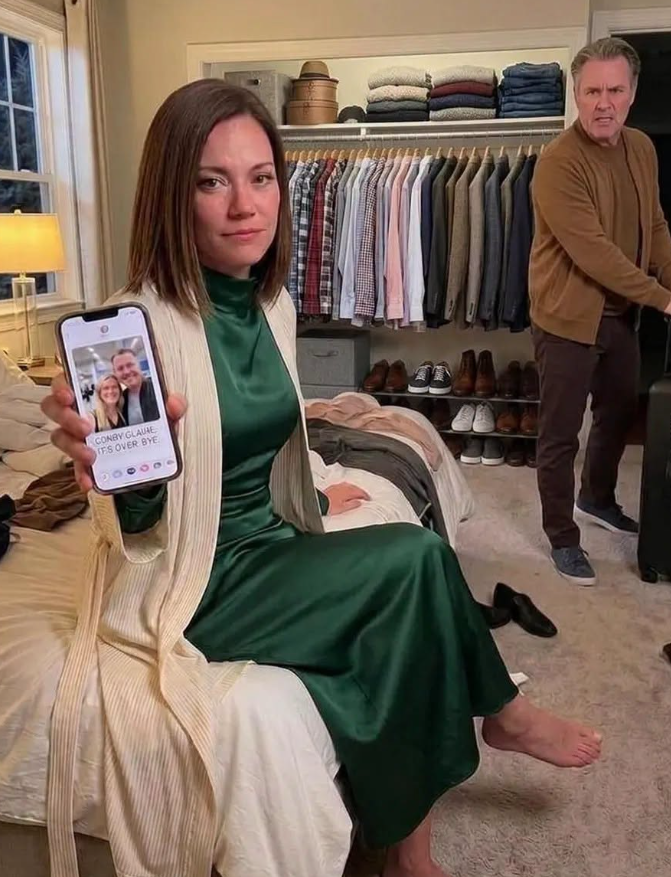
At 2:37 in the morning, my phone lit up with a photograph of my husband smiling beside his mistress at Boston Logan Airport. Olivia wore my diamond bracelet, while Victor stood with one arm around her and a suitcase packed for a one-way flight to Zurich. Beneath the image, he had written, “Goodbye, useless woman. I’ve taken everything.” He believed the powder he had slipped into my tea would keep me asleep until he was safely overseas. What he did not know was that I had switched our cups, watched him pack through the reflection in our bedroom window, and spent the previous six months documenting every suspicious transfer. I laughed quietly, sent back three words—“Enjoy the airport”—and waited for the trap to close.
Langley Medical Logistics had not begun with Victor, despite the name he proudly placed on every brochure and executive presentation. My father, Harold Whitaker, started the company in his Ohio garage, and I expanded it into a regional medical-delivery network before Victor understood cold-chain compliance or hospital contracts. After eleven years of marriage, I had allowed him to become the public face while I corrected his forecasts, protected client relationships, and repaired the expensive mistakes he made behind closed doors. That confidence eventually became entitlement, and entitlement became fraud. My forensic accountant found $2.6 million routed through fake suppliers, consulting firms, and an LLC connected to Olivia’s brother. The night Victor left, Olivia carried $180,000 in cash and certified checks, while he believed he still controlled the company, our home, and every account attached to our future.
At 6:12 that morning, Detective Marcus Reed called to say Homeland Security had stopped them before boarding Flight 418. Victor told investigators I was emotionally unstable and claimed I had voluntarily given him full authority over our marital and corporate assets. By eight o’clock, my attorney, Diane Caldwell, was sitting in my kitchen with the trust documents Victor had signed the previous month without reading beyond the first page. Page seven placed final operational control under the Whitaker Family Trust if an executive attempted unauthorized transfers or international flight with company funds. His frantic voicemails began with apologies, moved quickly to threats, and ended with him insisting that paperwork could never make me powerful. That evening, Diane and I faced him across a federal conference table and placed a civil complaint in front of him alleging fraud, identity misuse, breach of fiduciary duty, and conspiracy. Victor looked at the first page, turned pale, and finally realized the woman he called useless had already removed every door he planned to escape through.
Two days later, the emergency hearing moved into Suffolk County Superior Court, where Victor’s lawyer argued that I had frozen personal accounts out of revenge. Diane responded with the airport photograph, the $180,000 seizure report, one-way tickets purchased under alternate names, and nine months of documented transfers. The judge upheld the account restrictions, blocked Victor from borrowing against the mortgage, and prohibited him from moving property connected to our marital estate. My attorney also preserved the company’s insurance records, investment accounts, vendor contracts, and cloud backups before Olivia’s brother could erase them. Because Victor had signed the trust amendment himself, the court found that he had no right to regain corporate access while the forensic audit continued. The board then removed him for cause, restored the company’s original name—Whitaker Medical Logistics—and appointed me acting chief executive. Hospitals remained with us because medicine still reached patients on time, proving that Victor’s speeches had never been the system holding the business together.
By June, Victor accepted responsibility for unauthorized transactions and falsified records, while Olivia cooperated in exchange for reduced consequences. The divorce became final that fall, and I sold the large house because I no longer wanted rooms filled with memories of things I had pretended not to notice. A year after the airport photograph, Whitaker Medical Logistics received a regional excellence award, and my father watched from the front table as I accepted it. Later that night, Victor sent one final message admitting that I had never been useless—he had simply depended on me while resenting the fact. I felt no triumph, only the quiet relief of someone who no longer needed an apology to understand what happened. I replied, “You were right about one thing. Goodbye,” blocked the number, and slept peacefully in a life that finally belonged entirely to me