
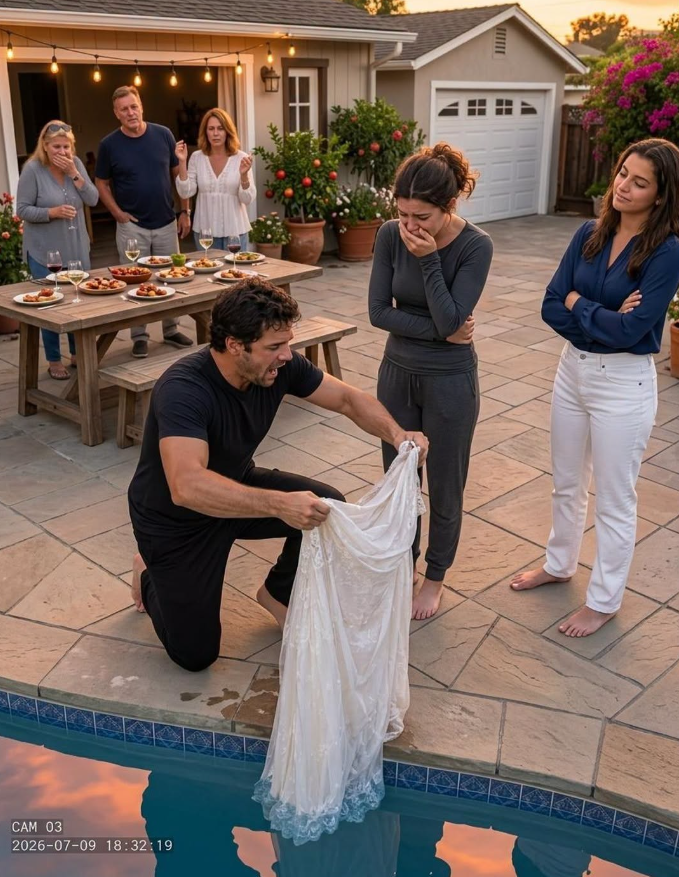
Emily’s scream sent Michael running through the sliding door and into his parents’ backyard. His family stood frozen around the pool, where her white wedding gown floated across the blue water like something abandoned. Chlorine soaked through the custom lace while the heavy skirt slowly sank. Ashley, Michael’s nineteen-year-old sister, watched with folded arms and called it “only water.” When Emily reminded her that the ceremony was five days away, Ashley laughed and told her to climb in after it. Michael pulled the gown from the pool himself as relatives stared in silence. Then Ashley said Emily was not truly part of their family yet.
The dress had cost $4,300, including alterations Emily paid for through months of careful saving. She had skipped dinners out, delayed buying a winter coat, and placed part of every paycheck into a wedding envelope. More importantly, her late mother had helped select the gown during one of her final outings before cancer made travel impossible. Michael had warned his relatives that Emily was quiet and sensitive, but they had spent years excusing Ashley’s cruelty as humor. Michael and Emily were already legally married after a simple courthouse ceremony, yet the church service still mattered because Emily wanted to carry her mother’s memory down the aisle.
Inside the house, Emily locked herself in the bathroom while Michael spread the damaged gown across clean towels. He photographed the wet lace, found the bridal receipt, saved the alterations invoice, and called the boutique for an emergency assessment. When Emily emerged wearing his old sweatshirt, she apologized for “causing trouble,” and Michael finally understood how badly his family had failed her. That evening, he gathered everyone in the kitchen and placed three documents on the table: the $4,300 receipt, the damage report, and their certified marriage certificate. Ashley rolled her eyes—until the boutique owner called with the replacement estimate.
The written assessment warned that chlorine had permanently weakened the lace and listed the full replacement cost at $6,850 with rush alterations. Michael told Ashley she could repay the loss through a formal agreement or face a property-damage report supported by photographs and receipts. His parents protested until he explained that an attorney, insurance claim, or court filing would cost far more than accepting responsibility. He also reminded them that Emily was his legal wife and that their household, mortgage, investment plans, and future estate would be built together. Ashley eventually signed a repayment schedule, while Michael’s parents admitted that protecting family peace had allowed the behavior to continue.
The original gown could not be restored, but the boutique opened early and helped Emily choose a simpler dress in time for the ceremony. Her mother’s handwritten note was sewn into the lining near her heart. Michael removed every relative who had laughed from the guest list unless Emily personally invited them back. Ashley was not there, though her first repayment arrived the following week after she sold her expensive phone. During the reception, Michael said family was not defined only by blood, but by who protected another person’s dignity when silence would be easier. Emily squeezed his hand, knowing the dress had been damaged—but her place beside him had finally been defended.

