
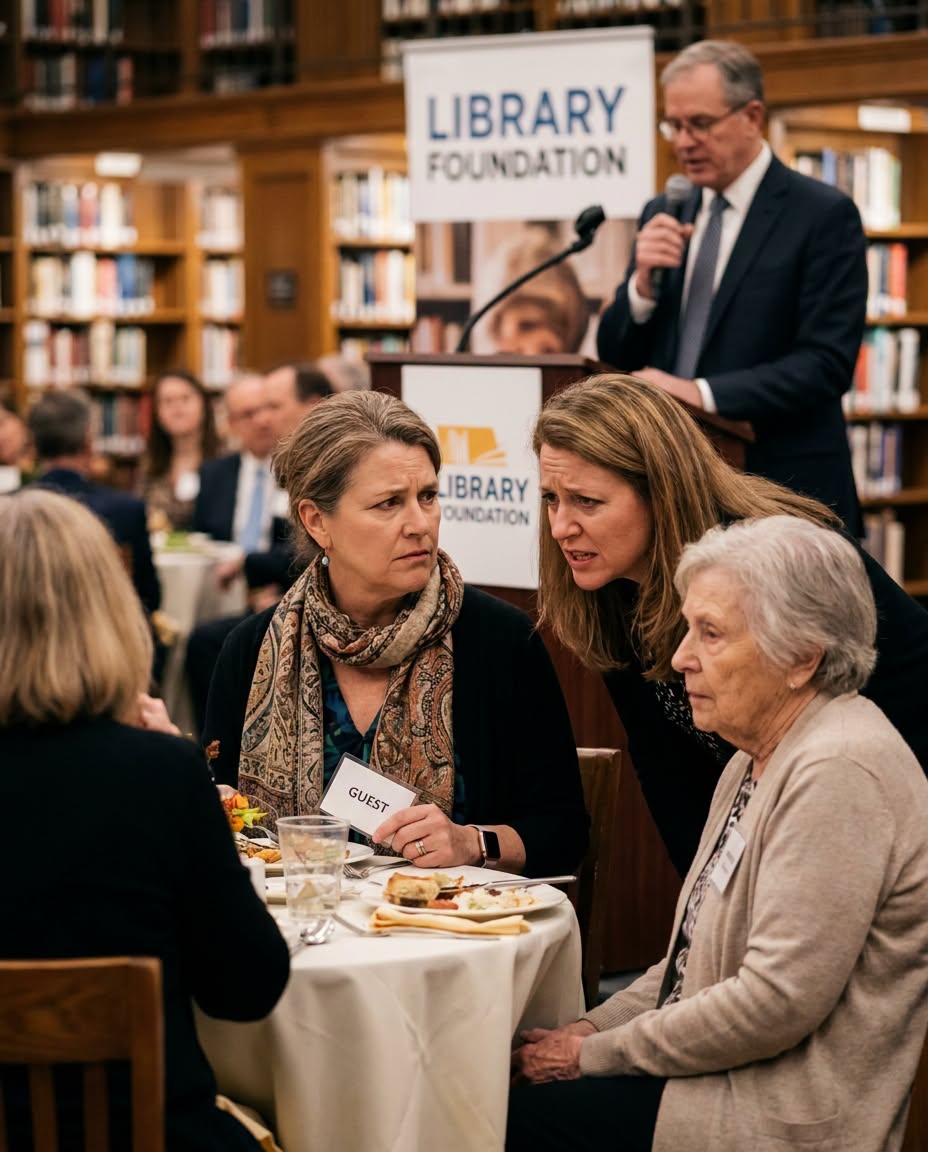
My sister told the banquet hall I was “just a guest,” and I was holding the award. My name is Paula Reed. My mother was being honored by the town library after forty years of volunteer work, and my sister Dana had planned a dinner afterward. When the hostess placed my name card at the table, it read PAULA – GUEST. Mom had a card. Dana and her husband had cards. Even Dana’s neighbor had one with a title. I asked whether it was a mistake. Dana leaned over and said, “I didn’t know what else to put. You didn’t really help with the event.” I had spent six weeks scanning family photographs, writing Mom’s speech, and driving her to planning meetings. Dana had ordered centerpieces. Then the library director stepped to the microphone and announced that the person who made the evening possible was me.
Dana stopped smiling when the director lifted a framed black-and-white photograph of our mother at twenty-four, standing outside the old library with a stack of children’s books. I had found it in a box at Mom’s house while looking for photos for the display. On the back, our father had written, “For Paula, when she is older.” Dad died when I was fifteen, and Dana had always been the family organizer after that. She handled reservations, holidays, and announcements. I handled the quiet jobs: driving Mom, fixing things, sitting through appointments, remembering what needed doing. Dana liked the visible parts. I learned to make myself useful in places nobody applauded.
The director explained that Mom had donated the photograph years earlier with instructions that it be given to the daughter who “understood why libraries mattered.” Mom had never told me. She was crying too hard to speak. Dana stood up and reached for the frame, saying it should stay with Mom. The director held it back gently and said, “Mrs. Reed’s instructions were very specific.” Dana looked at me and whispered that I was embarrassing her. I looked at the card that called me GUEST, then at the photograph Dad had saved for me, and said, “I think we have been using different words for family.”
There was no lawsuit, no shouting, and no dramatic removal from the restaurant. Dana sat down. Mom gave her speech, using the one I wrote, but halfway through she stopped reading and said something not on the page. “Paula has been taking care of me for years,” she told the room. “I should have said it sooner.” The room applauded. Dana did not. Later, she told me I had made her look selfish. I told her she had done that before I arrived. For the first time in my life, I did not soften the sentence to make it easier for her to hear.
The framed photograph hangs in my hallway now. Mom comes over on Tuesdays, and we sit beneath it with coffee. Dana still comes to family events, but she no longer controls every list, table, or title. Last month, she asked me whether I could help plan Mom’s birthday. I said yes, if we planned it together. She agreed. That is not an apology, but it is a beginning. The guest card is in the back of the frame. I kept it there because sometimes a piece of paper tells you exactly when you stopped accepting the seat somebody assigned you.