
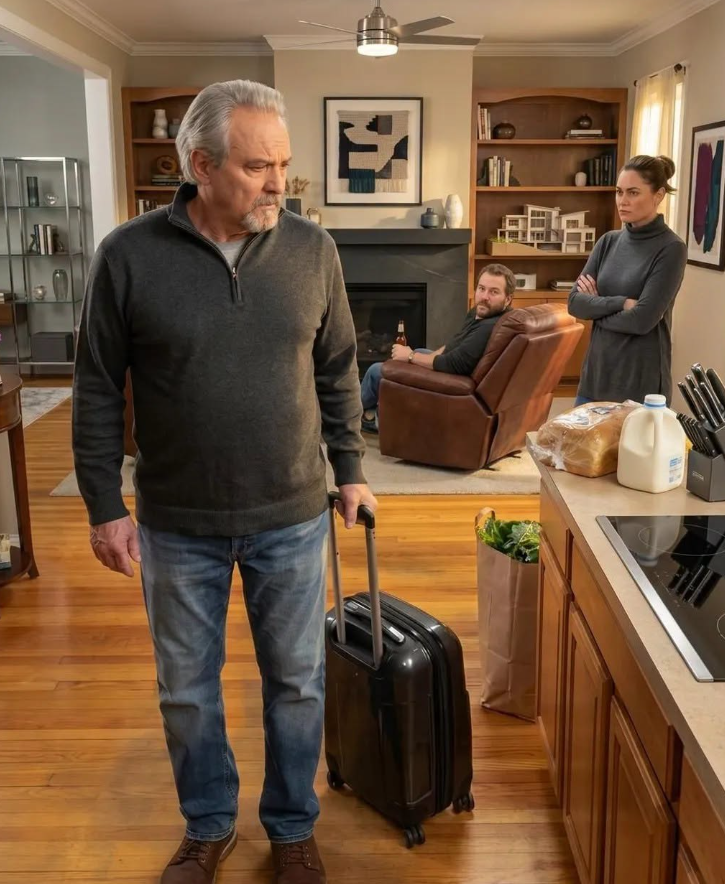
Clark had just carried several heavy grocery bags into the house when his son-in-law, Harry, called from the living room and told him to bring over a cold drink. Clark stood quietly beside the food he had purchased with his Social Security check and asked Harry to wait until the groceries were put away. Harry replied that Clark should help because he was living in “their” house. The words stung because Clark had provided the down payment, covered the mortgage, paid the utilities, and supported the couple for five years. When his daughter Tiffany entered, Clark expected her to understand. Instead, she told him to either do what Harry wanted or pack his belongings and leave. Clark did not argue. He simply smiled, carried an old suitcase into his bedroom, packed a few clothes and a photograph of his late wife, Martha, and walked out of the house he had spent years protecting.
From a small motel room, Clark finally reviewed the numbers he had avoided for too long. He had paid $160,000 toward Tiffany’s education, $25,000 for her wedding, $80,000 toward the house, and hundreds more each month for groceries, insurance, credit cards, and household expenses. He had called it love, but he now realized his generosity had become an expectation. With thirty years of banking experience, Clark knew exactly what to do. He stopped the automatic mortgage payments, removed Tiffany and Harry from his insurance, canceled their access to his credit cards, and ended every monthly transfer. His phone soon filled with missed calls, but he did not respond. For the first time in years, he allowed them to manage the life they claimed belonged entirely to them.
A few days later, Clark met an old banking colleague who revealed that Harry had recently tried to obtain a $50,000 home-equity loan using the house as security. The application failed because the property belonged only to Clark. He also learned that Harry had built up nearly $18,000 in private debts and had been searching for ways to gain control of the home. Clark began the formal process of asking the couple to leave and gathered every financial record he had kept. Harry soon disappeared from town, leaving Tiffany to discover unpaid bills and credit-card charges she had never known about. When she finally met Clark at a diner, she admitted that she had ignored the warning signs because siding with Harry had seemed easier than admitting her father was right.
Tiffany apologized publicly and began rebuilding her life through counseling and honest work, but Clark made one boundary clear: the house would never become her reward for saying sorry. He had already signed it over to a Montana housing organization so three military families could have a safe place to begin again. Months later, Clark bought a small cabin beside Flathead Lake, where he spent peaceful mornings reading and watching the water. Tiffany visited once a month, never asking for money or property. Slowly, their conversations became less about what she needed and more about who her father truly was. Clark had spent forty-one years building a comfortable stage for everyone else. The greatest change came when he finally stepped away from it—and chose a life that belonged to him.