
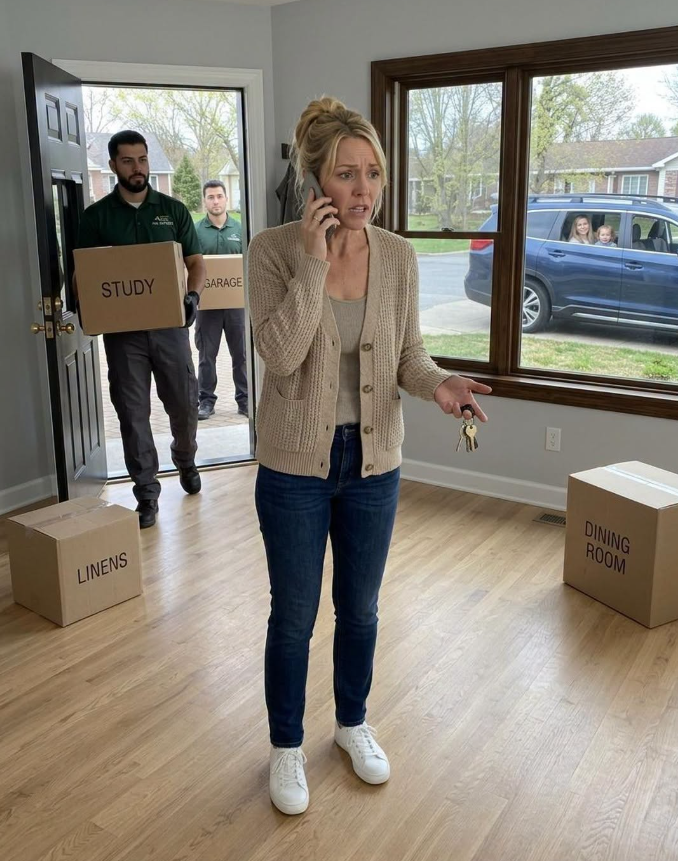
“I sold the house,” I said as my family stood on the frozen sidewalk surrounded by suitcases, coolers, pillows, and wrapped gifts. My mother stared past me at the moving truck, certain I was playing some elaborate joke to punish her. My brother Ryan looked through the bare front windows, while my sister Bethany demanded to know where nineteen people were supposed to sleep that night. Beside me, the new owner waited patiently with a closing folder tucked beneath her arm. I placed the final brass key into her palm, and the tiny click seemed louder than every argument my family had started that December. No one asked why I had felt desperate enough to leave the home I had loved for eleven years. Ryan only repeated the question that finally revealed everything: “But where are we supposed to stay?”
For more than a decade, my three-bedroom house had served as my family’s free Christmas hotel. Ryan arrived early every year with his wife, Megan, their three children, and enough luggage to block the hallway, yet he rarely carried out so much as a trash bag. Bethany borrowed my clothes, toiletries, chargers, and bedroom without asking, while my mother stood in the kitchen holding a glass of wine and offering criticism instead of help. I spent nearly $1,700 on groceries the previous Christmas, prepared a turkey, a glazed ham, three pies, breakfast casseroles, snacks, and special drinks, and then cleaned until my hands were raw. Nineteen relatives slept in beds, on couches, and across floors, but not one stripped the sheets or contributed toward food. The moment that finally changed me came when Megan’s children ate an entire three-layer cake I had made for David’s parents, and she shrugged as though my effort meant nothing. Standing before the empty plate, I understood that my relatives did not see me as another person celebrating Christmas; they saw me as the kitchen, the housekeeper, and the woman who would always surrender her comfort to preserve theirs.
That December, I wrote one calm message in the family group chat: I was tired, I would not host, and someone else could arrange the gathering. My mother immediately called me selfish, Ryan announced that his children were already expecting to stay with me, and Bethany posted online that someone in the family had chosen personal comfort over Christmas tradition. Relatives who had eaten my food and slept beneath my roof joined the criticism without ever asking what the holidays had cost me. Rather than argue, I saved screenshots, noted the dates and times, and showed everything to David. The next Monday, I contacted a realtor named Diane, who valued the house at $465,000 and received three offers within forty-eight hours. David and I accepted a clean offer from a young couple, signed a thirty-day closing agreement, and quietly began packing while my family continued making plans for rooms they had never been invited to use. On December 22, my mother called from two hours away and told me to prepare food because everyone was hungry—but as she spoke, their cars turned onto my street and slowed beside a moving truck they had never expected to see.
Because the mortgage had nearly been paid off, the sale left David and me with substantial equity after the real estate commission, property insurance adjustment, taxes, and closing costs. Our attorney reviewed every contract and confirmed that the house was solely ours, so no relative had any legal claim or right to challenge the transaction in court. We placed part of the proceeds into a conservative investment account, reserved money for our next home, and used a small portion to rent a one-bedroom cabin in the mountains for Christmas week. My mother insisted I had ruined the holiday, but I reminded her that I had given clear notice and had never agreed to receive uninvited guests. The family eventually crowded into her home, where she discovered what it meant to cook for eighteen people, manage overflowing trash, protect furniture, wash endless dishes, and cover every expense herself. By the end of the night, she was standing alone at the sink while everyone else watched television. The woman who had dismissed eleven years of my labor finally experienced one day of it, and no estate, savings account, or expensive house could protect her from that truth.
Two months later, my mother called and apologized without asking me to excuse her behavior or make her feel better. She admitted that she had mistaken my competence for endless energy and my silence for permission. I told her forgiveness would take time and that every future gathering would require invitations, shared food, and equal cleanup. The following Christmas, David and I lived in a smaller house with one guest room, a table for four, and a front door I no longer felt guilty about controlling. My mother arrived alone, carrying a pumpkin pie she had made herself, with no suitcase and no announcement that other relatives were on the way. After placing the pie on the counter, she turned to me and asked, “What can I do to help you?” Selling the old house did not erase the years I had spent feeling unappreciated, but it ended the belief that love had to be earned through exhaustion—and that was the real home I finally gave myself.

