
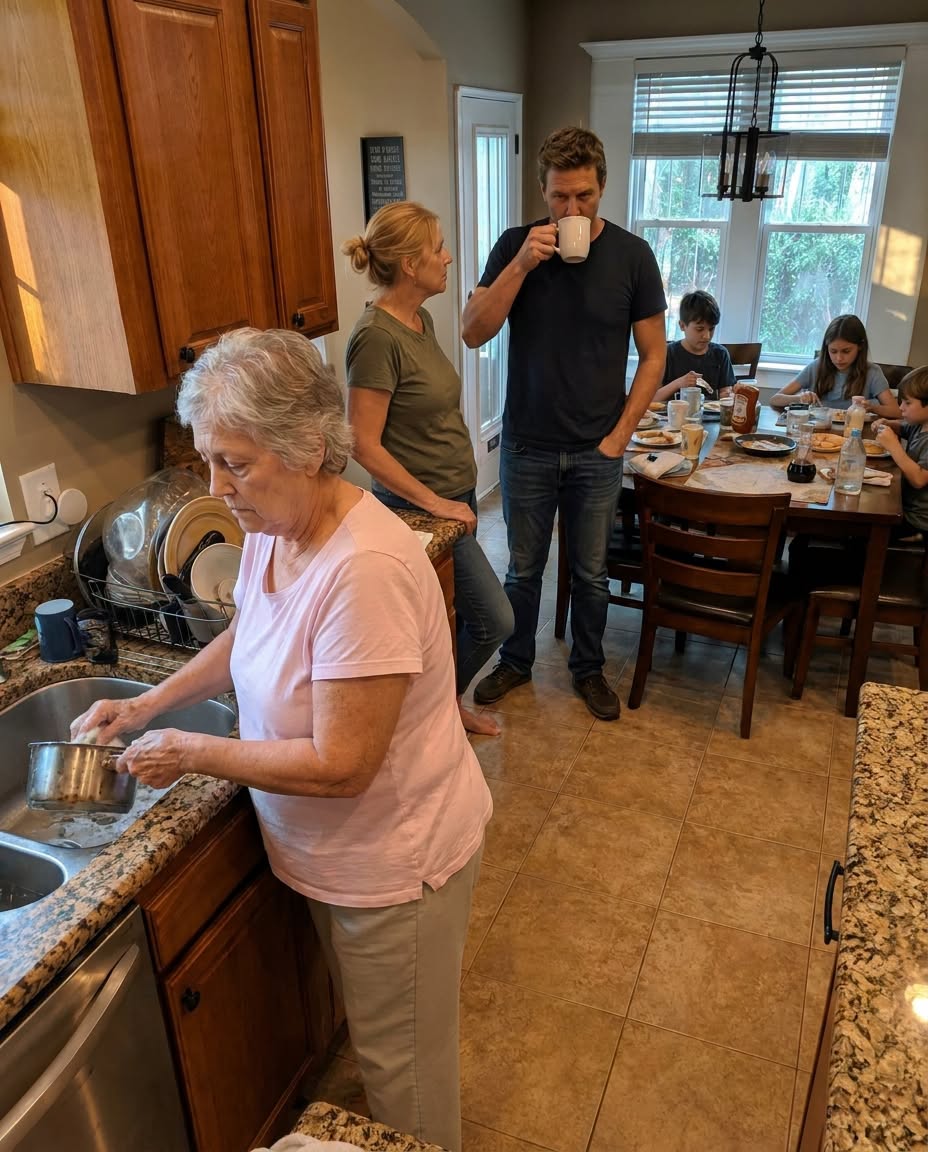
“You should be grateful,” my daughter said while I stood at the kitchen sink with soap slipping between my fingers. “You’re lucky we even let you sleep here.” The bacon cooled on the stove, my son-in-law Craig frowned at the breakfast I had prepared, and my two grandchildren stayed silent behind their screens. Outside, a leaf blower started down the block, the same sound that once made my late husband Walter complain before finishing his coffee. For one clear moment, I saw the room as it truly was: four people occupying the house Walter and I had paid for since 1979 while treating me like an unwanted guest. I dried my hands, walked to the smallest bedroom they had assigned me, and sat beside the old bed from my first apartment. By afternoon, I was pulling the original deed from a filing cabinet in the garage.
My name is Rosalind Hartley, and I was seventy when Diane and her family moved into my four-bedroom Savannah home after Walter died. She called the arrangement temporary and said she wanted to protect me from stairs, loneliness, and the possibility of falling while living alone. Two moving trucks arrived, and within months Diane and Craig had taken the master bedroom, rearranged the kitchen, filled Walter’s workshop with golf equipment, and converted my dining table into a business desk. They contributed little toward rising utility expenses while purchasing a new vehicle and treating my home as their permanent address. Diane once asked me to eat dinner alone in my room so Craig could entertain business associates professionally, and I listened through the wall as guests complimented her on her beautiful house. I had spent nearly forty years managing records at a law firm, but my family mistook grief and patience for confusion.
The deed, mortgage payoff, Walter’s death certificate, and survivorship filing all confirmed that the property belonged entirely to me. I made several certified copies and met with Harold Bishop, a retired attorney who had known me for decades. Together, we documented the unpaid expenses, room changes, business mail registered to my address, neighborhood statements, and the repeated attempts to present Diane as the person controlling the property. Harold asked whether I wanted to remove them and remain in the house or sell the property and begin elsewhere. Walking through the master bedroom where Walter had spent his final weeks, I realized the home I remembered had already been dismantled one concession at a time. When a buyer offered a substantial all-cash price after a favorable zoning change, I accepted—and the people who believed I would never stand up for myself were still sleeping beneath my roof when the formal notice arrived.
Harold served Diane and Craig with a thirty-day notice to vacate, following the applicable property and occupancy procedures rather than relying on threats or family arguments. They responded with tears, promises of rent, claims that grief had affected my judgment, and warnings that legal action would leave me alone. I preserved every message, transferred utilities, secured my bank accounts, moved Walter’s desk and personal belongings into storage, and completed the sale with clean title documentation. When they refused to leave by the deadline, the buyer assumed possession, changed the locks, and provided supervised access for them to collect their belongings. The sale proceeds allowed me to purchase a smaller condominium overlooking the marsh, while my attorney handled every ownership notice, financial transfer, and legal communication. Diane’s family was never left without options; they simply had to begin paying for their own housing instead of treating mine as an entitlement.
My new home has fewer rooms, but none of them require permission. Walter’s reading chair sits beside the window, his chipped bowling mug rests on my shelf, and on Sunday mornings I cook bacon without anyone criticizing the year it belongs to. Diane eventually admitted that she had viewed the house as the only stable thing in her life, and for the first time called it what it had always been: my house. Her apology did not repair everything, but it acknowledged the boundary she had ignored. I still miss the fig tree, the porch, and the daughter I believed would never confuse my generosity with surrender. Yet the silence in my condominium feels honest rather than punishing. I lost a building filled with memories, but I stopped disappearing inside it—and when my family finally understood whose name had been on the deed, I was already breathing freely somewhere they could no longer claim as their own.

