
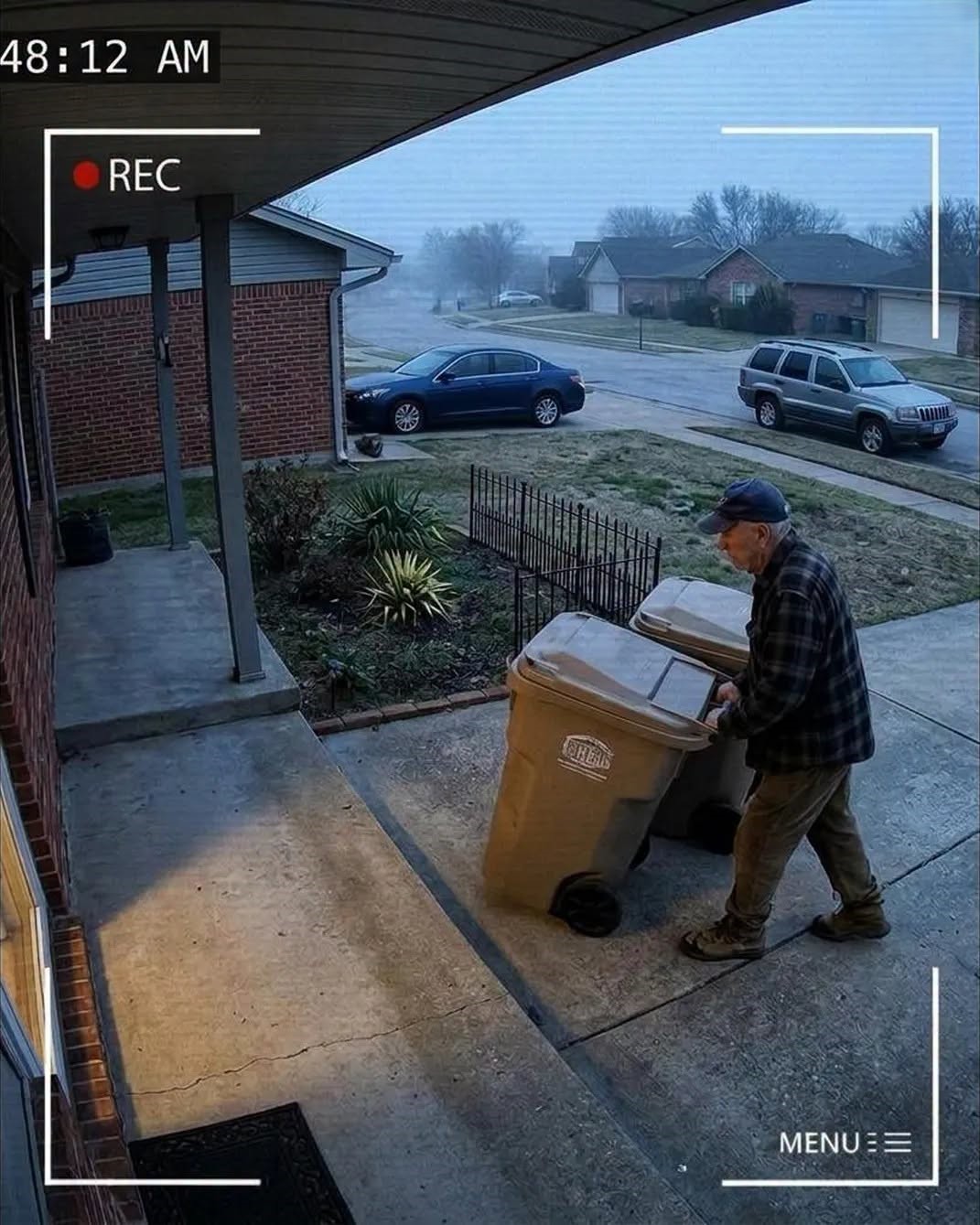
At 5:38 on a rainy Friday morning, I watched an elderly man roll my trash cans from the curb and place them neatly beside the garage. He adjusted both handles, swept several leaves aside with his shoe, then stood facing my front door with one hand raised as though he might knock. When I enlarged the security footage, my coffee cup slipped from my fingers and shattered across the kitchen floor. The man was Robert Hale, my father’s former best friend and the witness whose testimony had helped send him to prison twenty years earlier. Robert and my father, Frank, had built a construction company from two old trucks into a business supporting sixty employees, until nearly $200,000 appeared to vanish. My father managed the accounts, and although he insisted he was innocent, Robert eventually told investigators that nobody else could have moved the money. Dad lost four years of his freedom, returned home broken and withdrawn, and passed away six weeks later.
Robert had recently purchased a house less than three miles away, which meant he had probably found me soon after returning to town. For four Fridays, he had quietly straightened my trash cans before sunrise, pausing at my door but never gathering the courage to knock. The following week, I waited in the living room wearing my father’s faded wool cardigan. When I opened the door, Robert froze with one hand resting on the green bin. I told him he had destroyed my father’s name, left my mother to face whispers in grocery stores, and forced my daughter to grow up hearing strangers call her grandfather dishonest. Robert did not defend himself. Instead, he pulled a worn manila envelope from his coat and said he had carried it for years because it contained the truth my family had never received—and when I opened it, the first document proved my father had never stolen a dollar.
The records showed that the missing $200,000 had been mistakenly transferred into an escrow account connected to a canceled property investment. A bank employee had entered the wrong internal code, leaving the funds dormant while investigators searched for evidence of theft. Three years after the court convicted Dad, an auditor finally discovered the error. Robert admitted he had gone to Dad’s apartment with the news but remained outside, convincing himself he needed stronger documentation from an attorney before speaking. By the time the official papers arrived, my father was gone. Robert had later tried contacting my mother, but every envelope had been returned unopened. The evidence could not restore Dad’s job, repair his mortgage problems, recover the insurance coverage my parents lost, or return the years taken from his estate. It could, however, clear his record, and Robert had already arranged to cover every legal expense required to formally correct the court files.
Robert did not ask me to forgive him. He only explained that Dad had always straightened the company’s trash cans before leaving a job site, saying, “The cans may not care, but people do.” After Dad’s passing, Robert began fixing crooked bins wherever he found them because the simple habit made him feel close to the friend he had failed. As he walked away that morning, I called after him and said he could return the next Thursday—but not before sunrise. At six that evening, he knocked with empty hands, and I offered him coffee. We stood beside the garage, talking slowly about my father as he had been before the courtroom became our family’s only memory of him. When Robert reached toward a crooked trash can, I placed my hand over his, and together we moved it back into place.

