
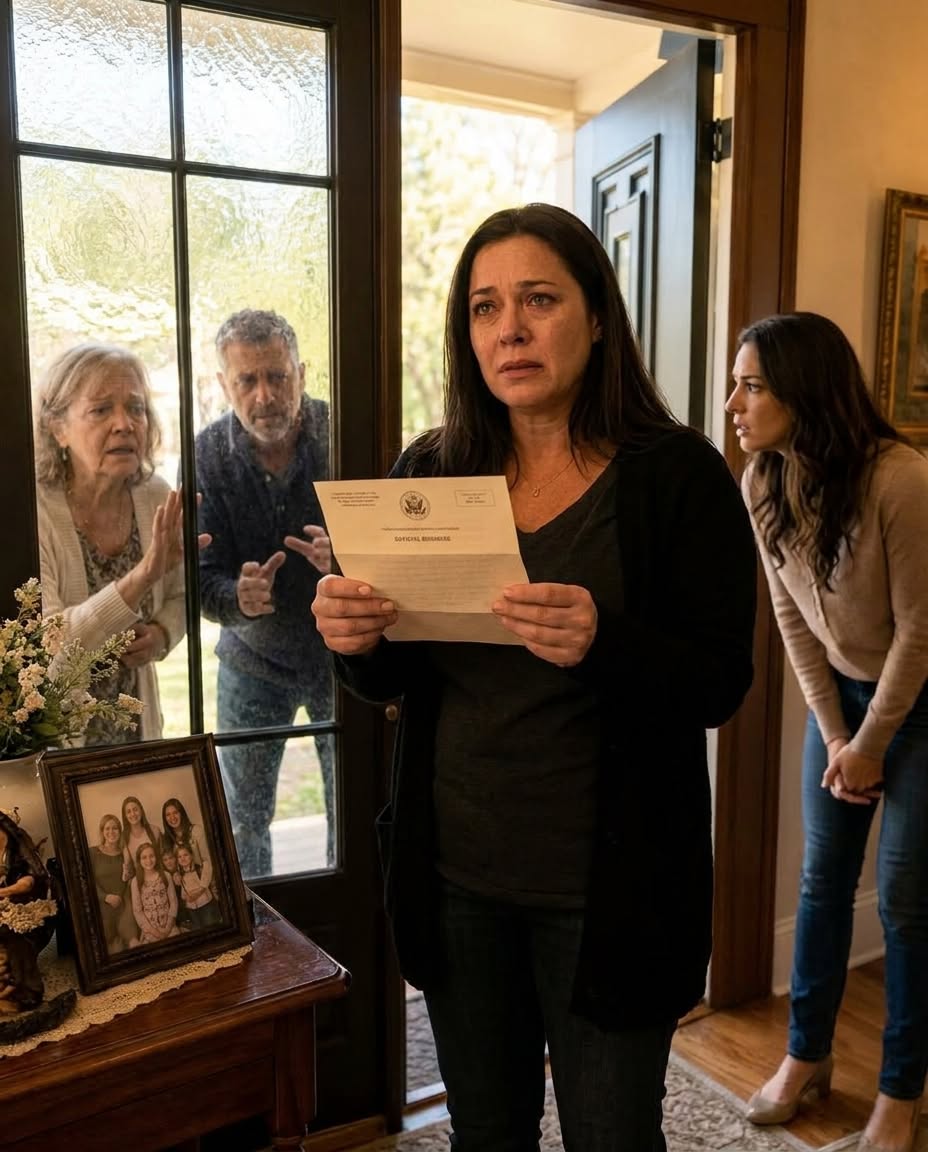
“Please come,” I begged into the phone while laughter, music, and champagne glasses sounded behind my mother’s voice. Only hours earlier, I had learned that my husband Michael and our two children, eight-year-old Emma and six-year-old Noah, had died in a devastating traffic collision during the morning school run. I was sitting alone in a hospital parking lot, unable to understand how the ordinary Tuesday that began with dinosaur-shaped pancakes and violin practice had ended in silence. My father told me they could not leave because my sister Jessica’s thirtieth-birthday celebration had been booked for months. When I asked how I was supposed to arrange three funerals alone, my mother told me not to be dramatic and suggested the decisions could wait until after the party. Jessica later called to complain that my crisis had spoiled her special day and said she would also miss the funeral because she had expensive concert tickets. By the time the line went dead, I understood that the family I had spent thirty-eight years trying to please would not appear even when my entire world had disappeared.
My name is Sarah Bennett, and I had always been the dependable daughter while Jessica remained the center of our parents’ attention. They redirected the college fund my grandmother created for me toward Jessica’s European gap year, even after I earned a full scholarship, and later paid off the debt she brought home. I took unpaid leave to care for my mother after surgery, watched Jessica receive credit for the recovery, and stood by as she turned my wedding reception and professional milestones into stages for her own announcements. Michael recognized the pattern long before I did, telling me that my relatives had trained me to disappear while calling that disappearance maturity. At the funeral, Michael’s elderly parents flew across the country despite serious mobility difficulties, his colleagues filled the cathedral, and friends surrounded me as I stood before three coffins. The reserved seats for my parents and sister remained empty, while Jessica posted birthday photographs online during the service and described herself as blessed to be surrounded by everyone she loved.
Three weeks later, my mother finally called—not to ask whether I was sleeping or eating, but to inquire about Michael’s life insurance, pension, retirement accounts, and the value of my home. She said Jessica needed money for fertility treatment and suggested that keeping any substantial benefit for myself would be selfish. Soon afterward, Jessica and her husband arrived uninvited, appraised my furniture and property, and offered roughly $300,000 for a house worth nearly twice that amount. When I refused, my relatives staged what they called an intervention, invited extended family members and a counselor, and argued that grief had made me incapable of managing my finances. Their proposal was for me to enter a treatment facility while they temporarily controlled my accounts, insurance proceeds, and property. After I walked out, Jessica posted publicly that I had inherited millions, suffered a mental breakdown, and was refusing to help struggling relatives—without realizing that dozens of people possessed dated photographs, funeral records, and firsthand knowledge that contradicted every word.
Michael’s best friend responded with photographs of the empty reserved seats, and his mother publicly confirmed that my parents and sister had chosen a birthday party over the funeral. The story spread rapidly, eventually producing a local headline about relatives accused of portraying a grieving widow as incompetent while seeking access to insurance funds. That exposure brought Michael’s attorney, David Chen, to my door with the estate documents I had been too overwhelmed to review. Michael had maintained life-insurance policies totaling $5 million and placed the proceeds in a carefully structured trust under my control, with explicit exclusions preventing distributions to my parents or Jessica. He had also preserved financial records, witness statements, and video testimony anticipating claims that I was mentally unfit, while purchasing legal-defense coverage for any guardianship, conservatorship, probate, or insurance dispute. My parents’ emergency petition was dismissed, Jessica’s claim against the policy failed, and the court ordered her to cover legal fees after the documents established both Michael’s intentions and my full competence.
Once the litigation ended and the trust assets were secure, I created the Emma and Noah Bennett Foundation to help families facing sudden loss with funeral costs, counseling, and legal assistance. I converted a neighboring property into a retreat for grieving parents and established a Northwestern scholarship for students whose educational savings had been taken or redirected by relatives. These projects did not lessen the absence of Michael, Emma, or Noah, but they gave their names a future larger than the worst day of my life. My father eventually wrote that I had destroyed the family, yet I no longer confused a shared history with genuine care. Michael had protected me twice: through the life we built together and through the estate plan he prepared in case he could no longer stand beside me. The people who demanded that I shrink had arrived too late to claim what he left behind. His final gift was not simply financial security, but the freedom to build a new family from the people who showed up when the reserved seats were empty.

