
The insurance agent called at 2:17 on a rainy Tuesday and asked why my sister had listed herself as co-owner of my lake house. I stopped typing and stared at my computer, certain I had misunderstood her. Rachel had apparently planned a wedding for 200 guests at 2847 Lakeshore Road, complete with two reception tents, overnight accommodations, and cocktails on my grandfather’s aging dock. She had already committed nearly $85,000 to vendors and signed a liability declaration claiming our family owned the property together. That was false. I had purchased the house three years earlier with money my grandfather left specifically to me, and my name was the only one on the deed, insurance policy, tax records, and mortgage release. When the agent asked whether I had approved the event, I answered with one word: “No.”
The documents arrived before the call ended. Rachel had written that I merely handled the bills and should not be contacted because I became “overwhelmed” and created unnecessary conflict. She had even submitted a $22,000 planner deposit and arranged for a locksmith to change my side-door lock so vendors could enter. When I confronted her, she insisted Grandpa had intended the property for everyone and ordered me to correct the “misunderstanding.” Then my security camera showed Rachel, our mother, her fiancé, the wedding planner, and a locksmith arriving at my house. Rachel believed I would surrender rather than embarrass the family, but she had forgotten one important detail: every institution involved would believe the legal documents, not her version of our grandfather’s wishes.
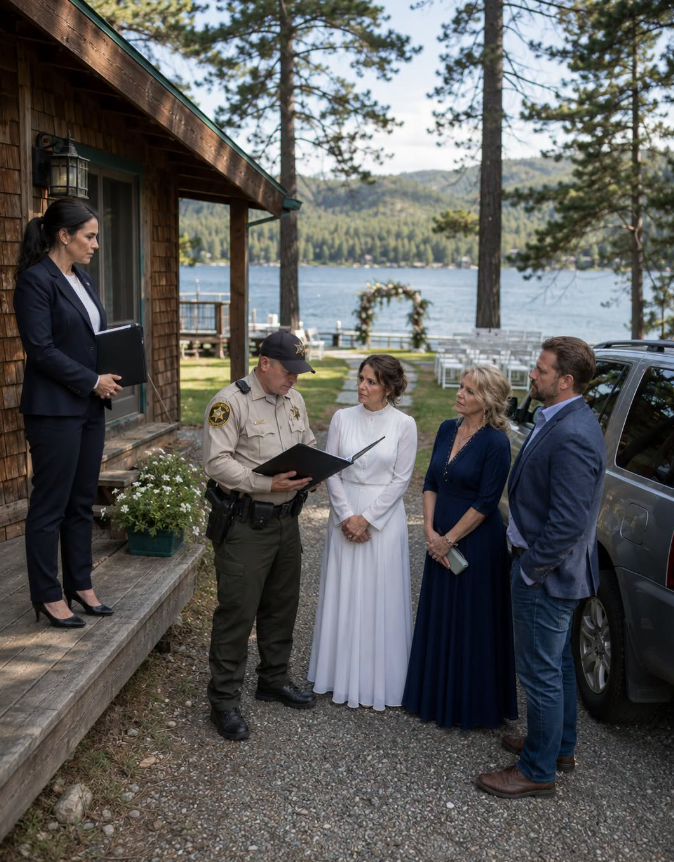
I sent the deed, property survey, closing statement, and my grandfather’s letter to my attorney, Diane. I contacted the sheriff’s non-emergency line and reported an unauthorized attempt to alter the locks. The insurance company froze coverage, making it impossible for reputable vendors to operate on the property, while Rachel’s deposit was flagged because it supported a contract containing a false ownership claim. The planned investment in flowers, catering, transportation, and lodging was suddenly at risk. When a deputy arrived, he reviewed the paperwork and told the locksmith to leave. My mother argued that the house belonged to the family, but the deputy calmly explained that he could only act on the deed. No estate argument, mortgage story, or possible court threat could change the name printed there alone: Rebecca Patterson.
The wedding eventually moved to a vineyard and cost Rachel far more than planned. My mother stopped speaking to me for seven months, but I refused to apologize for protecting property I legally owned. Two years later, Rachel called during a difficult period in her marriage and quietly asked whether she could spend a weekend at the lake house. She finally admitted that she had lied because asking permission would have forced her to acknowledge that the decision belonged to me. I opened the door, and she stayed for three days. Since then, she has always asked before visiting, and I have almost always said yes. My grandfather had not given me the house because he loved me more; he gave me the harder responsibility of keeping it available without allowing anyone to take it for granted.

