
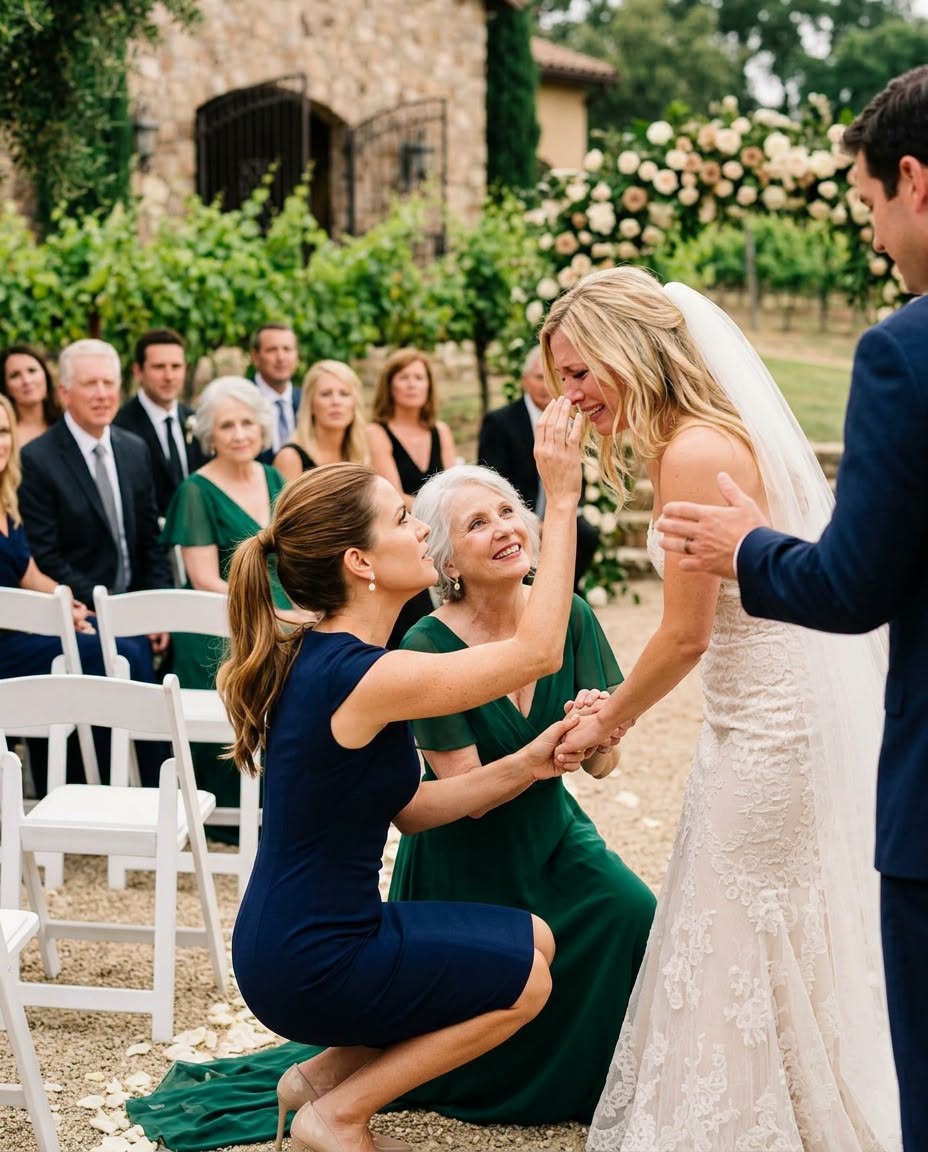
“You’re not on the list,” Savannah said, smiling as though she were announcing something harmless. We stood in the polished lobby of a San Francisco hotel while forty invited relatives and friends watched from behind floral arrangements and champagne glasses. My mother approached only to warn me not to make a scene, and no one asked whether I was hurt or why my own sister had excluded me from her wedding weekend. Savannah waited for anger, pleading, or the kind of reaction she could later describe as dramatic. Instead, I smiled, wished her a beautiful day, and walked back to my car. By the time I reached Sonoma, humiliation had cooled into something far more useful. My family had forgotten that I owned Alder Ridge Vineyard, a $4 million property with an event terrace, guest house, tasting barn, and enough room for every person Savannah had decided was inconvenient.
For years, I had been the family member who handled the work nobody photographed: estate documents after our grandfather died, medication schedules for Grandma Eleanor, and long drives to help our mother recover from surgery. Savannah remained the social center of the family, while I was described as difficult whenever I refused to smooth over someone else’s cruelty. The vineyard had begun as a failing property seven years earlier, mocked by relatives as my countryside gamble, but private tastings and wedding bookings had turned it into a valuable, debt-free business. My family never knew the numbers because they had never cared enough to ask. When I called my events manager Naomi and asked whether the entire property was available Saturday evening, she immediately understood that the answer needed to be yes. I began inviting everyone Savannah had excluded, dismissed, used, or quietly removed from her carefully designed celebration.
The guest list grew quickly: Aunt Denise, pushed aside after cancer treatment changed her appearance; Cousin Becca, denied a plus-one while strangers received one; Uncle Ray, forgotten after lending my parents money; and Aunt Carol, removed from the photographs because she refused to wear the exact color Savannah demanded. The most important call was to Grandma Eleanor, who listened silently before asking when dinner would begin. On Saturday, guests arrived beneath the late-afternoon Sonoma light to tables set with linen, candles, white roses, and estate wine. Then Grandma appeared at my door wearing a lavender coat instead of attending the wedding events in Napa. She told me she belonged wherever family was behaving like family. Within minutes, phones across the terrace began ringing as Savannah and my parents realized that the matriarch they needed for photographs, ceremony, and public blessing had made her own choice.
My mother arrived in person demanding that I return Grandma immediately and stop ruining Savannah’s weekend. I reminded her that the vineyard gathering had no forced attendance, no stolen guest list, and no interference with the wedding contract; every adult present had freely accepted a separate invitation. The estate, event business, and premises were legally mine, and Savannah had no claim over the property, staff, or private gathering simply because it occurred during her wedding weekend. When my mother insisted that Grandma was expected to lead the family into the ceremony, Eleanor answered that anyone seeking her blessing should first behave like someone worth blessing. Savannah never came to confront us, but her repeated calls made clear what had truly frightened her: exclusion had failed to isolate its targets. Instead, it had created a visible record of how many relatives had been treated as disposable.
Dinner continued beneath the lights with salmon, risotto, lemon cake, and the relieved laughter of people no longer pretending that humiliation was tradition. Aunt Denise spoke openly about surviving illness, Uncle Ray admitted that the wedding had begun to feel like a transaction, and Becca raised a glass to invitations that genuinely meant something. I did not feel victorious so much as finished with the belief that belonging had to be granted by the loudest person in the family. Savannah received the elegant celebration she had planned, but she could not control where affection, loyalty, or respect chose to gather. Grandma sat at the head of my table facing the sunset, not as a symbol borrowed for photographs but as a woman exercising her own judgment. The vineyard’s real value that evening was not its appraisal or its wine—it was the space it gave rejected people to discover that they had never been as alone as exclusion was meant to make them feel.

