
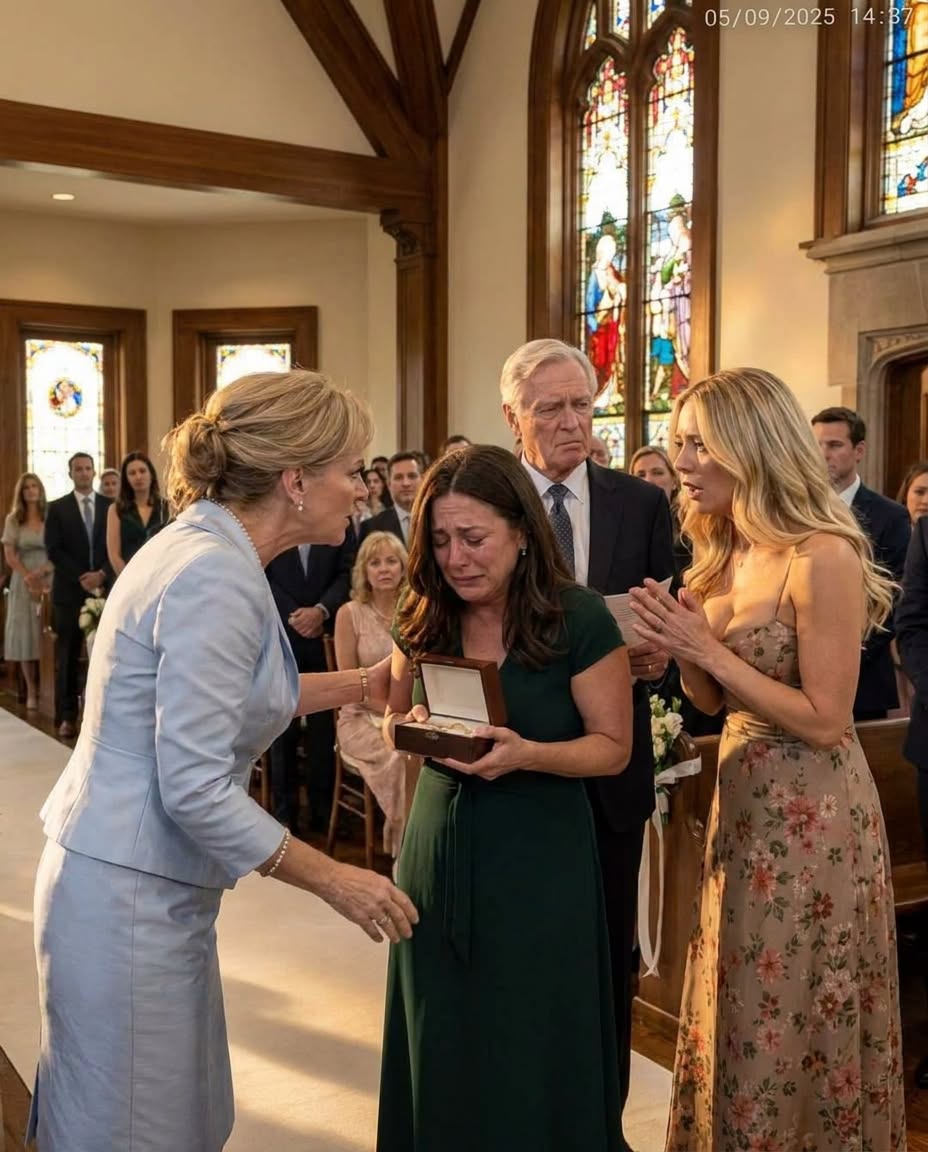
“Open the blue box before you marry,” the lawyer read aloud, and the chapel fell so quiet that the rain against the windows sounded like tapping fingers. My name was written across the cream envelope fixed to the lid, yet my mother reached for the box before I could touch it. She insisted Grandma Evelyn had been confused, while my sister Vanessa watched with irritation rather than grief. Inside were photographs, financial records, a flash drive, and messages showing that my mother had helped Vanessa interfere in every serious relationship I had ever had. The final exchange concerned my fiancé Daniel: Vanessa planned to isolate him at the family lake house, while Mom urged her to move quickly before I married. Daniel stepped away from them, and my father lowered himself into a pew as though the truth had finally become too heavy to stand beside. Then Grandma’s lawyer placed a second file on the table and explained that the blue box was only the beginning.
For years, Vanessa had pursued the men I dated while my mother dismissed each betrayal as coincidence and described me as overly sensitive. Aaron left me and appeared weeks later beside my sister; Ryan met her secretly at a hotel; Nathan ended our relationship after receiving fabricated warnings that I was unfaithful. Grandma had hired an investigator, collected receipts, phone records, bank statements, and hotel documentation, and identified Daniel as Vanessa’s active target. She also left me the lake house and a trust available upon my marriage or thirty-second birthday, with a clause releasing a sealed evidence archive if my parents or sister contested the will. In the lawyer’s office, my father finally admitted that my mother had pressured Grandma into granting improper access to property and accounts during a medical scare. Over six years, funds intended for Grandma’s care and investments had quietly financed Vanessa’s condo, failed business, travel, and carefully curated lifestyle.
The most painful revelation was not that Vanessa had wanted what belonged to me, but that my mother had taught her to treat my happiness as something unfairly withheld. Vanessa defended herself by claiming every man had chosen her willingly, until Daniel asked whether he had ever approached her, been bored with me, or encouraged her attention. She could not answer. He then admitted that she had visited his office twice and that my mother persuaded him to conceal it, though he had reported the incidents to Grandma months earlier. When the lawyer offered me a choice between accepting the inheritance quietly or demanding a full accounting, my family expected the old version of me to remain silent. Instead, I read Grandma’s final letter, which warned me not to confuse exposure with cruelty and reminded me that confusion does not keep receipts. My hands stopped shaking, and I requested the accounting.
The estate review documented nearly $214,000 in unauthorized transfers, disguised reimbursements, and payments routed through my father’s business and Vanessa’s lifestyle company. I chose civil recovery rather than criminal prosecution, pursuing restitution through the estate, property liens, negotiated settlement, and formal accounting procedures. My parents sold their oversized house, my father repaid part of what he had helped conceal, my mother settled rather than submit to a deposition, and Vanessa’s condo was listed for sale. The lake house and trust passed to me under Grandma’s uncontested estate plan, while Daniel and I postponed our wedding and entered counseling instead of pretending secrecy had not damaged our trust. My father later apologized without asking me to comfort or absolve him, and I accepted that remorse could be genuine without erasing responsibility. The legal process recovered much of the money, but its greater value was placing the family’s private version of events beneath records they could no longer rewrite.
On my thirty-second birthday, Daniel gave me a letter saying he wanted a life with me but would not ask for an answer until I was ready. A month later, I proposed to him in the lake house kitchen while rain tapped the window and coffee cooled between us. We married there in September before forty guests, without my mother or Vanessa, and with Grandma’s blue box resting upstairs beside the water. I kept her letter, Daniel’s note, and one message I wrote to myself: freedom does not need receipts forever. For years, I imagined closure as an apology, a confession, or proof that I had finally defeated my sister. Instead, it felt like standing beside someone who knew the full truth and never asked me to make it smaller. My family had not stolen my future; they had only delayed the moment when I finally chose it for myself.