
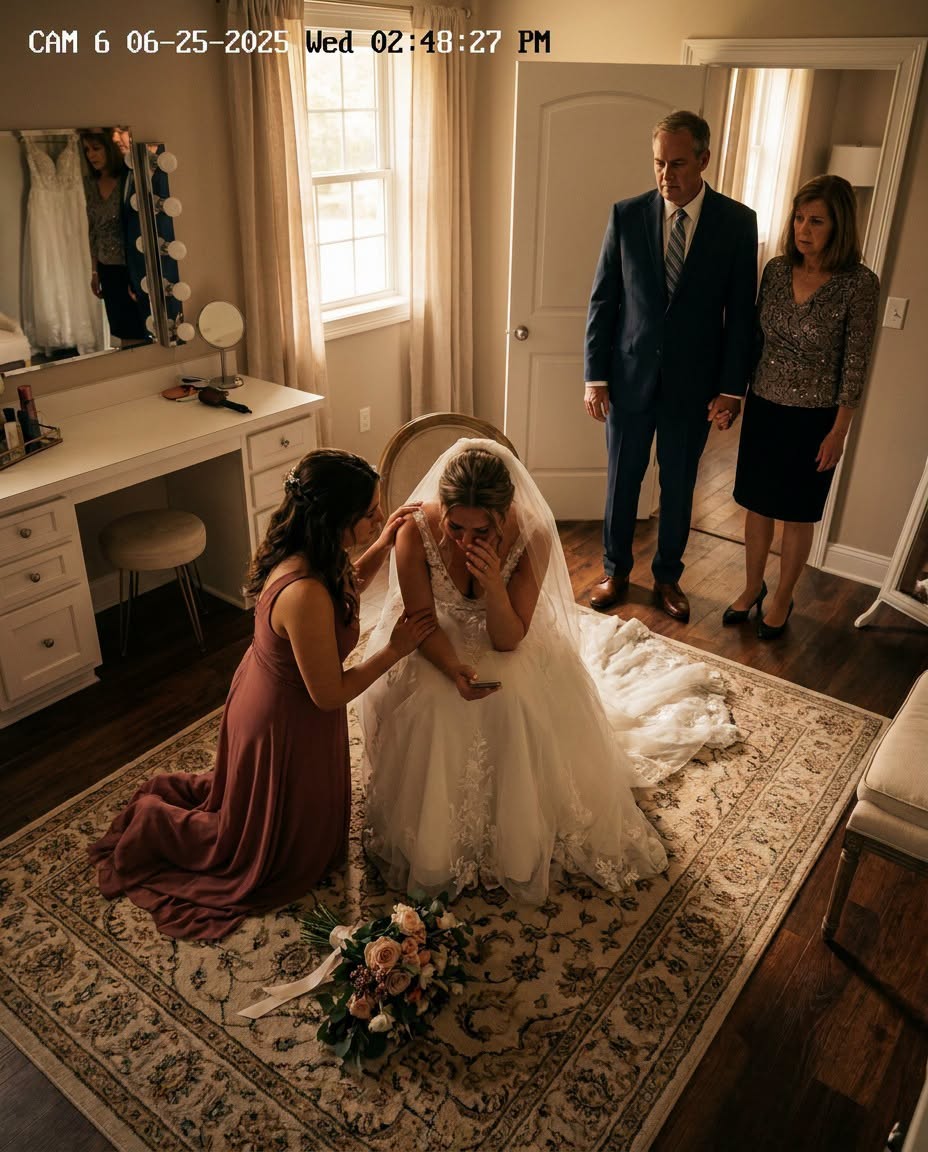
At 1:43 in the afternoon, my bouquet slipped from my hands and landed softly on the bridal-suite carpet. My sister Chloe had texted four words: “Calm down. No one’s coming.” Seventeen minutes before the ceremony, an email from my mother confirmed that my parents, brother, and sister had chosen Chloe’s engagement dinner over my wedding. My mother wore the blue dress she had bought for my ceremony, while my father raised champagne beside the wealthy family Chloe hoped to marry into. Three entire rows reserved for my relatives remained empty as my best friend Elise walked me down the aisle. Daniel asked only whether I still wanted to marry him, then placed the bouquet back in my hands when I said yes. I spoke my vows while the people who came refused to let the people who stayed away become the only story in the room.
For seven years, I had quietly financed much of my family’s life. I paid my father’s truck insurance, carried my parents on my phone plan, covered my brother Aaron’s rent, maintained the emergency credit card, funded grocery deliveries, and deposited money every month into a future wedding account for Chloe. The direct transfers alone totaled $34,200, not including gifts and repeated last-minute rescues. My family had grown so accustomed to my support that they no longer recognized it as generosity; it had become an invisible utility they expected to remain switched on. The morning after the wedding, I opened my laptop in the hotel room and canceled every payment, closed shared services, froze the card, changed the passwords, and stopped Chloe’s wedding deposits. Then I sent one brief email stating that all financial support and account access had ended, copying my aunt Rebecca and uncle Thomas so the decision could not later be rewritten.
At first, everyone treated the cutoff as a temporary tantrum. Then my father’s insurance lapsed, Aaron received a rent notice, my mother’s grocery card was declined, and Chloe’s venue payment failed. A month later, Aunt Rebecca revealed that my mother had told the extended family my wedding had been postponed because of a venue problem. The empty chairs had not all belonged to relatives who rejected me; some people had been deliberately deceived and denied the chance to attend. I sent Rebecca the messages, timestamps, engagement photographs, and my mother’s email telling me I would be fine alone. Within minutes, the family story began collapsing. My parents arrived at my home expecting to restore control, but found Rebecca and Thomas already present by video call and a seven-year financial ledger open on my kitchen table.
The ledger documented every transfer, insurance payment, rent contribution, subscription, and wedding deposit by date, amount, and beneficiary. My mother admitted misleading relatives to “prevent drama,” while my father claimed he had never understood how much I had paid. Chloe appeared genuinely stunned to learn that I had been saving for her wedding long before Preston entered her life. I explained that the accounts were closed, the authorizations revoked, and no financial arrangement would be reinstated that day. There was no debt instrument requiring repayment and no legal duty for me to continue supporting competent adults, but every automatic payment had been formally terminated and documented. I told them I had cut off the money, not necessarily the relationships; what remained between us would depend entirely on how they behaved without access to my income. When my mother accused me of tearing the family apart, I pointed to the records and said I was merely showing them where the tear had already been.
My father later sent an apology acknowledging that he had missed my wedding and allowed me to carry responsibilities that belonged to everyone else. I read it without mistaking remorse for immediate restoration of trust. My parents opened their own phone accounts, Aaron moved to a cheaper apartment, and Chloe postponed her venue plans. Daniel and I traveled to Portugal the following spring with two carry-on bags and no unpaid family crisis waiting in my inbox. At dinner beneath the lights of a Lisbon street, he raised his glass to the people who showed up. I had once believed every empty chair represented rejection. Now I understood that some empty chairs reveal who was misled, some reveal who valued convenience over love, and some create the space where a healthier life can finally begin.

