
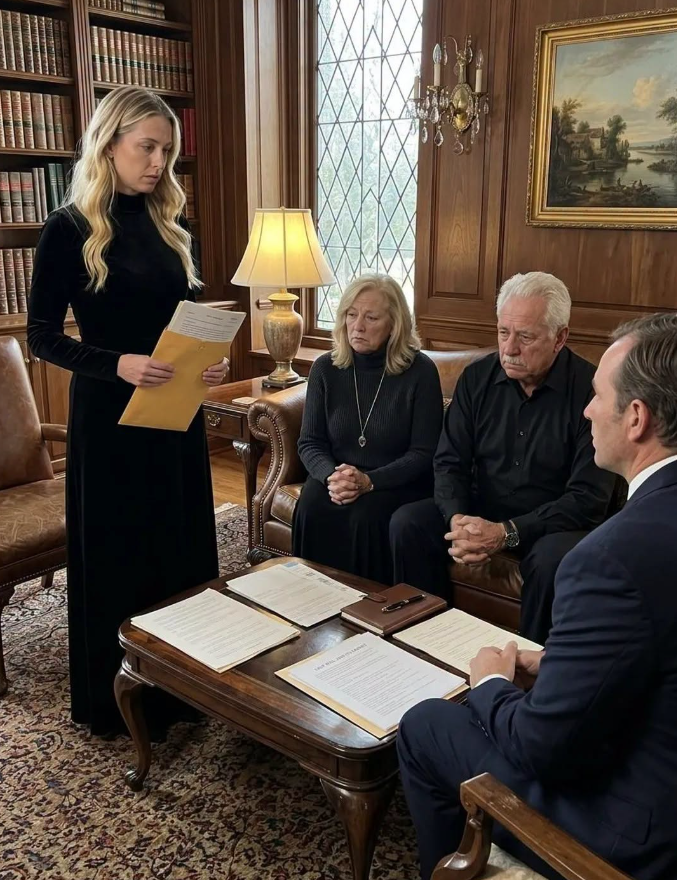
The funeral mud was still wet on my shoes when Ryan told me I had forty-eight hours to leave the house. He did not offer me a chair or ask whether I was all right. His sister Lisa sat beside him, almost smiling, while a man in a gray suit read from a folder on our coffee table. The house and savings, he said, belonged to Ryan. After ten years of caring for my mother-in-law Margaret through appointments, medications, and sleepless nights, I would receive just $5,000 “for my service.” Then Ryan looked at me and said, “You were never really family.”
I packed one bag and drove to a roadside motel without arguing. For three days, I stared at the walls while the word eviction repeated in my head. Margaret had once pressed a sealed envelope into my hand and made me promise not to open it until she was gone. I had carried it through the funeral, the humiliation, and the cold drive away from the only home I knew. On the third night, I finally broke the seal—and found a small bank key, a phone number, and one sentence that changed everything: “The will they show you is not the real one.”
The next afternoon, attorney Samuel Harris opened Margaret’s safe-deposit box and placed the genuine estate documents in front of me. The real will left the house to me, along with a substantial investment account and enough money to protect the property, insurance, taxes, and remaining mortgage expenses. Margaret had also recorded a video explaining that Ryan and Lisa had rarely helped, while I had provided nearly all her care. Harris had medical records, signed statements, and copies filed months earlier, making their paperwork impossible to defend in court. Their attempt to control the estate collapsed quickly. The false document was challenged, the house transfer was stopped, and both of them were forced to answer for what they had done.
Months later, I signed the final papers and walked back into the house alone. Ryan and Lisa eventually apologized through their attorneys, but I told them I was not ready to forgive them. I did not sell the property. Instead, I used part of Margaret’s money to create a weekly support group for unpaid family caregivers who had put careers, savings, and years of their lives on hold. We met in the same living room where I had once been treated like a stranger. I named the group Margaret’s House and planted roses in the backyard because she had loved them. The envelope did more than return my home; it proved that someone had seen every quiet sacrifice I thought the rest of the family had forgotten.

