
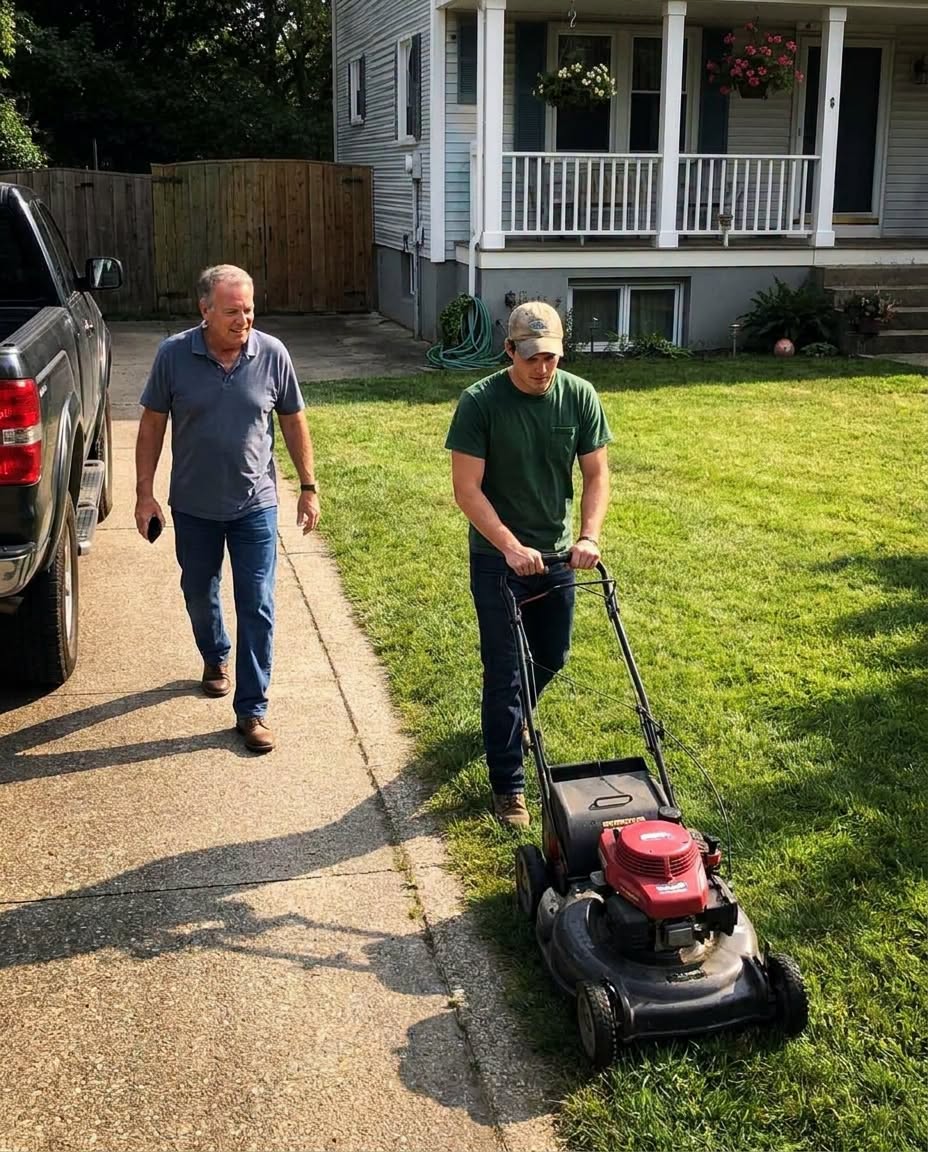
“I keep hearing somebody crying inside your daughter’s house,” the young man said over the phone, his voice dropping almost to a whisper. I shut the garage door behind me, grabbed my keys, and listened as the lawn mower went silent on his end. Through the open line came a faint, exhausted cry—small enough to miss, but unmistakably a child’s. Clara was supposed to be on a flight, and I had visited the house only hours earlier, when every shutter was closed and every room appeared empty. By the time I reached her backyard, a grocery receipt lay beside a fallen bag listing fever medicine, diapers, electrolyte drinks, and soup purchased less than two hours before. The back door had not latched properly, and another weak cry drifted from somewhere below the floorboards. When I descended the basement stairs, I found my daughter holding her feverish two-year-old son in a carefully prepared refuge she had never intended me to see.
My name is George Whitmore, and at seventy-two I had watched Clara change during a bitter divorce and prolonged custody dispute with her former husband, Evan. She had become meticulous about locks, curtains, receipts, and routes home, though she never directly admitted she was afraid. That morning she had genuinely gone to the airport, checked in, and called me from the terminal, but when boarding began she could not leave Liam behind. Instead, she returned home and made the upper floors appear vacant while hiding with him in the basement until an emergency custody hearing scheduled for Monday. The space contained medicine, food, water, legal files, clean clothing, and the duck-patterned blanket my late wife had sewn before Clara was born. It was not neglect or confinement. It was a mother’s temporary shelter built inside the only residence the court expected her to occupy.
The documents on Clara’s folding table explained the fear she had carried alone. Photographs showed bruising on Liam’s arm, police reports documented delayed returns after visitation, and neighbors had repeatedly seen Evan’s dark pickup circling the house. During the most recent exchange, he had smiled and told Clara that one day he would not bring their son back. She reported the threat, but without a witness it remained her word against his. Her attorney warned that leaving the legal residence with Liam could be portrayed as interference with the temporary custody order, so Clara created the appearance that she had traveled while remaining exactly where the court required. She hid the basement lights, stocked supplies, and prepared to endure the weekend in silence because she feared that telling me would provoke a confrontation damaging to her case. The real danger was not only Evan’s threat, but the loneliness that had convinced her she must manage it without anyone else.
I contacted a retired sheriff’s deputy who arranged discreet observation of the property rather than confrontation. Clara and Liam stayed at my home while two trained witnesses monitored the street and documented any suspicious activity. At Monday’s emergency hearing, the court reviewed police reports, medical photographs, sworn statements, neighbor testimony, and security footage showing Evan’s vehicle repeatedly lingering near the residence. The judge issued a temporary protective custody order suspending unsupervised visitation pending a full evidentiary hearing and required future contact concerning Liam to occur under court supervision. The order did not end the litigation, but it created enforceable safeguards and preserved the chain of documentation Clara had spent months assembling. For the first time, her caution was not dismissed as anxiety; it was recognized as a reasonable response to a documented pattern of intimidation.
Months later, sunlight entered the basement through an uncovered window, and the mattress, medicine bins, and legal folders were gone. Clara returned her mother’s duck-patterned blanket to the cedar chest upstairs, where it belonged as a family memory rather than camouflage. Jesse continued mowing the lawn, unaware that one ordinary phone call had changed the course of a custody case. He had simply heard something wrong and trusted himself enough to speak. I once believed the mystery that day was who had been hiding beneath the house. The harder truth was that my daughter had been visible all along—careful, exhausted, and frightened—while believing that love from the people around her might become more dangerous than silence. After that weekend, she never had to carry her fear alone again.

