
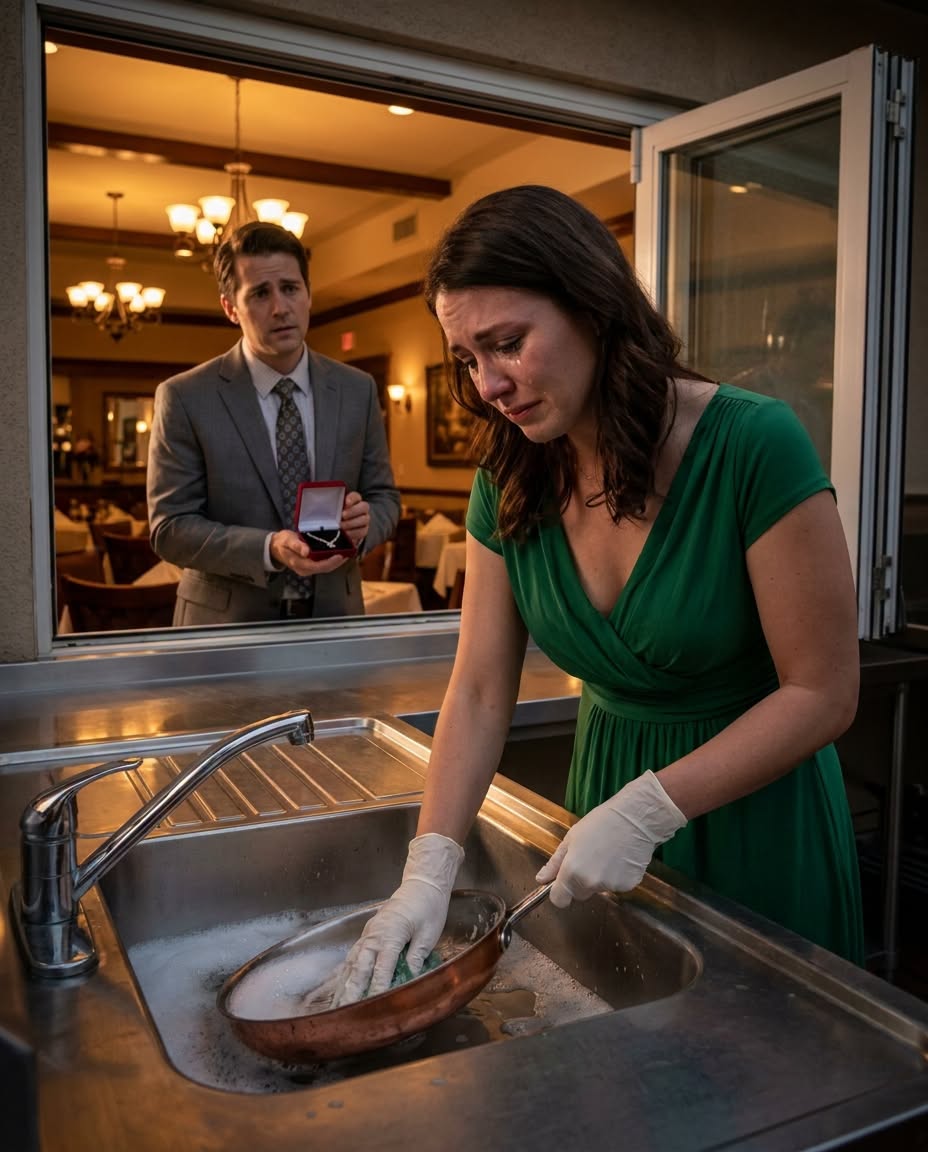
I found Emily standing over a sink full of heavy pots while a party continued in the dining room of our own home. Her clothes were soaked, her hands were raw, and when my sister Ashley turned toward me, the confidence vanished from her face. I had returned early from months overseas, carrying a diamond necklace and expecting to surprise my wife with a quiet evening. Instead, my family had taken over the house, confiscated Emily’s phone, restricted her movements, and convinced everyone around her that she was unstable. When I asked whether she had volunteered to serve them, she looked at the floor and whispered, “No.” I recorded the conversation, ended the party, and walked her back into the dining room wearing my jacket and the necklace she had chosen to accept. For the first time, I saw that the life I claimed to be building for her had become the place where she was most alone.
My name is Daniel, and Emily had stood beside me long before my restaurants, properties, and company made our family wealthy. She worked extra shifts during the first difficult years and once sold a family bracelet so I could pay employees. While I traveled and expanded the business, my mother Margaret assumed control of household accounts, Ashley managed the staff, and my brother Michael benefited from expenses presented as property management and consulting fees. Emily discovered suspicious withdrawals after receiving a bank statement by mistake. When she began asking questions, her phone disappeared, the housekeeper who supported her was dismissed, and the family portrayed her as emotionally unwell. Rosa, our former housekeeper, connected Emily with a financial investigator who identified shell companies tied to Ashley and Michael. The photographs my family presented as evidence of an affair actually showed Emily meeting the investigator who had been tracing their money.
The records revealed that my relatives had diverted substantial sums from household and business accounts while treating my wife as an obstacle to what they believed they deserved. Margaret defended the transfers by claiming I owed the family for their sacrifices and that Emily had made me weak. After security removed them and changed the access codes, Emily showed me a hidden letter written by my late father, whom I had been told died leaving only debt. The letter disclosed a trust created in my name, temporary authority granted to Margaret only until I turned twenty-five, and instructions to contact his former attorney, Leonard Shaw. I was thirty-five, and the assets had never been transferred. Leonard later produced trust agreements, bank records, deeds, forged amendments, and a statement falsely signed in my name rejecting further contact. What began as household mistreatment had become evidence of a financial deception extending back sixteen years.
The legal team initiated a forensic audit, asset-tracing review, and examination of potential breach of fiduciary duty, forgery, misappropriation, and unauthorized trust administration. One deed showed that the building housing my first restaurant had belonged to a holding company created by my father, who quietly arranged favorable rent so I could begin my career without knowing he was helping me. A recording in his own voice confirmed the trust and warned that someone close had betrayed him. Near the end, he urged me to love the person who saw me before the world applauded and never force her to survive on the leftovers of my ambition. Yet Margaret’s final note introduced another layer, asking why Rosa had known where to find the hidden letter and why a second trust had been altered before my father’s death. Then an anonymous photograph arrived showing Margaret, Leonard, my uncle Victor, and Rosa standing together years earlier beside a blue ledger.
Emily and I returned home knowing that the immediate abuse had ended but the deeper truth had only begun to surface. For years, I believed protection meant earning enough money to make us untouchable. I had not understood that wealth without presence could leave the person I loved vulnerable inside the very house built in her name. Emily had preserved evidence in her apron, endured isolation, and still found the courage to speak when I finally asked the right question. My father’s records might explain the trust, Rosa’s connection, and the betrayal that shaped my first success, but they could not repair my marriage for me. That work required something less dramatic and more difficult: staying, listening, and refusing to leave Emily alone with the consequences of my absence. This time, when we walked toward the truth, we walked through the door together.