
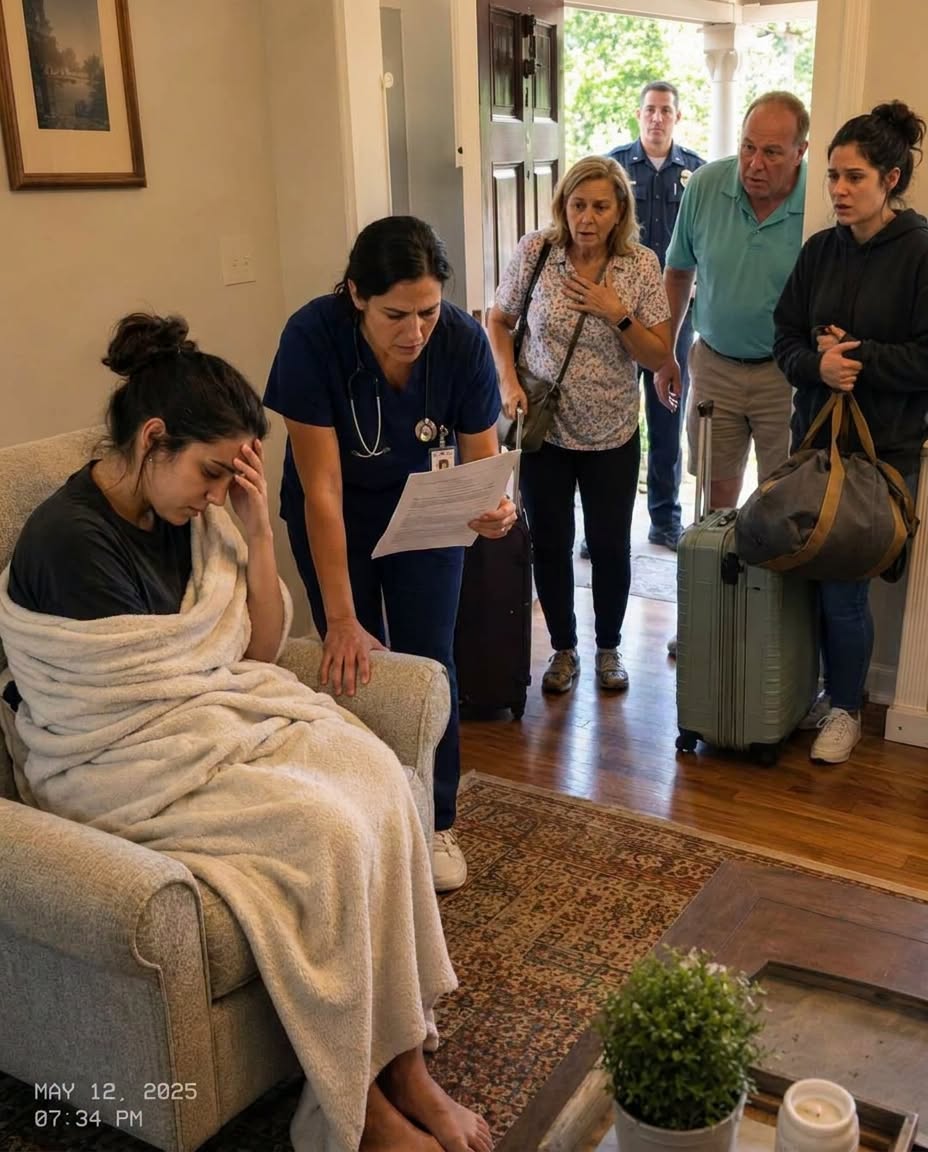
I was still wearing the hospital wristband when my mother told me to get dressed. The room smelled of antiseptic and overheated plastic, and every breath scraped low in my chest while the nurse warned that my oxygen levels remained unstable. The doctor had recommended another night of monitoring, but my parents were preoccupied with a Florida vacation they had already charged to my debit card. My mother signed the against-medical-advice form, my father stood silently beside her, and the nurse slipped a folded note into my hand before the elevator doors closed. It contained a telephone number and two words: patient rights. By the following afternoon, I was lying on my parents’ kitchen floor with four doses left in my inhaler, no filled prescriptions, an empty phone battery, and “VACATION” written cheerfully across the family calendar. That small yellow note was the only door anyone had left open for me.
My name is Renee, and at twenty-eight I had spent most of my life confusing my mother’s control with care. She knew my bank PIN, kept keys to my apartment, inserted herself into medical and employment records, and treated access to my life as proof of maternal concern. My father rarely issued the commands himself, but he watched them happen and allowed silence to make him appear innocent. Two days before their trip, a severe respiratory infection had caused me to collapse at work and led to emergency hospitalization. Even after the physician said I was unsafe to leave, my mother arranged airline upgrades, a resort deposit, a prepaid dinner, and a rental-car hold using the remaining money in my account. She then removed me from the hospital, drove me to her house instead of my apartment, left crackers, cold medicine, two cans of soup, and a glass of water on the kitchen table, and departed before sunrise with my father and brother.
When I called the patient-rights number, the advocate heard my breathing and immediately began documenting the situation before my phone died. I sent screenshots of the unauthorized charges, photographs of the discharge packet, the nearly empty refrigerator, the inadequate supplies, and the calendar showing the vacation dates. An advocate and police officer entered during a welfare check using a spare key known to the neighbor and found me unable to stand. Back at the hospital, staff discovered that four prescriptions had never been filled because I no longer had access to my own money. More importantly, the nurse who had given me the sticky note had written a timestamped incident report four minutes after my discharge. It recorded my medical instability, my mother’s stated concern about travel costs and plans, my visible difficulty walking, and my father’s failure to intervene. For the first time, the account of what happened existed somewhere beyond my family’s ability to rename it.
The bank opened a fraud investigation and traced the vacation transactions to the internet connection at my parents’ home. The advocate compiled the AMA form, medical records, medication history, welfare-check report, bank evidence, photographs, and nurse’s contemporaneous note into a formal case file. When my family returned, they found an officer and advocate waiting while I collected my belongings with a witness present. My mother called the withdrawals temporary and dismissed the hospital’s warnings as liability concerns, until the advocate identified the conduct as documented medical neglect and financial exploitation. The bank later reversed most charges, access to my accounts was secured, and additional contact was preserved through case numbers, written notices, and official reports. No dramatic arrest followed; the consequences arrived as frozen access, investigations, signed statements, and records that prevented anyone from reducing the incident to a private family disagreement.
Recovery took five months of medication, pulmonary appointments, missed work, and slow climbs up the stairs to my own apartment. I changed my emergency contact, locks, PIN, pharmacy records, and every account where my mother’s name had appeared. On my first night home, I sat beside a charging phone with soup, bread, fresh apples, and a new inhaler resting nearby. Those ordinary things felt sacred after I had been expected to survive without them. I still keep the yellow sticky note in my nightstand, though the ink has begun to fade. It reminds me that one nurse saw what was happening, could not stop my parents from leaving, and chose not to look away. They came home expecting obedience and silence; instead, they found someone at the door whose only responsibility was to protect me.