
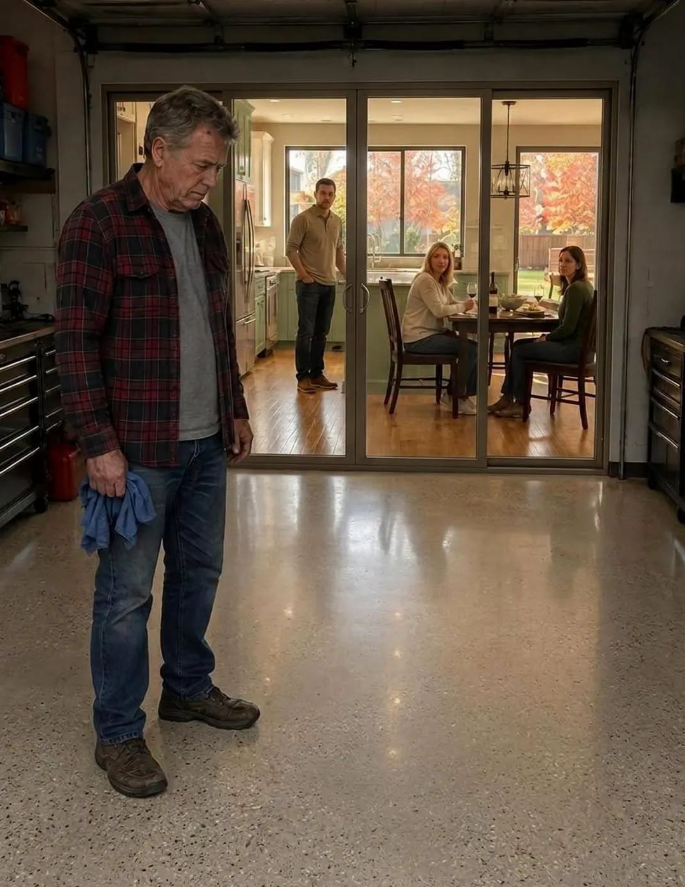
The investigator introduced himself as Special Agent Richard Hayes, and his calm voice immediately changed the mood inside the room. He thanked me for taking the call and confirmed my full name before explaining that the motorcycle had drawn attention because its serial number matched a federal archive that had not been reviewed in decades. “Mr. Bennett, this isn’t a criminal investigation directed at you,” he said. “Our priority is preserving the motorcycle and verifying its chain of ownership.” Across the table, Elaine looked as though she could barely breathe. Carol quietly set down her champagne glass, while Dennis stared at the frozen bank notification on Elaine’s phone. Agent Hayes asked whether I still possessed the original envelope my father had given me all those years ago, and when I answered yes, he became noticeably more serious. “Please don’t let anyone else handle those papers,” he said. “There may be something inside that changes everything.” His final words lingered in the silence long after the call ended.
Elaine followed me into my workshop as I unlocked the old oak cabinet where I had stored my father’s belongings for decades. The wooden toolbox sat exactly where he had left it, its brass latch polished by years of careful hands. Beneath faded maintenance logs and handwritten repair notes rested the envelope wrapped in brown paper and tied with an aging blue ribbon. My father’s handwriting covered the front: Open only if ownership is ever challenged. My hands hesitated before loosening the ribbon. Elaine whispered my name, but I didn’t answer. Carol appeared quietly in the doorway, no longer wearing the confident smile she had arrived with that afternoon. Inside the envelope lay several official certificates, engineering drawings, and one sealed letter addressed to me personally. Before I could unfold it, my phone vibrated again with another unexpected call.
The number belonged to Attorney Melissa Grant, a name I hadn’t heard in nearly twenty years. She explained that she represented the estate of retired engineer Harold Whitcomb, my father’s closest colleague during the government testing program. “Mr. Bennett, we’ve been trying to locate you for several years,” she said. “Your father’s motorcycle is connected to more than a historical collection.” She carefully explained that several original project engineers had established a private preservation trust, funded through investment income generated over decades. According to the trust agreement, ownership of the prototype motorcycle determined who would become the final trustee after the last surviving engineer passed away. Harold had died only three weeks earlier. Melissa paused before adding, “Legally, that responsibility now belongs to you.” Elaine slowly sank into a chair as the weight of those words settled over the room.
I unfolded my father’s sealed letter with trembling fingers. His handwriting was steady, almost as if he had expected this exact moment. He wrote that the motorcycle had never been about money or prestige—it represented a promise made by a small group of engineers who believed their work should remain protected for future generations. At the bottom of the page, however, one final paragraph stopped me cold. My father warned that if anyone ever attempted to sell the motorcycle without my consent, it would reveal something far more valuable than the bike itself. He had hidden another item decades earlier, and only the rightful owner would know where to find it. Before I could read the final sentence describing its location, someone knocked loudly on my front door and announced, “Federal investigators… we need to speak with you immediately.”

