
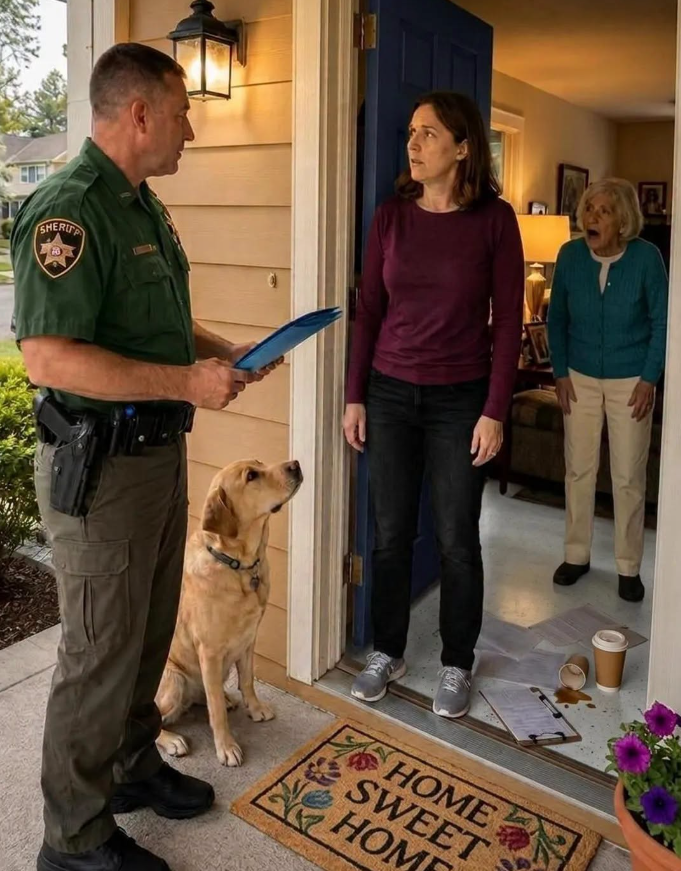
The evening my daughter got her dog back, she barely spoke a word. She simply stood in the doorway as a deputy walked inside with Scout beside him, his leash wrapped carefully around one hand. The moment Scout spotted Lily, his tail began to wag, and she dropped to her knees and held him tightly, crying into his fur as though she was afraid he might disappear again. Just two days earlier, my mother had told me Scout was gone and that there was nothing I could do about it. Scout had been part of our family for nearly three years, and Lily had saved every birthday photo, vet record, and adoption document connected to him. I had never imagined that something so personal could turn into a dispute inside my own home, especially after I had spent months trying to help my mother and sister when they needed somewhere to stay. At the time, I believed opening my home would bring us closer, but I soon learned that generosity can become complicated when people stop respecting boundaries.
About a year earlier, my mother, Diane, and my younger sister, Karen, moved into my house after both faced financial difficulties. My home had four bedrooms, and I thought giving them a place to stay would be temporary and manageable. I covered most household expenses, including utilities, groceries, and repairs, while they worked on getting back on their feet. For a while, everything seemed fine. We shared dinners, watched television together, and even spent weekends outside with Lily and Scout. But gradually, small disagreements became more frequent. Diane began making decisions about household routines without asking me, while Karen treated Scout as though he were simply another dog she could control. I tried not to make every disagreement into an argument, but the situation changed completely when I came home one afternoon and discovered Scout was missing. Diane calmly told me she had found someone willing to pay $400 for him because, in her view, Lily was “too attached” and the dog was becoming a problem. I immediately asked where Scout had been taken, but she refused to tell me. Then I found something that changed everything: a message on her phone showing that the sale had already been arranged—and the person who bought Scout had no idea the dog was not hers to sell.
I started gathering every record I had, including Scout’s adoption paperwork, veterinary bills, licensing information, photographs, and messages showing that I had paid for his care. Lily’s name appeared on several records as well, making it clear that Scout was not some unwanted possession that could simply be handed over. I contacted the buyer, explained the situation calmly, and asked for Scout to be returned. To my surprise, the buyer had no intention of keeping him once the truth became clear. A deputy eventually helped coordinate the return, and Scout came home without anyone needing to turn the situation into something bigger than it had to be. Still, the incident forced me to consider issues I had previously avoided. If the disagreement had become a formal dispute, an attorney might have been necessary to determine ownership, while records similar to those used for insurance claims, estate planning, or other property matters could have become important evidence. I also realized that the same lesson applied to my household finances: just as I would carefully protect a mortgage document, investment account, or estate paperwork, I needed to protect the things my family depended on. By the time Scout returned, however, I had already made a decision about what would happen next.
My mother and sister eventually moved out, and I changed the way I handled family boundaries. There was no dramatic courtroom battle, no expensive legal fight, and no need to punish anyone. Instead, I focused on making sure everyone understood that living in my home did not give them permission to make major decisions on my behalf or my daughter’s behalf. Lily slowly returned to her normal routine, taking Scout on walks, filling his bowl each morning, and sleeping more peacefully knowing he was home. I also organized important documents, kept clearer records, and stopped assuming that silence was the easiest way to keep family relationships peaceful. The experience changed how I viewed kindness. Helping someone through a difficult season can be meaningful, but help should never require surrendering reasonable boundaries. For Lily, the most important part was simple: Scout was home again. For me, the lesson was bigger—the people we love may deserve our support, but trust still depends on respect.

