
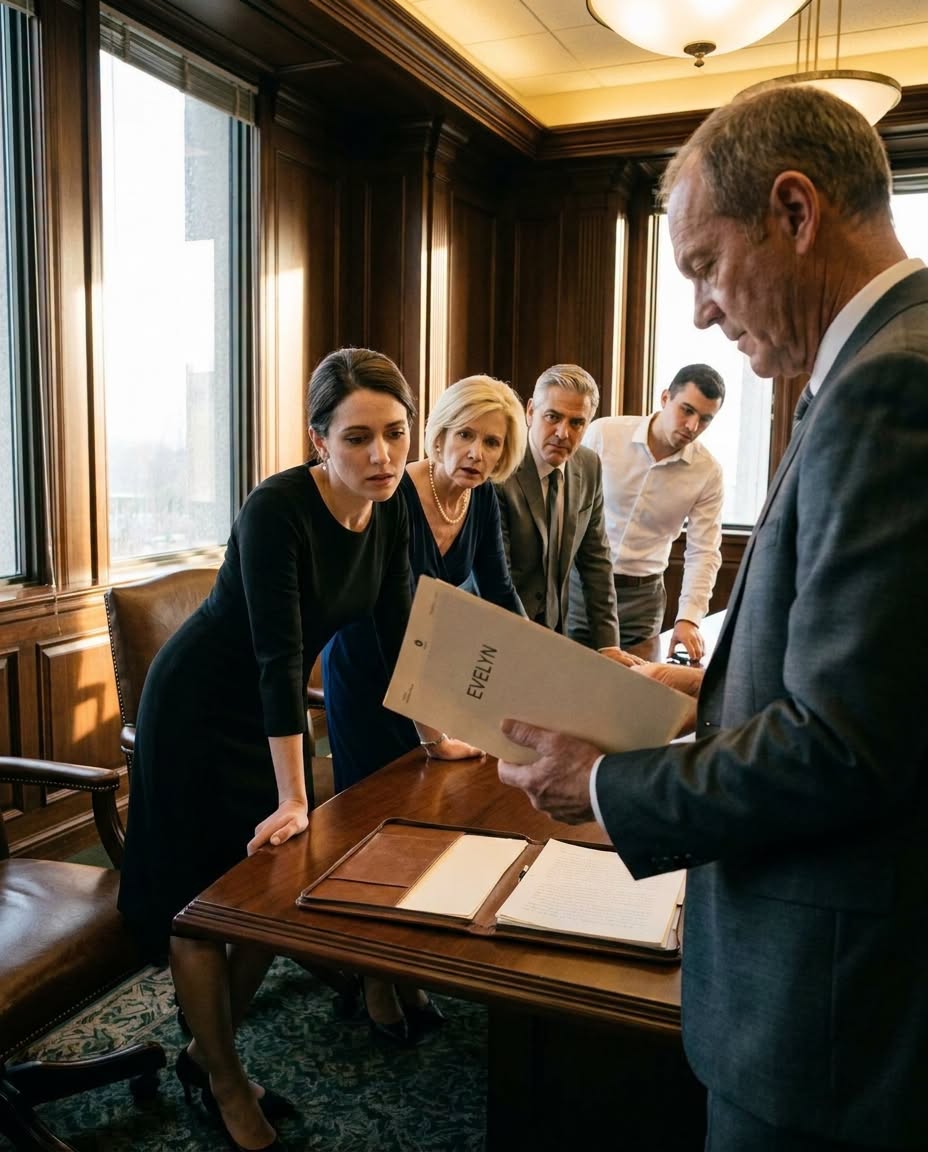
Ryan’s chair slammed against the wall the moment Mr. Bellamy said the house had not belonged to my parents for eighteen years. Until then, my brother had spent most of Grandma’s will reading looking bored, while my father treated every legal explanation as something he could overpower by speaking louder. Then the attorney placed a property-transfer document on the table, and I recognized the address immediately: the house where I had grown up, the house my parents still called theirs. Eighteen years earlier, after foreclosure proceedings began, Grandma Margaret had paid off the mortgage and taken legal title under a documented arrangement. My parents made repayments for less than two years and then stopped, but Grandma never transferred the property back. Six weeks before her death, she placed the house into a trust. The named beneficiary was me.
My name is Evelyn Hart, and throughout most of my life, being useful was the closest thing I had to being valued. I cooked when my mother Linda was tired, cleaned when Ryan made a mess, changed my own plans when my father Frank had a difficult week and learned early that peace usually depended on me apologizing first. Ryan, meanwhile, was praised for accomplishments large and small and treated as the child whose needs naturally came first. Grandma noticed more than I realized. During the estate meeting, her attorney explained that she had prepared the trust months earlier, supported by a geriatric competency evaluation, witness affidavits, deed records and a video statement designed specifically to answer accusations that I had manipulated her. I had not even known Grandma still owned the house. My parents had assumed the old arrangement had somehow disappeared with time, but the county records had never shared that assumption.
Grandma’s letter changed the atmosphere in the room more than the property documents did. She wrote that she was not leaving me the house as payment for taking care of her, because kindness should not become another transaction. She was leaving it to me because I needed one place in the family where nobody could tell me to stand outside. My father immediately threatened to contest the estate, but Mr. Bellamy calmly pointed to the trust structure, deed history, independent competency report, contemporaneous correspondence and recorded statement supporting Grandma’s decisions. Then the video played. Grandma, thin but completely lucid, looked into the camera and anticipated nearly every argument my family had already made. She said I had never asked her for money, had not known she still owned the house and owed no one my inheritance simply because they expected it. Finally, she admitted that she had mistaken my endurance for strength and regretted not stepping in sooner. Her last instruction to me was simple: use the front door.
The transfer had already occurred through the trust, so after obtaining independent legal advice I became the lawful owner while my parents remained temporary occupants. I did not remove them immediately. Instead, through counsel, I gave them ninety days to arrange new housing and followed the formal tenancy process rather than turning a family dispute into an impulsive eviction. Ryan called repeatedly insisting that I sign the property back. My mother appealed to loyalty and sacrifice, while my father warned that I would regret humiliating the family. I kept the house. Three months later my parents moved into a condo across town, and I began sorting through the rooms where I had spent years making life easier for everyone except myself. I kept Grandma’s green chair, cleared out Ryan’s old bedroom and renovated the kitchen according to what I wanted rather than what anyone else preferred.
The first night the new kitchen was finished, I made pasta for one and deliberately left the plate in the sink for an hour. Nothing happened. No one called me lazy, asked whether I had finished their laundry or reminded me that Ryan had more important things to do. Later I sat in Grandma’s chair with tea and one of her detective novels, her letter tucked inside the cover. For years I had believed that home was the place where people needed me most and that love was proven by anticipating everyone else’s needs before they were spoken. Grandma’s inheritance gave me a different definition. A home was not the place where I was most useful. It was the place where I was finally allowed to sit down.

