
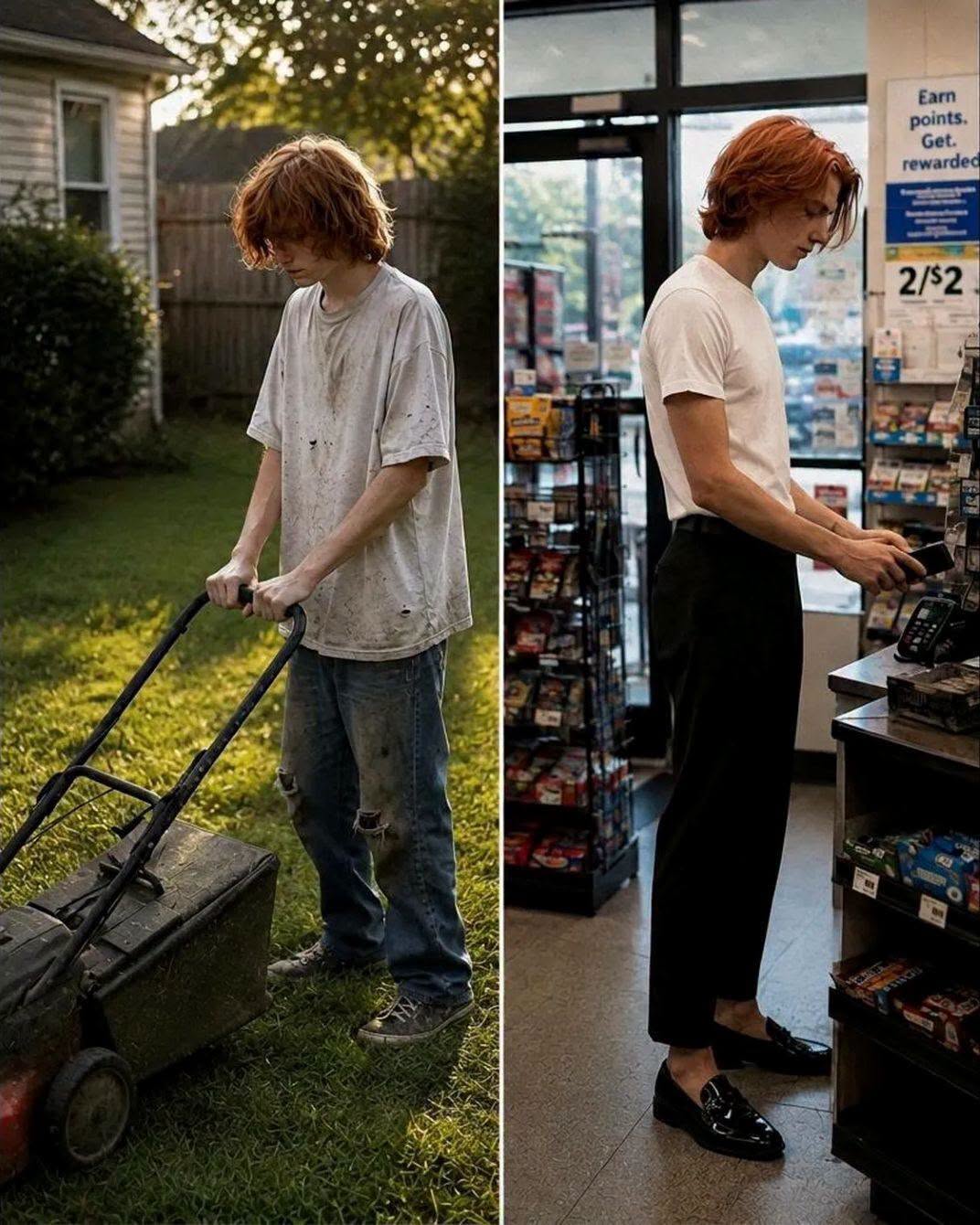
The afternoon I caught fifteen-year-old Chase stepping out of my locked garage, everything about our summer arrangement suddenly felt different. I had hired him weeks earlier after he appeared at my new house pushing a battered red mower and asking only $25 to cut a lawn that looked completely abandoned. I paid him $50 because he worked harder than any landscaping crew I had ever hired. Every Saturday at exactly eight, he returned, cut perfect rows, refused extra money, and repeatedly glanced toward the detached garage behind my house. Once, I caught him touching its weathered siding like it meant something to him. I assumed he was simply curious—until I came home early one afternoon and found the garage door open, Chase inside, and the only key still in my pocket.
When I demanded an explanation, Chase claimed the door had been open, but then accidentally asked, “You keep it locked now?” That word—now—told me he knew more about the property than he had admitted. I told him not to return unless he was ready to tell me the truth, and he disappeared without even collecting his pay. Days later, I spotted him getting into a new black SUV wearing designer clothes, nothing like the patched sneakers and faded cap he wore while mowing. The following Saturday he returned looking exhausted and finally explained that the SUV belonged to his wealthy father, Christian. Then Chase looked toward my garage and said something I never expected: “My family used to own your house.”
Chase told me his grandfather had built the garage workbench, taught him to ride a bicycle on the concrete floor, and spent rainy afternoons there listening to storms hit the roof. After his grandfather died, Chase’s mother could no longer afford the mortgage, and the family lost the property three years earlier. His father had money but resisted helping until a court ordered child support, long after the house was gone. There was no attorney battling over my estate, no insurance mystery, and no hidden investment waiting in the garage; Chase simply missed the place where he had felt safe. His father’s expensive clothes and payments had never replaced actual time together. I understood then that Chase had not chosen my yard because he needed spending money. He had been mowing it because maintaining the property gave him one small connection to the home he had lost.
I let Chase keep the job, and eventually Christian came to visit the garage after his son finally explained what the place meant to him. A few weeks later, while cleaning, I discovered pencil height marks on the wall labeled “CHASE—AGE 8,” “AGE 10,” and “AGE 12,” along with marks for his mother and grandfather. Behind an old storage bin was a cracked photograph of Chase as a little boy standing beside his grandfather and a bicycle—the same photograph I vaguely remembered seeing during the open house. When Chase arrived the next Saturday, I handed it to him and watched his face change. I had planned to repaint the garage that weekend, but instead I put the roller away. The pencil marks stayed exactly where they were. Chase had originally come looking for a lawn to mow, but what he really found was proof that the life he remembered had existed—and that someone was willing to let a little piece of it remain.

