
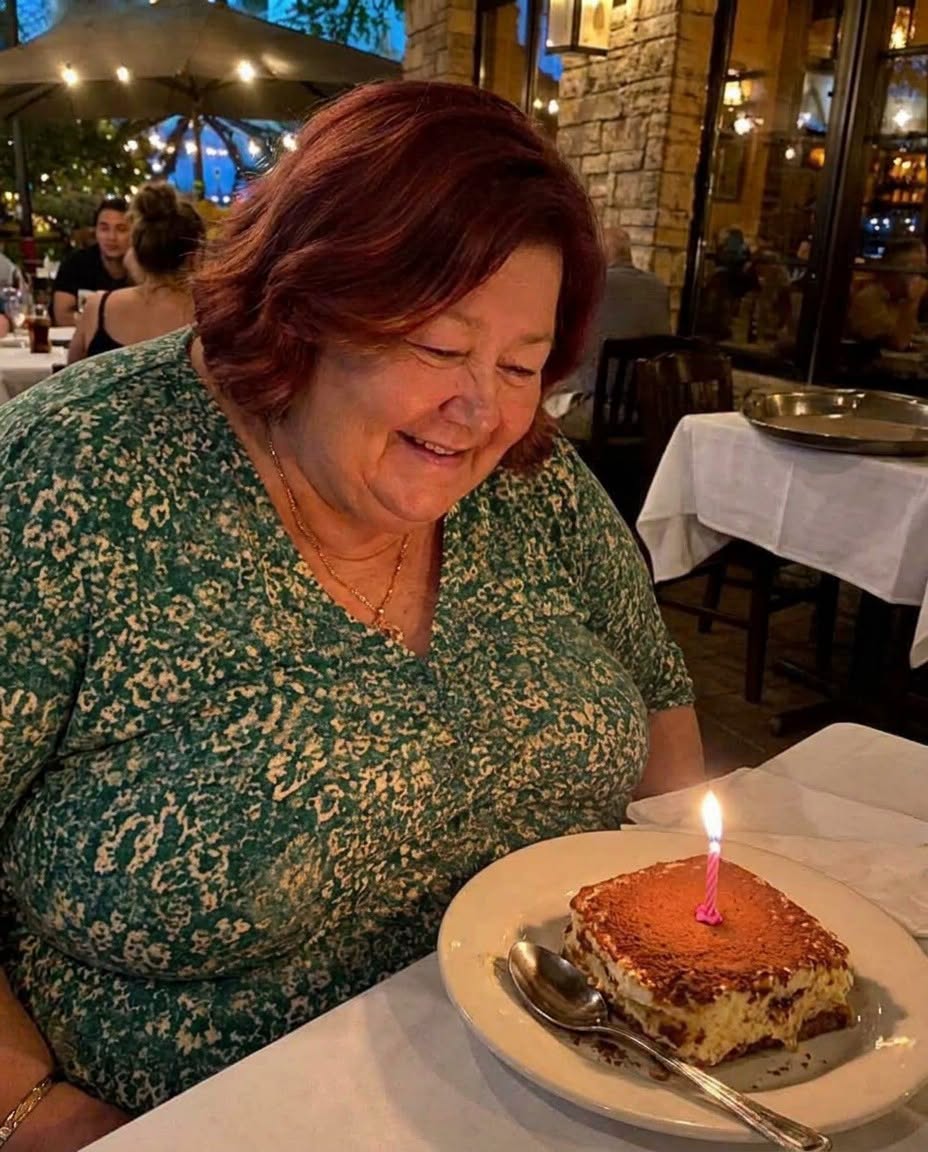
“Maybe skip dessert this time,” the woman at the next table said loudly enough for half the restaurant to hear. My mother Molly had been laughing seconds earlier, her fork poised over a slice of tiramisu she had deliberately ordered before dinner because, as she put it, turning sixty-five gave her certain privileges. Then her smile disappeared. The warm little Italian dining room seemed to freeze around us, silverware suspended, conversations thinning into silence, while Mom reached automatically for her purse and whispered that we should leave. I felt anger rise so quickly my hands began to shake, because this was exactly why she had avoided restaurants for months. Before I could decide what to say, the kitchen doors swung open and the head chef walked straight toward us. He looked at the woman who had insulted my mother and said, without hesitation, “You need to leave.”
My name is Daphne, and I had chosen that restaurant because Mom once loved going out to eat. Years of comments about her weight had slowly changed that. Some strangers whispered while looking at her plate, others laughed just loudly enough for her to hear, and a few openly offered unwanted judgments about what she should or should not eat. By the time her sixty-fifth birthday arrived, every invitation from me produced an excuse—she was tired, her stomach felt strange, ordering in would be easier—and I knew what she was really avoiding. That evening had been going beautifully until the insult. Mom wore the silver necklace and earrings my father had given her, laughed through dinner and even admitted that perhaps she should start going out more often. The chef, whose name was Alaric, interrupted the confrontation in a way none of us expected. He looked closely at my mother, went pale and said, “Molly?” Mom’s purse slipped from her hand. “Alaric?” she answered. Then he told us he did not merely work there. He had owned the restaurant for twenty-three years.
More than forty years earlier, long before I was born, Mom and Alaric had worked together at a small diner. He was twenty-two, broke and determined to become a chef despite having almost no professional experience. Mom had tasted his experiments after closing, encouraged him when other people dismissed him and convinced the diner’s owner to give him time in the kitchen. When Alaric later lost that job after an argument, she helped him find another. “You were the first person who made me believe I belonged in a kitchen,” he told her. Mom tried to minimize what she had done, but he refused to let her. Then the woman who had insulted her stood to leave and repeated that people should not be offended when someone tells them “the truth.” For years I had watched my mother shrink when strangers commented on her body; this time she stood. Calmly, she told the woman that seeing her size did not mean knowing her health, medications, medical history or anything her doctor had actually said. “And even if you knew all of it,” Mom added, “humiliating a stranger in public would not make you helpful. It would still make you cruel.”
The woman left without another word. Mom sat down with trembling hands, and I reached across the table while Alaric quietly joined us. Then he pointed toward a wall of framed photographs beneath the restaurant’s warm lights. In one picture, a young Alaric stood in a cramped kitchen beside a smiling woman with thick brown hair—my mother. Beneath it was a brass plaque that read: FOR MOLLY, WHO TOLD ME I BELONGED IN A KITCHEN BEFORE I BELIEVED IT MYSELF. She stared at the photograph with tears in her eyes, stunned that he had kept it all these years. Alaric disappeared into the kitchen and returned carrying dinner himself: fresh pasta, roasted vegetables, bread and, beside everything else, another slice of tiramisu. “Maybe don’t skip dessert this time,” he said. The dining room erupted in laughter, and Mom laughed harder than I had heard her laugh in months.
On the drive home, she was quiet for several minutes before telling me she meant what she had said earlier: maybe she really should start going out more often. This time I did not pretend the sentence was small. What happened that night did not erase every cruel remark she had heard or instantly restore all the confidence that had been chipped away over the years. But something had shifted. A stranger had tried to reduce her to the size of her body, and within minutes another person had reminded her—and everyone else in the room—of the life, kindness and influence that body had carried through the world. Alaric remembered a young woman who had believed in him when he needed it most, while I saw my mother finally defend herself without apology. She had walked into the restaurant afraid of being seen. She walked out remembering that being seen properly could feel entirely different.