
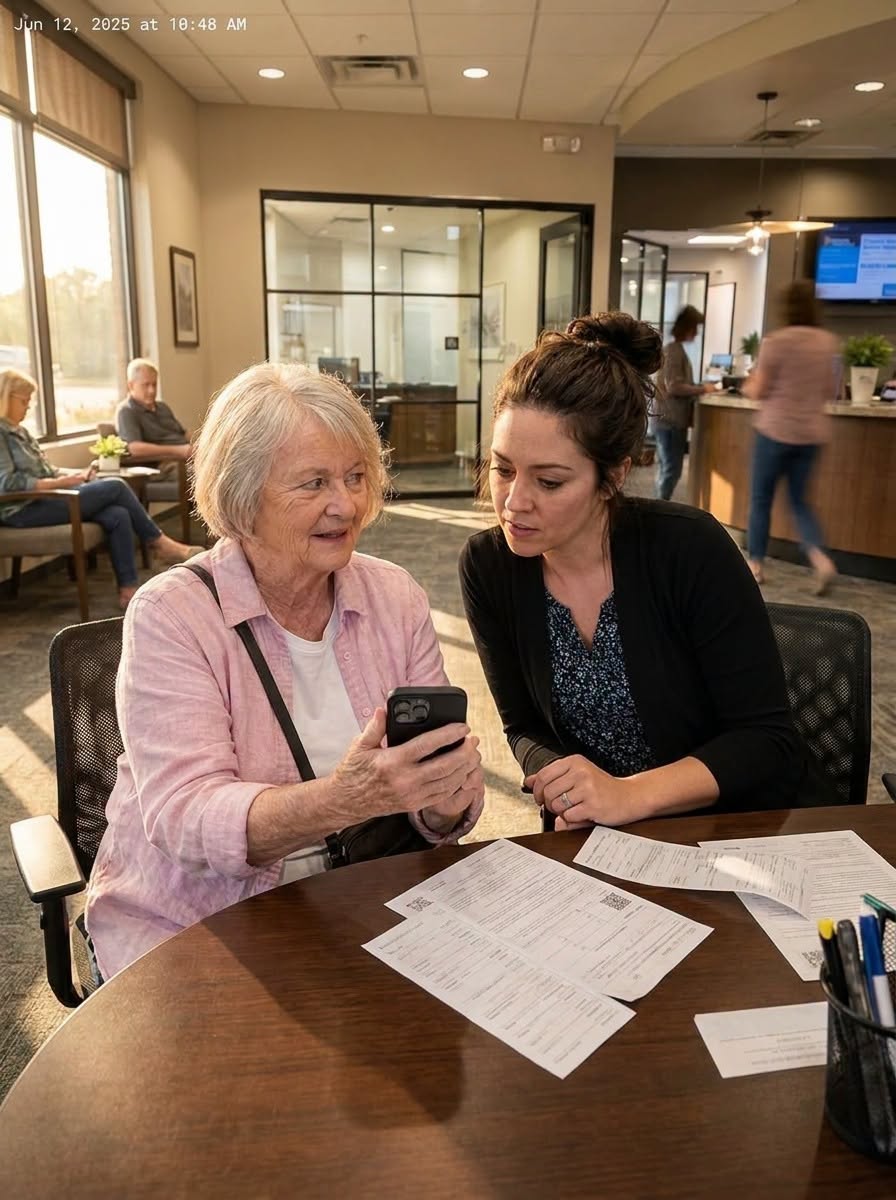
The bank teller’s fingers were still hovering over the keyboard when my phone lit up with the message that changed everything: You’re not invited to my wedding. I was sitting there to wire $31,000 for my daughter Camille’s honeymoon, after already paying a $47,000 venue deposit, guaranteeing a $178,000 business loan for her fiancé Brandon, covering groceries, and absorbing thousands more in wedding expenses. The teller asked if I needed a moment. I folded the transfer form in half, then again, slipped my phone into my purse, and said no. I had spent thirty-three years being Camille’s mother and fourteen years being both parents after my husband Thomas died; I did not need more time to understand what that message meant. I walked out without sending the money. For the first time, I stopped treating financial sacrifice as the price of keeping my place in my daughter’s life.
Camille had once been the little girl standing beside my drafting table with a yellow tape measure, while Thomas burned pancakes on Sunday mornings and laughed about it. After he died, I paid Camille’s tuition, helped her through college, and built my engineering firm into a fifty-two-person company while trying to hold the rest of our family together. Then Brandon entered her life. He was polished, charming, and dismissive enough to call my company “your little business,” yet I ignored my instincts because Camille seemed happy. I co-signed his loan, funded the venue, and kept paying whenever they needed something. After Camille excluded me, I called my attorney and began unwinding every commitment I legally could. At the venue, I discovered Brandon had already called asking whether the deposit I had paid could be refunded directly to him. A longtime lending contact then alerted me to another application in which Brandon had used my name as financial “stability” despite carrying roughly $96,000 in undisclosed personal debt, maxed-out credit accounts, a failed investment, and a prior line of credit closed for nonpayment. The wedding dispute was no longer simply about hurt feelings; I was tied financially to a man whose private balance sheet looked nothing like the future he had sold my daughter.
When I withdrew my guarantee, canceled the honeymoon transfer, and stopped the grocery support, Camille accused me of ruining her life until I sent her documentation of what Brandon had been doing. Hours later, she called in tears after confirming with the venue manager that he really had tried to redirect my deposit. Then she started checking the accounts herself. She found a hotel receipt for a suite booked in Brandon’s name with another woman, Megan Riley, along with repeated transfers, restaurant charges, and hotel expenses paid partly from an account holding wedding gift money. When Camille confronted him, he blamed me for making her suspicious, and his mother Evelyn dismissed the affair as pre-wedding nerves while continuing to portray me as a bitter widow using money for control. Camille finally admitted she had allowed them to describe my grief over Thomas as jealousy and manipulation because accepting their version was easier than admitting something was wrong with Brandon. Three days before the ceremony, she looked across my kitchen table and said she was afraid to cancel because everyone was already coming. I took her hand and told her the only thing I could: fear is not a wedding vow.
The rehearsal dinner became the place where Camille ended it. She arrived without her engagement ring, placed copies of the hotel receipt and transfers on the table, and announced there would be no wedding. Brandon denied everything until the paperwork made denial impossible, while Evelyn immediately blamed me. Camille corrected her herself, explaining that Brandon had tried to redirect my venue money, used wedding funds for another woman, and relied on my financial backing while privately working to turn her against me. Her attorney later handled recovery efforts connected to the gift account, while mine formally revoked my guarantee and notified the lender of unauthorized references and undisclosed risk concerns. The lender froze and eventually denied Brandon’s business financing, other creditors surfaced, and additional messages from Megan confirmed that he had been telling different women different versions of the same story. Camille moved into my guest room temporarily, changed her locks, entered therapy and debt counseling, and began the slower work of repairing what no cancellation form could fix. I redirected the unused honeymoon money and part of the returned venue funds into the Thomas Harrow Engineering Scholarship for students who had lost a parent and wanted to pursue engineering, architecture, or construction management.
Five years later, Camille married a kind high-school history teacher named Aaron beneath the maple tree Thomas had planted when she was born. By then, trust between us had returned slowly—through apologies, accountability, time, and the understanding that forgiveness does not erase structural damage; it simply means deciding the bridge is worth rebuilding. Camille and Aaron had quietly saved the exact $31,000 I had once refused to wire and tried to return it to me after their wedding. I handed the receipt back and asked them to put it into the scholarship instead, creating what we called the Bridge Fund for students trying to continue school after loss, betrayal, or family collapse. The first recipient used it for emergency expenses that might otherwise have forced her to quit. Sometimes I still pass the bank where I folded that transfer form and remember how certain I was that I was losing my daughter. In truth, I was losing the belief that being needed was the same as being loved—and making room, painfully and slowly, for a relationship in which neither of us had to pay for the right to stay.

