
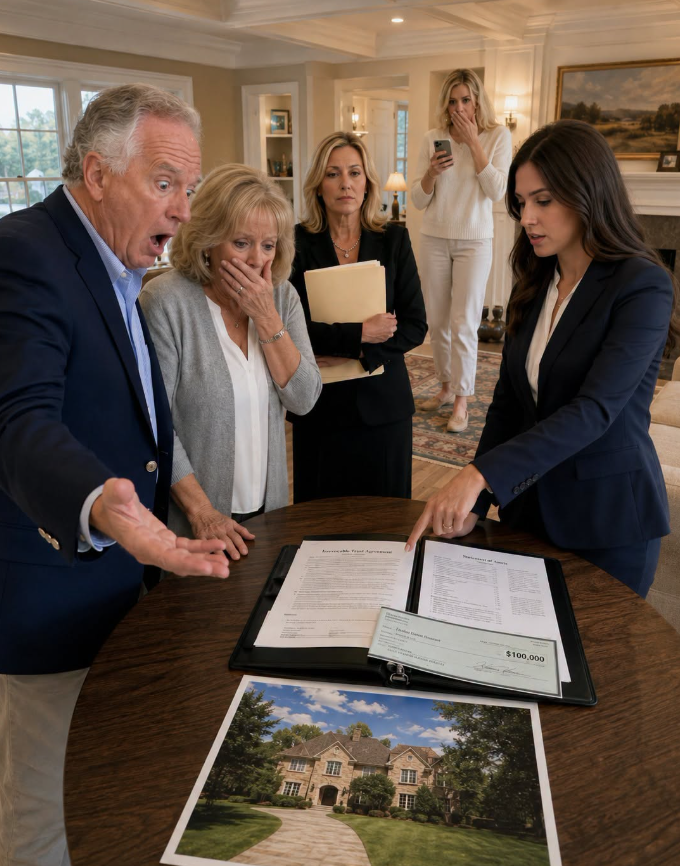
The second bank transfer stopped me cold. It showed $28,400 sent to a luxury travel agency, and my attorney, Imani, quietly confirmed it had paid for my sister Marlowe’s honeymoon. Marlowe stared at our parents as if the floor had shifted beneath her. Three years earlier, they had proudly given her $100,000 for her wedding while telling me I was not “worth investing in.” I had believed the money came from my father’s retirement savings, so I walked away from the family and built my life alone. Now, standing inside the house I had purchased through my own business income, I learned something far worse: both payments had come from my share of our grandmother’s trust. And those were only the transfers we had found first.
My grandmother had created equal accounts for Marlowe and me, allowing withdrawals only for education, a first home, or a legitimate emergency. Weddings, vacations, and family gifts were specifically excluded. Yet my parents, who served as trustees, had redirected my statements to their address and even signed acknowledgment forms using my name. My mother insisted they had only “borrowed” the money because Marlowe needed it more. Then Imani opened another folder and explained that a forensic review had uncovered years of smaller withdrawals for property taxes, renovations, credit-card payments, and private-school expenses. When she finally told me the total missing from my share, everyone in that foyer went silent: $176,800 before interest—and the records suggested the concealment had been deliberate.
My attorney demanded a complete accounting, their immediate resignation as trustees, preservation of every remaining asset, and repayment with interest. When they refused, we filed in probate court, where bank records and a handwriting expert supported claims that my signature had been copied onto documents I had never seen. My parents hired their own attorney and first argued that the trust language was flexible, then offered me $30,000 and a confidentiality agreement. I declined. The evidence also showed that while my parents were asking me to pay their utilities and pharmacy bills, they were spending my inheritance on Marlowe’s wedding and honeymoon. Eventually mediation produced a settlement requiring full repayment, legal fees, and an independent fiduciary to manage the remaining estate assets. My parents sold an inherited rental property and refinanced their home with a new mortgage to cover what they owed. Marlowe returned $18,000 from savings. I kept the recovered funds in a professionally managed investment account, protected separately from my business income and insurance obligations.
The money mattered, but what changed me most was finally seeing the family pattern clearly. My success had never come from the trust; I had built my company from a tiny apartment, two clients, and a folding table after walking away from that painful dinner. Nearly a year after the settlement, Marlowe messaged me saying she wished everything could return to the way it had been before. I understood what she meant, but I could not return to a version of the family where keeping the peace required me to keep absorbing the cost. I answered with one sentence: “How things were is the reason I left.” Later, while unpacking in my new home, I found the cloth napkin I had carried away from that dinner three years earlier. Back then, when I stood from the table and simply said “Okay,” I thought I had surrendered. Now I understood that it had been the moment I stopped waiting for other people to decide what I was worth.

