
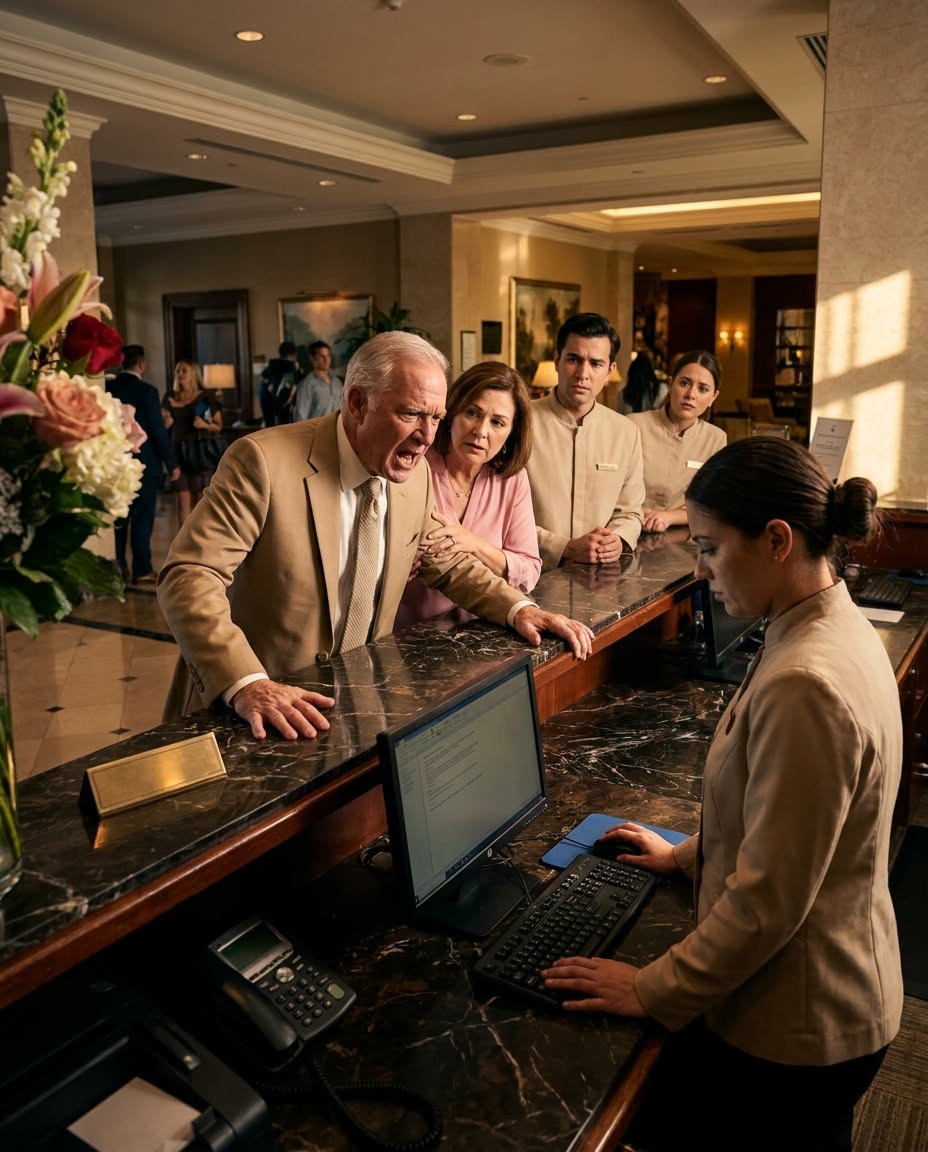
My father was halfway through threatening to call my landlord when I told him there wasn’t one. We were sitting inside the dining room of the Aldren, the Savannah hotel I had purchased three years earlier and spent eighteen months renovating before opening it under my own ownership. He had arrived with my mother asking for $60,000 to help my brother Derek buy a house in Ardsley Park, and when guilt failed, he tried leverage, suggesting that people in his commercial real-estate circle could make life difficult for me when my lease came up for renewal. I let him finish. Then I said, quietly, “I own the Aldren. The building, the hotel business, the operating entity—everything.” My mother went still. My father stared at me as the implications rearranged themselves behind his eyes. The threat he had brought to my table depended on someone above me having power over my future, and he had just discovered that the person he intended to call was me.
Seven years earlier, my parents had spent $42,000 that had been set aside for my education because Derek had what they called “a situation.” I learned the money was gone only after arriving for a semester and discovering there was nothing left to pay the bill. My father’s explanation was simple: family took care of family, Derek needed more help, and I would somehow be fine. I was fine, but not because anyone rescued me. I worked nights, finished school, saved aggressively, bought a small commercial building at twenty-seven, renovated it, sold it at a profit, and repeated the process through several properties until I could acquire the Aldren. I structured the hotel carefully with an attorney so no old family connection, lender, investor, or friend of my father could exert the kind of leverage he had always assumed other people possessed over me. During those seven silent years, my family knew almost nothing about what I was building. They knew enough to return when they needed money, but not enough to understand that the daughter they had once treated as financially expendable had become the person signing the checks.
I told my father exactly what his request sounded like from my side of the table: nostalgia, guilt, and a threat attached to a $60,000 demand. He accused me of enjoying having the power now, but I told him this was not about reversing our positions. He had walked into my business, asked me for money, and threatened something he could not actually harm; I was simply explaining why the money was not coming. Then I reminded him that he had not “borrowed” my college fund. He had spent it, chosen Derek’s immediate needs over my future, and left me to absorb the consequences. My mother said they had been trying to hold the family together. “You held the family together around Derek,” I told her. “That’s not the same thing.” For the first time that evening, my father stopped defending himself. He admitted he was not capable of giving me the apology I deserved—not that night, anyway—and then asked a question I had not expected: “Is there any version of this where we are your family again?” I told him the only honest thing I could: I didn’t know.
I did not give them money, but I also did not have security escort them out. I let the kitchen send the next course and returned to running the hotel. In the weeks that followed, small things began happening. Derek texted to say the hotel was beautiful, then called and admitted he had known about the missing college fund years earlier and had done nothing. My mother sent dahlias and later apologized through her doctor because she believed I would not take her call. Twenty-two days after that dinner, my father mailed me a two-page handwritten letter. He acknowledged that the $42,000 had been his choice, that he had spent years avoiding the cost of that decision, and that the seven years of silence had continued because apologizing would have required accountability. Most importantly, he did not ask for money, access, forgiveness, or anything in return. At Thanksgiving, I sat at a table with them for the first time in seven years. My father and I exchanged only a handful of sentences. When I left, he said, “Come back sometime.” I answered, “Okay.” It was not reconciliation. It was evidence that the door was no longer completely closed.
The following spring, I restored the Aldren’s original 1921 entrance doors, stripping away decades of paint until the old wood and brass were visible again. Standing in the lobby before sunrise, I thought about how restoration actually works. You remove layers carefully; you do not pretend they were never there, and you do not destroy the original simply because someone covered it badly for years. Owning the hotel had never made me better than my family. It had made me the owner of something I had built after learning exactly how expensive dependence could become. The deeper lesson was that I could protect what belonged to me and still leave a door open without surrendering the building behind it. My father’s letter remained in my desk. My mother’s dahlias returned to the lobby. Derek and I spoke again. None of it erased the $42,000 or the seven lost years, and I did not need it to. The building was mine. The doors were open. Anyone who wanted to walk through them now would have to come without threats, without demands, and without asking me to become smaller just to belong.

