
My eleven-year-old daughter stood in the hallway clutching a note that read, “We gave your dog away. Your cousin didn’t want it around. Don’t make a scene.” Emily was still wearing her navy soccer sweatshirt, tears sliding down her face as she asked where Max was. Max, her six-year-old golden retriever, had slept beside her bed since her father Daniel adopted him after a devastating loss in our family, and he followed her through the house like a shadow. We were temporarily staying with Daniel’s parents, Robert and Linda Mercer, while our kitchen was being rebuilt after a burst pipe, and Daniel was away on business. His sister Claire had arrived with her thirteen-year-old son Tyler, who said he disliked Max licking his hands. That minor complaint was apparently enough for Robert and Linda to remove a dog they did not own. I did not scream. I took Emily upstairs, locked the bedroom door, and started making calls.
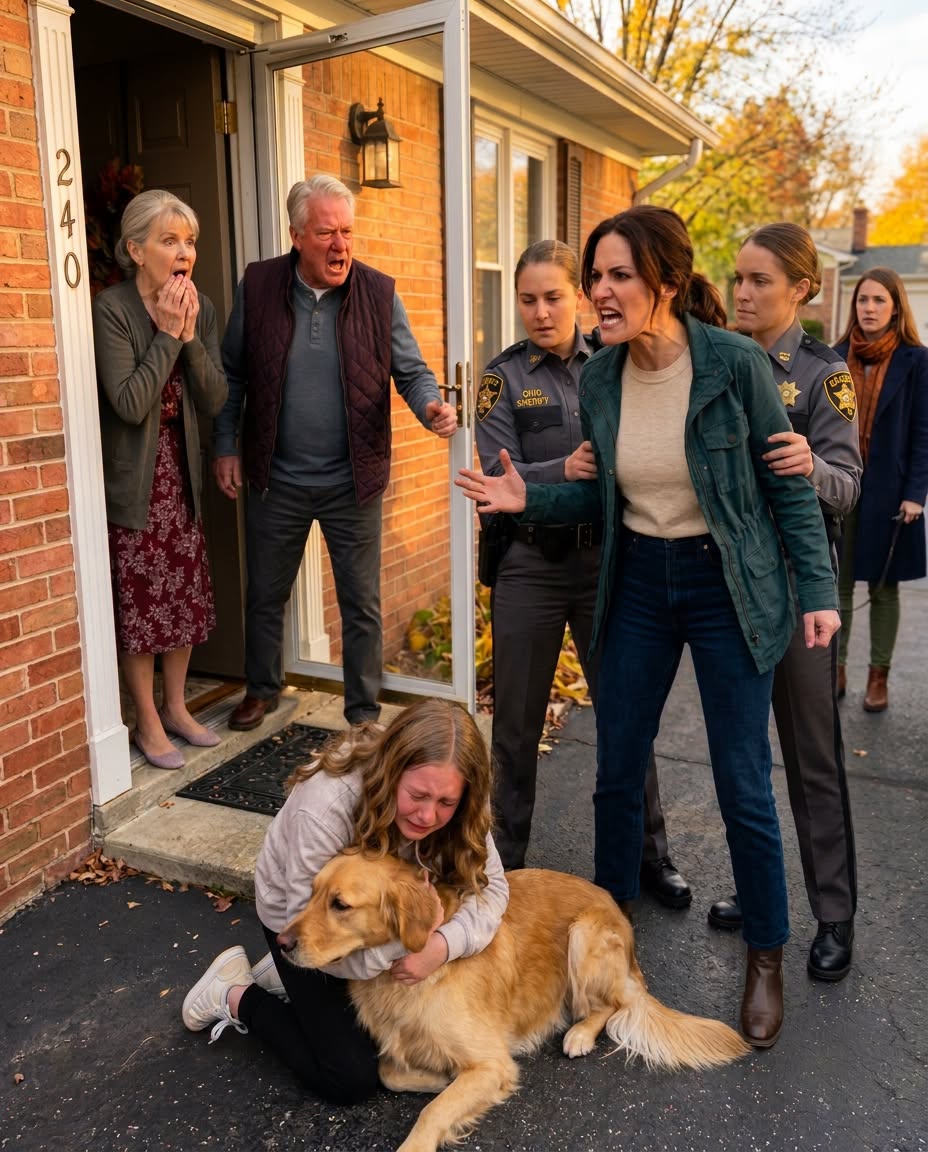
Max’s microchip, county license, veterinary records, and adoption contract were all in my name. Our exterior security camera showed Robert leading him toward a stranger’s SUV at 3:42 that afternoon, and by 10:15 that night the sheriff’s office had traced the vehicle. That was when I learned Robert had not simply “rehomed” Max—he had sold him through a Facebook group for $800 cash, falsely claiming he owned the dog and was moving into assisted living. The buyers, Megan and her husband, cooperated immediately when deputies contacted them. At 7:26 the next morning, three hard knocks shook the Mercers’ front door. Two sheriff’s deputies were standing outside with Megan, and Max was at the end of a red leash. The moment Emily shouted his name, he tore through the doorway and nearly knocked her down. Robert denied selling him until he accidentally told Megan, “I gave you back the money.” She answered, “No, you didn’t.” Then Tyler came downstairs and quietly admitted Max had never threatened him at all.
The evidence grew worse from there. Daniel discovered that his parents’ family tablet had synced eleven messages between Robert, Linda, and Claire showing the sale had been planned before Claire and Tyler even arrived. Linda had suggested goldens could bring “good money,” searched through our veterinary folder for Max’s paperwork, and told Robert that I would never agree, so they should not ask. Robert photographed vaccination records, cropped out my name, created the listing, negotiated the price, and took the cash. Claire agreed to get Emily out of the house early for soccer so she would not see the buyers arrive. Even the note had been planned in advance: keep it short, Linda had written, because once the dog was gone I would eventually accept it. When police first contacted Megan, Robert later appeared at her house and tried to persuade her to describe the transaction as a “temporary adoption.” Her doorbell camera recorded him saying, “You got your money’s worth.” By then, the issue was no longer a family argument about a pet. It was a documented unauthorized sale of property supported by messages, video, ownership records, witnesses, and Robert’s own words.
A prosecutor eventually filed charges, and Robert accepted a plea rather than take the case to trial. He received probation, community service, court costs, and financial obligations connected to the incident. Claire was not charged, but her messages became part of the evidentiary record, while Linda’s participation was documented separately because Robert had physically taken Max, negotiated the sale, accepted the money, and delivered him. Daniel refused every attempt by his parents to frame the consequences as something I had caused. When Robert complained that “family business” should never involve police, Daniel told him plainly that being related did not give anyone permission to take his wife’s property, lie about ownership, and traumatize his daughter. We moved into a pet-friendly hotel until our house repairs were finished and allowed Emily to decide when—or whether—she wanted contact with her grandparents again. Months later, Linda finally gave her a real apology: “I knew you would say no, so I did it anyway. I thought because I was your grandmother, you would have to forgive me.” Emily rested one hand on Max’s collar and answered, “Maybe someday. But you don’t get to decide when.”
A year after the night Max disappeared, Emily printed a photograph of herself sitting on our front steps with his head resting in her lap. She taped it to her bedroom door and wrote underneath it: “Max lives here.” I kept the old note too, folded inside the folder with his adoption papers—not as a souvenir, but as a reminder of why documentation matters when someone assumes family pressure will keep you quiet. I had not yelled that first night because yelling would not have found Max. His microchip did. The security footage did. The license and veterinary records did. Megan telling the truth did. Tyler refusing to repeat the adults’ lie did. Robert and Linda had written “Don’t make a scene” because they believed restraint meant surrender. They learned otherwise. And when Emily looked back at me from her doorway and said, “Mom? This time you can make a scene,” I laughed so hard Max started barking—and for once, all that noise meant nothing important had been taken from us.