
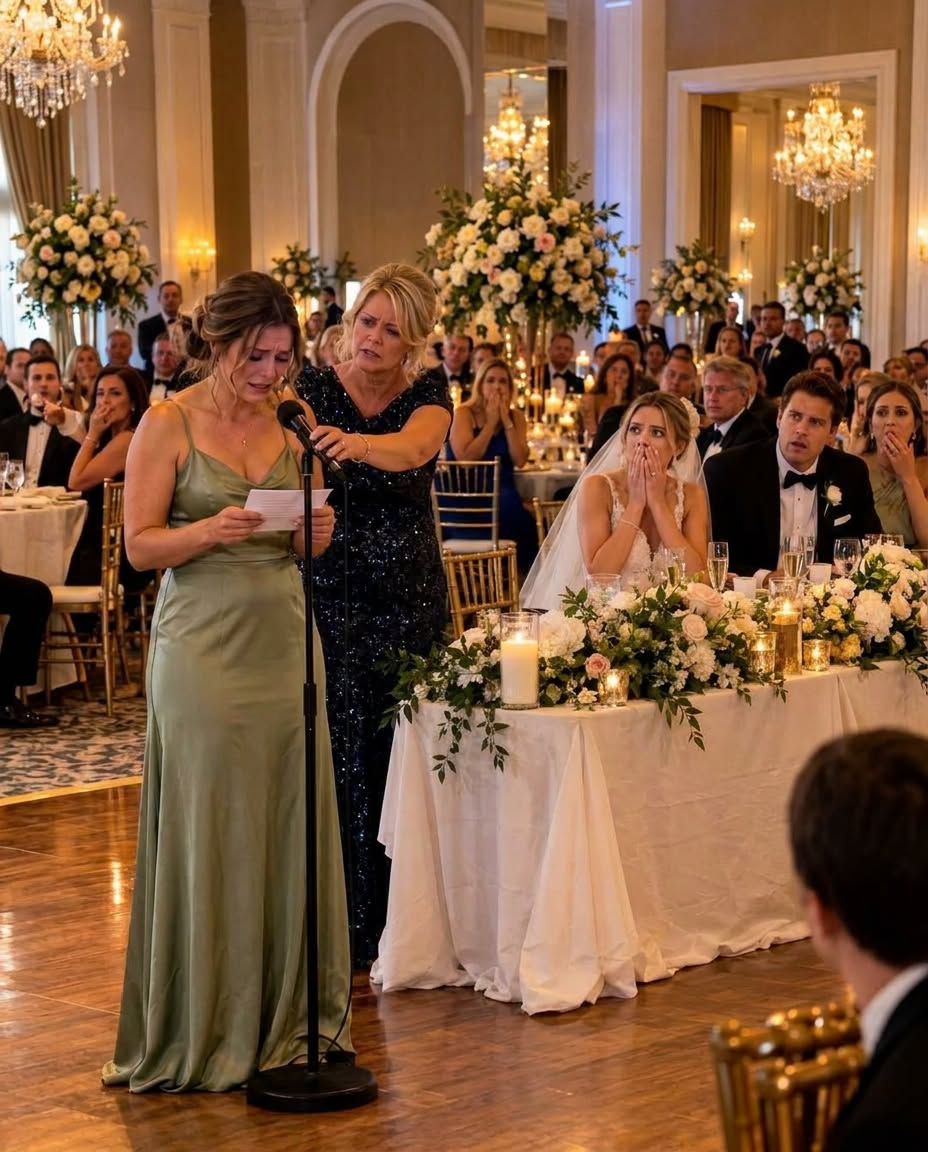
The room went quiet the second I picked up the microphone. Three hundred guests turned toward me beneath strings of warm lights, and my mother’s face lost its color before I had said more than my name. I was wearing the beige dress she had chosen because, in her words, it “wouldn’t distract from Melissa,” my younger sister and the bride. Minutes earlier, my father had called Melissa his perfect daughter, and my mother had spent five emotional minutes praising her beauty, grace, and future. I had spent twenty-eight years standing quietly beside that version of our family. That night, with four folded pages in my hand, I finally stopped helping them maintain it.
Melissa had always been the child my parents celebrated loudly. Her sixteenth birthday brought a large garden party; mine brought a card and fifty dollars. She received a new BMW after high school while I drove an aging Civic. When I became engaged, my parents offered $3,000 and advised me to keep the wedding small; when Melissa became engaged to Brendan, they proudly announced an $85,000 budget. The difference had never been only money. When my engagement later collapsed because my fiancé had been unfaithful, my mother told me I was “not exactly easy to love.” At Melissa’s dress fitting, after I sincerely told her she looked beautiful, she suggested Botox, a better haircut, and more effort. My mother laughed. Two months later, when I called my father excited about a promotion and a thirty-percent raise, he ended the call because Melissa’s reception tasting was starting. That night I stopped calling those moments isolated incidents and started writing them down.
So when the DJ invited open toasts, I stood. I told the room about the birthdays, the cars, the wedding budgets, the jokes about my appearance, and the promotion my father barely stayed on the phone long enough to hear. I did not shout. I had spent eight weeks removing every sentence that sounded like revenge and keeping only what I could remember clearly: dates, numbers, direct comments, and moments nobody in my family could honestly pretend had never happened. My mother tried to interrupt me. I kept going. I told them that for most of my life I had believed I was difficult, disappointing, and somehow less deserving of attention because that was the position our family had repeatedly assigned me. Then I said I was finished apologizing for existing and finished helping them treat the imbalance as normal. I placed the microphone down and walked out before anyone could turn my truth into another debate about my tone.
The consequences were messy rather than satisfying. My parents cut contact, and my father texted that I had embarrassed the family. Some relatives accused me of ruining Melissa’s wedding; others privately admitted they had noticed the unequal treatment for years. Melissa emailed three days later saying she had not understood how bad it had been. Months afterward, she met me for coffee and admitted something harder: she had always sensed the favoritism, but confronting it would have meant acknowledging how much she benefited from it. Her apology did not erase twenty-eight years, and I did not pretend it did. My mother later sent a two-page letter defending her intentions without actually apologizing. I replied once: “I didn’t misunderstand. I just finally said it out loud.” After that, I stopped negotiating the facts of my own life.
More than a year later, Melissa and I have a cautious relationship built on small conversations rather than automatic forgiveness. My parents and I do not. I moved into an apartment near Piedmont Park, painted the living room a deep green my mother would have hated, and built a life in which nobody gets to choose my value by comparison with someone else. My team at work has grown, my friendships have deepened, and I still sometimes hear the old family voice in my head before I walk into an important room. It simply no longer gets the final word. For years I thought becoming enough meant somehow earning the love Melissa seemed to receive effortlessly. What changed at that wedding was not that three hundred people finally saw what had happened to me. It was that, for the first time, I stopped needing anyone in that room to tell me whether Amanda was enough.

