
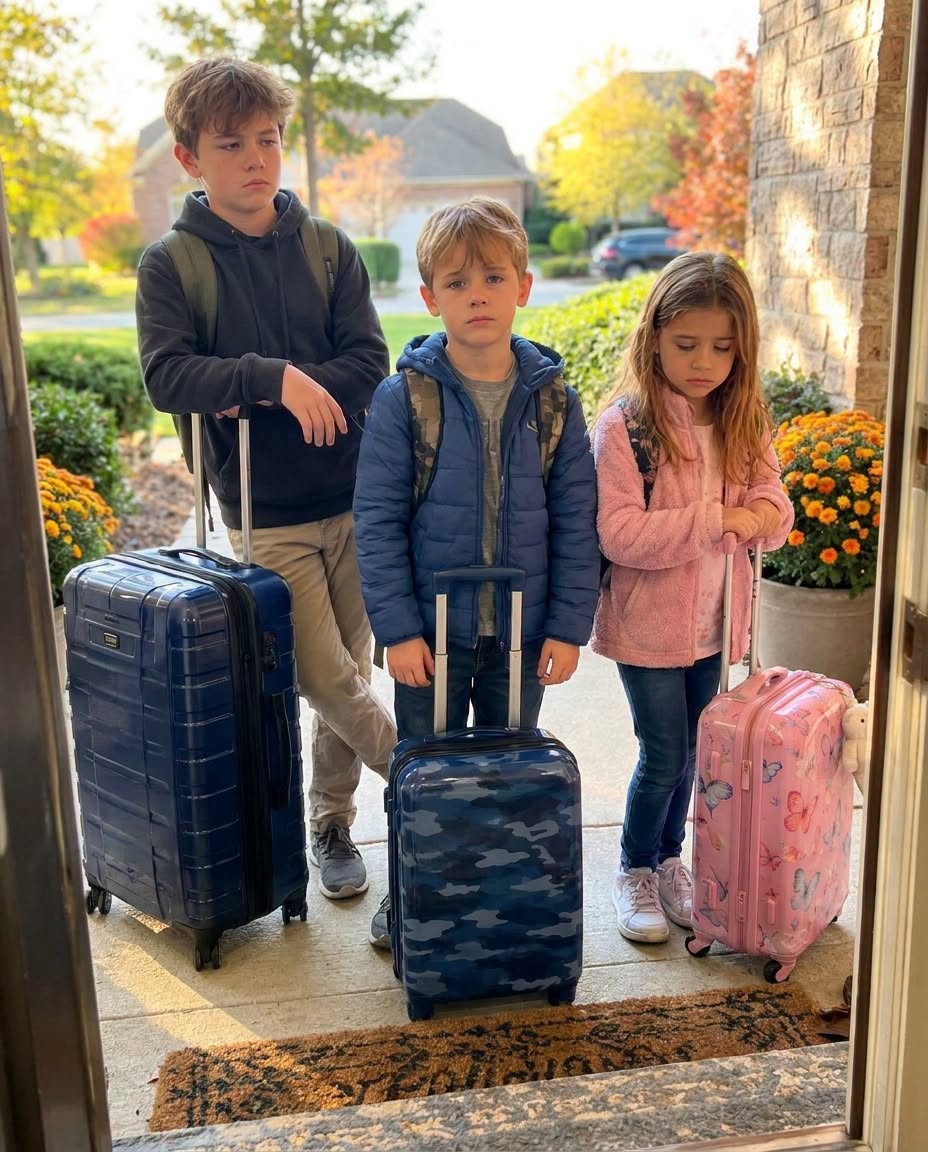
At 6:30 on a Friday evening, my doorbell rang while I was in my robe with tomato soup cooling on the counter and a crossword open beside it. When I opened the door, my three grandchildren were standing on the porch with backpacks and one large purple suitcase, while my daughter-in-law Vanessa’s white SUV was already backing down my driveway. Brooks was eight, Lily was six, Theo was four, and all three looked more confused than excited. I called Vanessa before she reached the end of the street and told her nobody had asked me to babysit. “Weekend trip,” she said. “Eric knows.” Then she added, “You’ll manage,” and hung up. My son Eric was working storm repairs out of town, and when I reached him later he sounded genuinely stunned; Vanessa had told him I had agreed days earlier. That night, after the children were asleep, Brooks insisted on keeping his backpack beside the couch, Lily mentioned that her mother had cried in the car, and I began to understand that the problem on my porch might be much larger than an inconsiderate weekend drop-off.
The next morning Brooks asked me over pancakes, “Grandma, are we going to live with you now?” He said Vanessa had told them to pack everything important because they might not return home for a while—and not to tell their father because it would make him sad. I went through the bags carefully. Brooks had all his schoolbooks, a framed family photograph, and the Little League trophy he normally kept beside his bed. Lily had her favorite clothes, jewelry box, and stuffed rabbit. The purple suitcase held winter coats, months of Theo’s medications, prescription paperwork, and a plastic folder containing all three children’s birth certificates, Social Security cards, immunization records, and passports. Eric told me he had never signed passport applications. Tucked into an outer pocket was a sealed envelope with his name on it. I wanted desperately to open it, but I did not. Instead I called my son and listed everything I had found. When I said “passports,” the line went silent. Then Eric said, “Mom, don’t call Vanessa again. Keep the kids there. I’m coming home.”
Eric arrived still wearing his lineman’s orange work jacket and went pale when he saw the documents spread across my dining-room table. The passports had been issued months earlier. A security-camera clip from his house showed a rental van carrying furniture away while he was out repairing storm damage. Before he could process that, Vanessa returned unexpectedly. Her smile disappeared when she saw Eric, the passports, and the unopened letter. Then Brooks walked in holding her iPad and asked why it showed that their flight was leaving that night. The reservation was one-way to Phoenix. The passenger list included Brooks, Lily, Theo—and an adult named Cole Barrett. Vanessa finally admitted Cole was a man she had met at the gym and that she had planned to leave with the children, call Eric after landing, and start over in Arizona. She said she had been lonely for years, exhausted by Eric’s absence during storm work, and afraid she would never leave if she had to face him first. Her loneliness was real. So was the deception. She had packed the children’s legal documents, arranged interstate travel, concealed the plan from their father, and used a joint credit card to purchase tickets for another man.
Eric had already contacted a family-law attorney on his drive home. The advice was simple: keep the children safely in their home state, preserve the travel confirmation, camera footage, documents, and messages, and seek an emergency court order before anyone attempted to remove them. Vanessa left alone that night. By Monday, Eric’s attorney had filed an emergency motion restricting out-of-state removal without judicial approval. The children stayed with me temporarily while Eric took leave from work and began custody proceedings. Vanessa called them every evening from Arizona, and eventually she returned to town on her own. The court later awarded Eric primary residential custody, with Vanessa receiving structured parenting time after relocating nearby. There was no triumphant courtroom humiliation. There was only paperwork, schedules, hard conversations, and three children trying to understand why the adults they loved had changed their lives without asking them. Eric eventually transferred off the storm crew, losing overtime so he could be home more. Vanessa found an apartment twelve minutes from the school. They did not reconcile, but they learned to communicate about doctor visits, homework, and pickup times without using the children as messengers.
Almost a year later, Eric came to my kitchen and asked whether I would be willing to watch the children after school four days a week. He made it clear I could say no. He offered to pay me. He promised Fridays would remain mine. I said yes, because being asked felt entirely different from having three children deposited on my porch beneath the words “You’ll manage.” One Friday evening, the doorbell rang again. Brooks, now nine, stood outside in his baseball uniform while Eric waited at the curb instead of driving away. Brooks asked if he could come in for five minutes, then handed me his new MVP trophy. He said he wanted it to stay at my house because the old trophy had been one of the “important things” he packed the night everything changed, and I had kept all of them safe. I placed it beside my late husband’s photograph and finally understood how much one phrase had shaped my life. For decades, being strong had meant handling whatever other people left for me without complaint. Now I knew better. Sometimes love means helping. Sometimes it means refusing. And sometimes the most respectful thing one person can do for another is knock, wait for the door to open, and ask first.

