
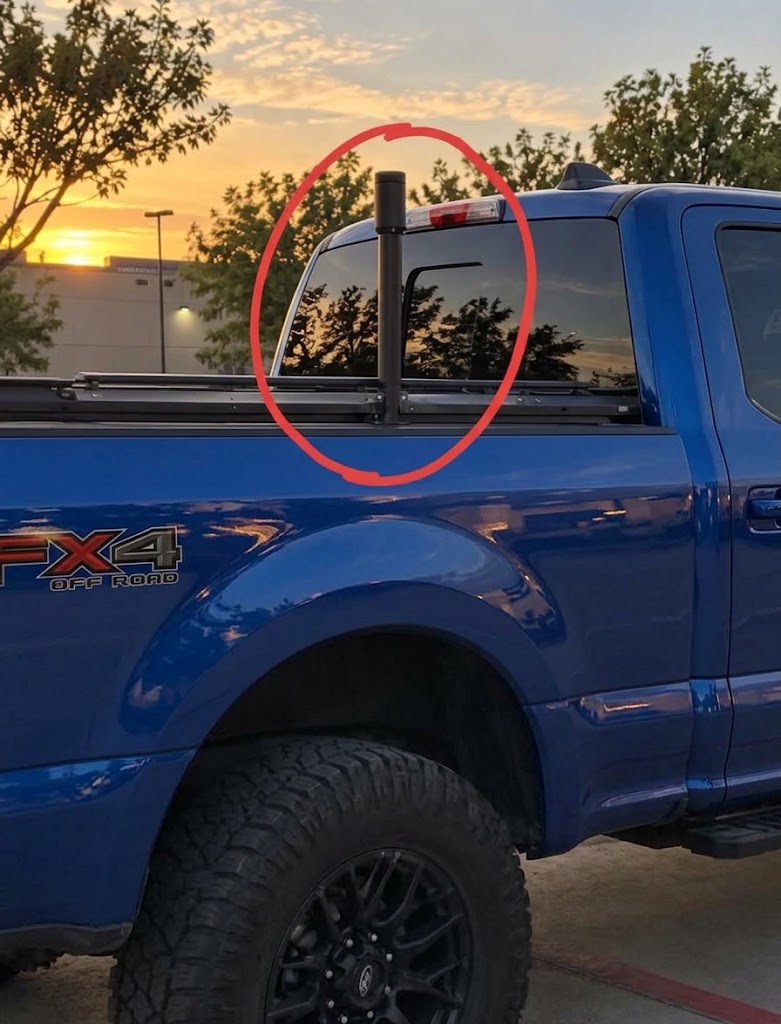
You may have spotted them while driving down the highway: tall, narrow rods rising behind the cabs of pickup trucks, seemingly attached for no obvious reason. At first glance, they might look like ordinary metal poles or decorative accessories, but many serve a practical purpose. For drivers who spend long hours on farms, construction sites, mountain roads, or remote highways, staying connected can be essential. A weak cellphone signal can make a routine trip frustrating, especially when someone needs directions, must contact a coworker, or faces an unexpected problem. That is why some truck owners install specialized antennas designed to help communication equipment work more effectively. Yet cellphone reception is only one possible explanation, and the real purpose depends on the technology fitted to the vehicle.
One common possibility is an external antenna connected to a cellular signal booster. These systems typically use an outside antenna, an amplifier, and an interior antenna to help compatible phones maintain a more reliable connection when a usable cellular signal is available. The truck’s metal body can interfere with radio signals, making an antenna mounted outside the cabin useful. However, even sophisticated equipment cannot create service where no usable signal exists. Other tall rods may belong to CB radios or two-way communication systems used by truckers, farmers, construction crews, and off-road enthusiasts. Some are connected to GPS navigation or fleet-tracking equipment, while certain off-road vehicles carry visibility poles to help drivers see one another over tall grass, brush, or sand dunes. So how can you tell which type you are looking at when several of these devices appear almost identical from a distance?
The answer often lies in the antenna’s design and the equipment inside the truck. A long, flexible antenna may be associated with a particular radio system, while a different shape or mounting arrangement could indicate another specialized device. The position behind the cab provides a convenient place to secure equipment while routing cables into the vehicle, where radios, amplifiers, or tracking units can remain protected. For businesses operating multiple trucks, reliable communication can also support scheduling, fleet coordination, and the efficient use of expensive equipment. Although purchasing and installing specialized electronics may require an investment, the right setup can be valuable for workers who regularly travel beyond reliable cellular coverage. If a driver is considering a signal booster, radio system, or related equipment, checking compatibility and installation requirements is more useful than assuming every tall rod serves the same purpose.
The next time you see one of these unusual attachments, remember that its appearance alone may not reveal its function. It could help a driver communicate with another vehicle, improve an existing cellular connection, track a work truck, navigate unfamiliar terrain, or spot other off-road vehicles. The distinction matters because each system is designed for a different job, and not every antenna improves cellphone reception. What looks like a simple pole may actually be an important piece of equipment for someone whose work or travels take them far from busy roads and reliable service. And once you know the possibilities, that familiar sight behind a pickup cab becomes a little more interesting.

