
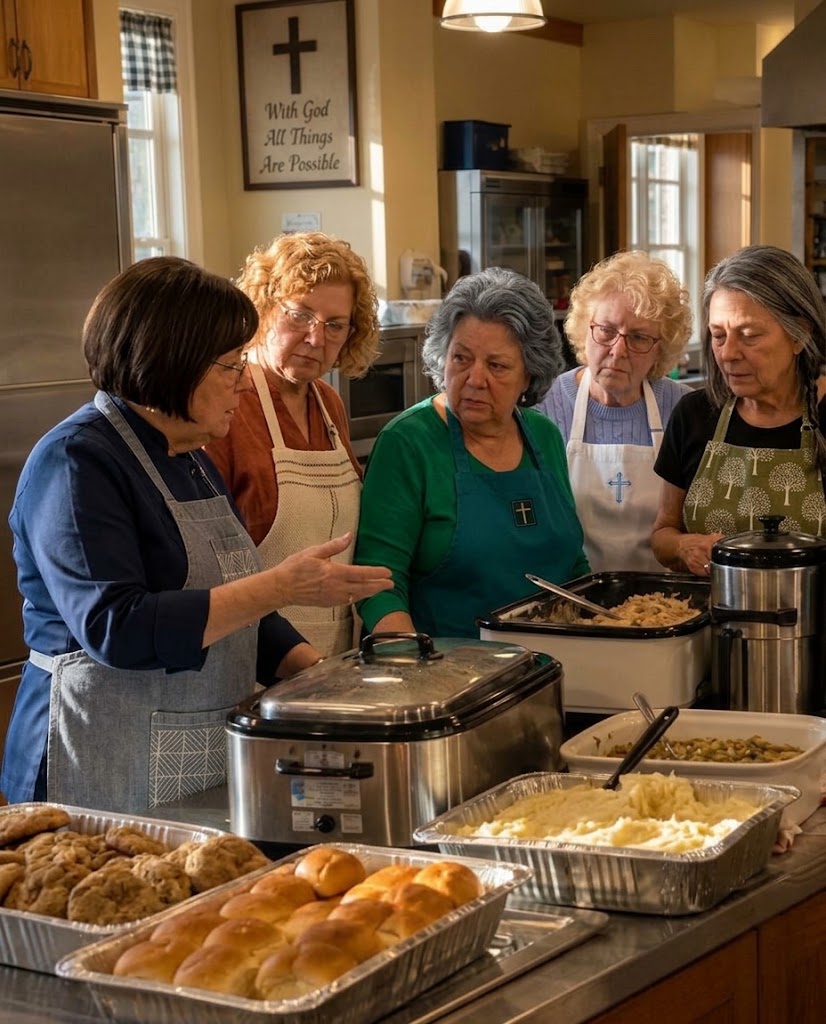
“There’s no food coming,” Louise whispered into the telephone, and I could hear the strain in her voice over the clatter of dishes in my kitchen. It was 9:45 on a bitter October morning in rural Nebraska, and in less than two hours, seventy mourners would gather in the basement of Zion Lutheran Church after burying a twenty-three-year-old woman and her unborn baby. The catering van had slid into a ditch on an icy gravel road, spilling its soup and destroying the trays meant for the funeral luncheon. Upstairs, a twenty-six-year-old widower named Cole Haney was preparing to say goodbye to his entire future, with no family nearby to help him afterward. For thirty years, four other women and I had cooked every funeral meal in that church, but two months earlier, the young pastor’s wife had replaced us with a professional catering service. I looked at the clock, pulled open the freezer, and found the ground beef I’d planned to make last all week. “Call Wanda,” I told Louise. “I’ll get Marge and Eunice.” Then I reached for my old apron, knowing there wasn’t time to ask whether we were still welcome in the kitchen we’d spent half our lives tending.
My name is Opal Deane, and I’m seventy-two years old. I’ve lived in the same small Nebraska town all my life, surrounded by people who know which families have been here for generations and whose pickup belongs outside the feed store. I became one of Zion Lutheran’s funeral cooks thirty years ago, after my own mother died during a February cold spell so severe that the cemetery crew needed machinery to break the frozen ground. Following her service, relatives and neighbors returned to the church basement shivering, exhausted, and hungry, only to find an urn of coffee and little else. Louise Pruitt, who’d experienced the same disappointment at her husband’s funeral the previous year, arrived at my house early that morning with scalloped ham and home-canned green beans and told me to fetch my coat. Wanda Keel and Eunice Brandt joined us, and two years later, Marge Holt became the fifth member of our little group. Nobody elected us or gave us an official title. We simply began showing up whenever someone in town died. We stocked a pantry shelf with canned vegetables, dried noodles, coffee, and paper napkins, and kept a discreet list of dietary needs taped inside the door so mourners wouldn’t have to explain what they could or couldn’t eat. Eunice’s husband built a sturdy shelf for the two hundred-cup coffee urns, and we learned how to feed a roomful of people with whatever the town could provide on short notice. The meals weren’t elaborate. We served ham and noodles, hotdish, biscuits, vegetables from someone’s garden, and bars baked in our own kitchens. But we knew the family members, remembered who had lost whom, and recognized when someone needed a plate brought to the table because they were too overwhelmed to stand in a serving line. Over the years, that kitchen carried us through our own losses as well. Wanda’s husband, LeRoy, died nine years earlier, and preparing funeral lunches became one of the few places where she could still laugh without feeling guilty. Marge lost her nineteen-year-old grandson, Tyler, to an infection, and she told me that helping prepare his funeral meal was what finally got her out of bed. Eunice’s eyesight had begun to fail, but her hands still knew how biscuit dough should feel. My husband, Hollis, had been gone six years, and there were days when the work in that basement made me feel useful in a way my quiet house no longer did. Then Pastor Shay arrived, newly called to Zion after our previous pastor retired. He was twenty-nine, thoughtful and earnest, and his wife, Tamra, was bright, energetic, and determined to help our shrinking congregation find a future. At a church leadership conference in Lincoln, she attended a session about volunteer burnout, especially the habit of relying on the same older members year after year until they became exhausted. She looked at five women in their sixties and seventies carrying roasting pans downstairs before sunrise and concluded that we needed someone to relieve us. Without asking how we felt about the work, she and Pastor Shay arranged for Prairie Table, a caterer from Grand Island, to provide funeral luncheons. A neatly printed sign-up sheet appeared on the kitchen door announcing the new process, and Tamra explained that we could finally attend services without spending the morning over hot stoves. She meant to be kind. I believe that now, and I believed it even then. But we had never considered those mornings a burden. We were reluctant to challenge the new pastor’s wife because Zion had dwindled from forty families to twenty-two, and none of us wanted to become the older women accused of blocking every attempt at change. So we untied our aprons and went back upstairs. The next three funerals were small, and the catered meals arrived without trouble. We sat among the congregation in our good dresses, listening to the scrape of folding chairs below us and feeling the absence of work our hands still wanted to do. Then, in the second week of October, Dana Haney died.
Dana and her husband, Cole, had moved to our county only eighteen months earlier. He worked at the grain cooperative, and she was expecting their first child in the spring. She developed a severe headache, was taken to a hospital in Grand Island, and died two days later from an aneurysm; the baby did not survive. Cole was twenty-six and had little family nearby. Dana’s relatives were coming from Ohio for the funeral, but most couldn’t remain afterward, and Cole’s own parents were either gone or estranged. When I saw him sitting alone in the front pew, with Pastor Shay’s hand resting on his shoulder, I worried about what would happen once the visitors returned home and the house on the old Petersen place grew quiet. Tamra had arranged for Prairie Table to serve sixty people at 11:30 on Saturday morning, paying $650 for soup, rolls, cold cuts, and sheet cake. The order had originally been reserved for another funeral that was postponed, so she’d transferred it to Dana’s service. But frost had settled on the roads during the week, and the delivery van slid off a gravel stretch while maneuvering around a stalled grain truck. The driver wasn’t hurt, but the soup spilled across the vehicle’s floor and a shifting case of bottled water crushed the cold-cut trays. The catering company offered a full refund and apologized, but it couldn’t replace the meal in time. Our council president, Harold Bruning, telephoned Louise because he didn’t know anyone else who could feed so many people with so little notice. Louise called me; I called Wanda and Marge; Louise reached Eunice. By ten o’clock, all five of us were back in Zion’s basement, wearing church dresses beneath old aprons, opening cabinets and checking what remained on the funeral shelf. The habits of thirty years returned without discussion. Wanda lifted the roasting pans from the high shelf and began preparing ham and noodles. Eunice checked the flour and started biscuit dough, working largely by touch because the basement light was difficult for her eyes. Louise brought green beans she’d canned in August, while I retrieved the ground beef from my freezer for a large pan of tater-tot hotdish. Marge called her husband, Dale, who brought meat from his farm freezer and arranged for additional folding tables and chairs from the fire hall. LeRoy’s son backed his father’s old flatbed trailer to the fellowship entrance, and the men carried furniture down the ramp while we worked. Marge’s granddaughter drove to her house for tins of lemon bars and rhubarb crisp, the sweets she habitually kept ready for visitors. The basement filled with the smell of browned onions, simmering ham, fresh biscuits, and coffee. At eleven-fifteen, Pastor Shay came downstairs, searching for Tamra and wondering how he could explain the missing luncheon to a grieving congregation. He stopped partway down the stairs and stared at the steaming roasters, then thanked us quietly and went back for his wife. Tamra appeared minutes later, twisting a church bulletin between her hands. She looked from the five of us to the food and admitted she’d called everyone she could think of without finding an alternative. She said she wouldn’t have blamed us if we’d refused to help after being replaced. I could see how ashamed she was, but there was a hotdish that needed serving and mourners arriving upstairs. I told her to put on an apron and carry the plates to the tables. She did, without argument, and worked beside us as the first families entered the basement. Cole came down at 11:35, looking exhausted and uncertain where to sit. When he saw Wanda’s ham and noodles, he stopped in front of the serving table. He said Dana’s grandmother had made the same dish, arranging the noodles beneath the ham, and that Dana used to call it her family’s funeral food because it was served whenever everyone came together. Wanda put down her spoon and walked around the table to him. She guided him to a chair, filled his plate, and sat across from him while he ate. They had known one another for only minutes, but I watched him begin to cry as she told him there was plenty more food and no need to hurry. I stood beside the coffee urns, wiping my eyes with the corner of my apron, and finally understood why the morning had felt so important. The meal hadn’t been saved so five old women could prove they were indispensable. It had been saved because a young man who had lost his wife and child needed someone to notice whether he had eaten, and no amount of efficient planning could replace that kind of attention.
After the last mourner left, we washed the roasting pans, folded the tables, and began putting the kitchen back in order. Tamra stayed behind, sitting on an overturned bucket near the pantry while Louise replaced the cans we’d used from the funeral shelf. She admitted that when she introduced the catering service, she thought she was protecting us from exhaustion. The conference had emphasized how churches sometimes depended on elderly volunteers until they felt unable to refuse, and she’d assumed that was happening at Zion. She hadn’t asked whether our work was something we wanted to surrender. I told her I believed her intentions were good, but that preparing those lunches had become part of how we cared for grieving neighbors and one another. Then she asked why we hadn’t explained our feelings before she changed the arrangements. I answered as plainly as I could. Pastor Shay and Tamra were new, and our congregation was fragile. We didn’t want a dispute over the kitchen to turn into another small-town church quarrel, with people taking sides and threatening to leave. We had chosen silence because we thought it was kinder than making a public challenge to the pastor’s wife. Looking back, I wasn’t certain we’d chosen well. Tamra listened, then glanced at the dietary list inside the pantry door and asked why no one had told her it existed. I explained how we’d learned the congregation’s needs over years of funerals and potluck suppers, and how keeping track was one way to spare people extra trouble during difficult days. She looked around the kitchen and admitted she’d mistaken a ministry of care for a chore that needed replacing. We didn’t tear down the new sign-up sheet or demand that everything return to the way it had been. There were still reasonable questions about aging volunteers, continuity, and how the church would feed people when one of us became ill. Instead, Tamra returned the following Tuesday in jeans and a sweatshirt, carrying a notebook and asking whether she could learn how we organized the pantry and prepared for sudden funerals. Louise, who had started our group so many years before, invited her in. Tamra learned how much extra time scalloped potatoes needed when we doubled a recipe, how to set up the coffee urns safely, and which congregation members had dietary restrictions. She asked questions, took notes, and helped carry supplies without trying to direct everything. The other women gradually relaxed around her, especially when she began inviting younger church members to help with the heavy lifting. A new sign-up sheet appeared on the pantry door, this time listing volunteers willing to move folding tables, transport food, wash equipment, and drive people home after long mornings. It wasn’t a replacement for the five of us but a practical way to share the work. Twenty-three names eventually filled the page, with Tamra and Pastor Shay at the top. The congregation also reviewed its arrangements with Prairie Table, whose failed delivery had been a genuine accident rather than negligence by the church. The company refunded the $650 and sent a letter of apology. At the next council meeting, Harold proposed using the money toward a new chest freezer for the basement. Pastor Shay supported the motion, and the council approved it unanimously. When the freezer arrived in November, Dale and LeRoy’s son carried it downstairs and set it beside the pantry. Someone placed a strip of masking tape across the lid, writing the names Louise, Wanda, Eunice, Marge, and Opal in black marker. I suspect Tamra did it, though she’s never said and I’ve never asked. The freezer became useful almost immediately, allowing us to keep prepared ingredients and meals ready for emergencies while reducing the need for anyone to rush to the grocery store before dawn. We began planning our funeral luncheons with more help and greater flexibility, making room for younger volunteers without pushing aside those who understood the congregation’s history. Tamra became part of the work, not because she replaced us, but because she learned why we’d been doing it. Cole Haney also started attending church most Sundays, sitting near the back. One Tuesday morning, he appeared in the basement doorway with his hands tucked into his jacket pockets and admitted he didn’t know how to cook. I told him nobody did at first and invited him to help Eunice stir the noodles. She showed him how to judge the texture by smell and feel when her eyes couldn’t easily distinguish the details, and he began returning when his work schedule allowed. While drying roasting pans one afternoon, he told me the church basement was one of the few places in town where he felt someone cared whether he’d eaten. Wanda took that as permission to send him home each week with a foil-covered plate, telling him he looked too thin. He always accepted it with a quiet smile.
Our kitchen is different now, and I think that’s a good thing. There are more people willing to help, the pantry is better stocked, and nobody feels ashamed to say her knees hurt or she needs someone younger to carry a full roasting pan down the stairs. Louise still makes her scalloped ham, Wanda still watches the noodles, Eunice still works biscuit dough with a confidence her failing eyesight hasn’t diminished, and Marge still arrives with a tin of bars whether we’ve asked for them or not. I continue to make hotdish, though I admit I’ve become more willing to let someone else lift the heaviest pans. Tamra comes most Tuesdays, sometimes carrying her notebook and sometimes bringing a new volunteer who wants to learn. She asks before making changes and listens when one of us explains why a custom matters. In return, we’ve become more willing to consider ideas that might keep the kitchen useful long after the five of us are gone. I can see now that her concern about volunteer burnout wasn’t foolish. There are churches that rely on the same people for too long, allowing work to become an obligation nobody feels permitted to leave. But our experience showed her, and reminded us, that not every long-held responsibility is an unwanted burden. Sometimes it is the place where people find companionship, purpose, and a way to make use of grief that has nowhere else to go. For Wanda, the kitchen remains somewhere she can laugh about her husband without feeling guilty that she’s enjoying herself. For Eunice, it is a place where people value what her hands still know, even as her eyes struggle. Marge continues to speak of Tyler when his favorite foods come up, and nobody hurries her through the story. As for me, I still think about Hollis whenever I set the coffee urns on the shelf or hear someone coming down the basement stairs. He used to tease me that I couldn’t pass a church kitchen without finding something to wash, and I suspect he’d be pleased that I finally have enough help to sit down for a cup of coffee before starting the next task. I think about Tamra too, about how hard it must have been to return after realizing she’d misunderstood something important. She could have defended her decision, blamed the caterer, or quietly withdrawn from the kitchen. Instead, she asked to be taught. That mattered. It gave us a chance to recognize her good intentions while making room for the experience she’d overlooked. Cole still joins us when he can. He speaks more now, though there are days when grief settles over him without warning and he grows quiet. We don’t press him to explain. We give him something to do, ask whether he wants coffee, and let him decide when he’s ready to talk. He may eventually leave the county for a place without so many painful reminders, and if he does, I hope he’ll carry some warmth from that basement with him. On the morning of Dana’s funeral, none of us could change what had happened to her or the baby. We couldn’t repair Cole’s shattered plans or make the coming months easy. All we could do was prepare lunch, find him a seat, and make sure someone stayed nearby while he ate. I’ve been part of that work for thirty years, and I still don’t know a better way to begin helping a grieving neighbor. Some mornings, I arrive before the others and stand for a moment in the quiet kitchen, listening to the refrigerator hum and looking at the names on the freezer lid. Then I switch on the coffee urns and open the pantry. Before long, I hear footsteps on the stairs, a familiar voice asking what’s needed, and the scrape of folding chairs being carried into the hall. By the time the first guests arrive, there will be a place for them at the table.

