
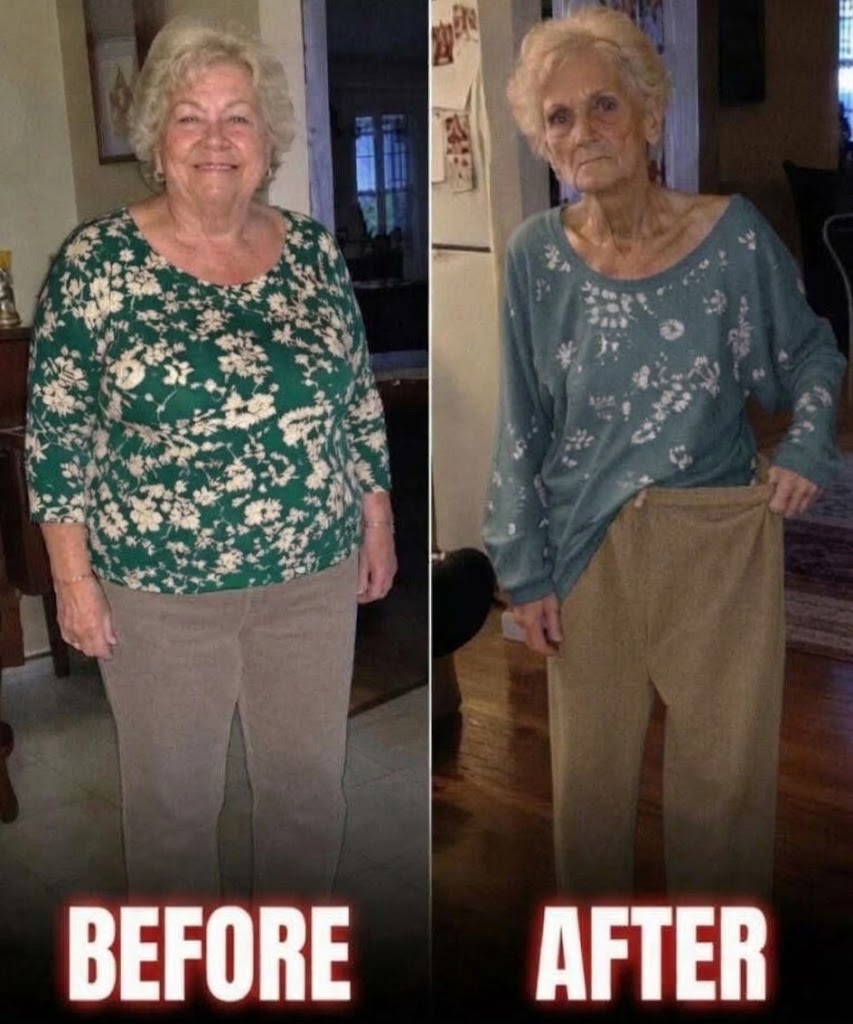
I barely recognized my 80-year-old mother when I picked her up at the train station after a week visiting an old friend.
She had lost so much weight that her clothes hung loosely from her shoulders, and she was struggling to pull an enormous black suitcase.
“Mom, what happened to you?”
She forced a weak smile. “Nothing, Laura. I’m just tired.”
But something was terribly wrong. And when I eventually opened that mysterious suitcase, I discovered a photograph, a child’s sweater, and a secret my mother had kept from me for nearly fifty years.
I almost walked straight past her at the station.
She was standing near a bench, holding the handle of a large black suitcase. Her gray hair looked disheveled, her face was unusually pale, and her familiar cardigan appeared several sizes too big.
“Mom?”
She turned toward me.
“Hello, sweetheart.”
I hurried over.
“Are you feeling all right?”
“Of course, darling. Just a little worn out from traveling.”
But her cheeks looked hollow, and even her voice sounded weaker.
My mother, Evelyn, had always been lively and cheerful. At eighty, she still enjoyed gardening, baking, and organizing our Sunday family dinners.
Only seven days earlier, she’d left to visit her childhood friend Margaret, whom she claimed she hadn’t seen in twenty years.
When I’d dropped her off at the station, she had been excited and energetic.
Now she looked completely exhausted.
“Mom, are you sick?”
“Just an upset stomach. Nothing serious.”
“I think we should get you checked.”
She shook her head.
“Please, Laura. I just want to go home.”
Then I noticed her luggage.
“Where’s your blue suitcase?”
“Margaret gave me this one. Mine broke.”
She tightened her grip on the handle.
“Can we leave now?”
I wanted to ask more questions, but she appeared too tired to continue talking.
I took the suitcase from her.
It was surprisingly heavy.
As we walked toward the parking lot, I remembered how excited Mom had been about the visit.
Margaret lived approximately three hours away, and the two women had known each other since childhood.
When Mom told me Margaret’s daughter had invited her for a week, I’d encouraged her to go.
“You haven’t seen her in ages,” I’d said.
“Twenty years,” Mom replied.
“Then you absolutely should visit.”
She hesitated.
“I don’t like leaving you with everything.”
I’d laughed.
“Mom, I’m fifty-two. I think I can survive one week without your Sunday dinners.”
She’d smiled and finally agreed.
The following Monday, I drove her to the station.
She carried her usual little blue travel bag, packed with clothing, medication, and homemade cookies for Margaret.
Before boarding, she handed me a phone number.
“That’s Margaret’s number, just in case you need to reach me.”
I saved it without thinking.
We spoke twice during the week.
Both times, Mom insisted she was enjoying herself.
But whenever I asked what they’d been doing, she quickly changed the subject.
I didn’t think much of it then.
Now, watching her struggle to walk beside me, I wished I’d asked more questions.
When we reached my car, I lifted the black suitcase into the trunk.
It felt much heavier than an ordinary week’s worth of clothing.
“What’s inside this thing?” I asked lightly.
“Oh, just a few things Margaret wanted me to bring home.”
She didn’t elaborate.
During the drive, Mom leaned against the window and barely spoke.
I kept glancing at her.
She closed her eyes several times and seemed to be struggling to stay awake.
When we arrived home, she insisted on taking the suitcase upstairs herself.
But after only two steps, she stopped to catch her breath.
“Mom, please let me carry that.”
She reluctantly agreed.
“Just put it in my bedroom.”
I carried it upstairs and placed it beside her dresser.
Mom followed me inside.
Then, as soon as I stepped into the hallway, she closed the door.
A moment later, I heard the lock turn.
I stared at it in surprise.
My mother had never locked her bedroom during the day.
That evening, I made chicken soup and brought her a bowl.
She ate only a few spoonfuls.
“Mom, you really need to see a doctor.”
“Perhaps tomorrow.”
“You look exhausted.”
“Thank you for that lovely compliment, sweetheart.”
She attempted a smile.
“I’m serious.”
“So am I. I’m tired, Laura. I just need some rest.”
I checked her temperature and encouraged her to drink water.
She insisted she’d feel better after a night’s sleep.
But I wasn’t convinced.
Once she’d gone upstairs, I decided to call Margaret.
Maybe her friend could explain what had happened during the visit.
I found the number Mom had given me and dialed.
A man answered.
“Hello?”
“Good evening. May I speak with Margaret?”
There was a pause.
“I’m sorry, but Margaret doesn’t live here.”
I frowned.
“Are you sure? I was given this number about a week ago.”
“Quite sure. I’ve had this telephone number for years.”
“Do you happen to know where she moved?”
“No, I’m afraid not.”
I thanked him and ended the call.
Then I stared at my phone.
Why had Mom given me an outdated number?
Had she genuinely forgotten?
Or had she wanted to prevent me from contacting Margaret?
I called her cell phone.
From upstairs, I heard it ringing.
She didn’t answer.
I considered knocking on her bedroom door, but I knew she was exhausted.
So I decided to wait until morning.
The next day, I found Mom asleep in her armchair.
She was still wearing the cardigan she’d worn on the train.
On the small table beside her sat a train ticket.
I picked it up.
The date caught my attention immediately.
It was from three days before I’d collected her at the station.
Why had she purchased a ticket to return home early?
Beneath it lay a luggage tag.
The name printed on it was Ellen.
Not Margaret.
Not Evelyn.
Ellen.
I looked toward the hallway.
Mom’s bedroom door was open, and the mysterious black suitcase stood beside her dresser.
I hesitated.
I’d never been comfortable going through another person’s belongings.
But Mom was clearly unwell, and the explanations she’d given me didn’t make sense.
I carefully carried the suitcase into the hallway and opened it.
Inside were several sets of neatly folded clothing, a sealed brown envelope, and an older digital camera.
The clothes appeared too large for Mom.
Beneath them, I found a small yellow sweater that looked as though it had belonged to a young child.
Beside it lay a miniature wooden rolling pin.
I picked it up.
Something about it stirred a distant memory.
I’d seen one just like it when I was little.
I could almost picture myself standing at a kitchen counter with flour scattered across the surface.
But the memory was so old that I couldn’t place it.
Next, I picked up the camera.
Its battery was nearly empty.
There were only four photographs stored on it.
The first showed Mom outside a modest brick house.
In the second, she sat beside an elderly woman resting in bed.
The third showed a handwritten schedule attached to a refrigerator.
It contained meal times, medication reminders, and notes about helping someone move safely around the house.
Then I opened the fourth photograph.
And everything changed.
It was a picture of an older printed photograph.
A woman stood outside a small white house, holding a toddler dressed in a yellow sweater.
I recognized that child immediately.
It was me.
I must have been around four years old.
But what truly startled me was the woman holding my hand.
I knew her face.
“Aunt Maggie,” I whispered.
I hadn’t spoken that name in decades.
Suddenly, fragments of childhood memories began returning.
A warm kitchen.
The smell of freshly baked pies.
A little white house with a porch.
A kind woman who used to let me sprinkle flour across the table.
I remembered calling her Aunt Maggie.
Mom had always told me she was an old family friend who’d moved away when I was young.
I’d assumed she’d passed away long ago.
At the bottom of the photograph, someone had written an address.
I recognized the street.
It was in the neighborhood where I’d spent so many afternoons as a little girl.
I checked that Mom was resting comfortably, left her a note, and drove across town.
The little white house was still there.
Its porch had been replaced, and the landscaping was different, but I recognized it.
I stood beside my car, staring at the front steps.
Memories came flooding back.
I remembered sitting there with a bowl of strawberries.
I remembered someone teaching me to roll pastry dough.
And I remembered feeling completely safe.
I walked up to the door and knocked.
A middle-aged man answered.
“Can I help you?”
“I’m sorry to bother you. Did a woman named Margaret once live in this house?”
He nodded.
“Yes. She owned it before us.”
“Do you know where she went?”
He shook his head.
“I’m afraid not. That was quite a long time ago.”
I showed him the photograph.
He studied it carefully.
“Is that you as a little girl?”
“Yes.”
He smiled.
“I wish I could help you find her.”
I thanked him and returned to my car.
Then I looked again at the digital photographs.
The brick house where Mom had been photographed had a clearly visible street number.
I compared it with the address printed on the luggage tag.
They matched.
The address was about three hours away.
That had to be where Mom had spent the week.
And if Margaret was the same woman I’d once called Aunt Maggie, I needed to understand why my mother had kept her identity from me.
When I returned home, Mom was sitting at the kitchen table with a glass of water.
The black suitcase was beside her chair.
She looked up.
“You opened it.”
I stopped.
“Yes.”
Her expression turned disappointed.
“Laura, those are private things.”
“I know, Mom, and I’m sorry. But I was worried about you. You came home looking unwell, and nothing you’ve told me makes sense.”
“You should have asked.”
“I did ask. Several times.”
She lowered her eyes.
I sat across from her.
“Mom, who is Aunt Maggie?”
Her face changed immediately.
“Where did you hear that name?”
“I remember her.”
Mom remained silent.
“The woman who taught me to bake. The woman who lived in the white house.”
I took out the photograph.
“Margaret is Aunt Maggie, isn’t she?”
After a long pause, Mom nodded.
“Yes.”
“Why didn’t you tell me?”
“I didn’t think you’d remember her.”
“Why wouldn’t I remember someone who took care of me?”
Mom’s eyes filled with tears.
“Because you were so young.”
I placed the photograph between us.
“Then tell me what happened.”
She looked at the picture for a long time.
Finally, she began.
“Your father had just left us. You were four years old. I was working two jobs, and I didn’t know how I was going to manage.”
I knew my father had left when I was little.
But Mom had rarely discussed the difficulties that followed.
She always made those years sound manageable.
“Margaret lived nearby,” she continued. “She offered to look after you while I worked evenings.”
I stared at her.
“She took care of me?”
Mom nodded.
“Sometimes you stayed at her house until late. On particularly difficult nights, you slept there.”
“For how long?”
“Almost two years.”
I couldn’t believe it.
Two years.
A woman I’d barely heard mentioned since childhood had played an enormous role in raising me.
“She made your meals,” Mom explained. “She helped you learn your letters. She read you stories and taught you how to bake.”
I looked toward the little rolling pin on the counter.
“Was that mine?”
“Yes. Margaret made it for you.”
Suddenly, I remembered standing on a chair beside a kitchen counter, proudly flattening dough with that tiny rolling pin.
I’d always assumed those memories belonged to our home.
But they belonged to Margaret’s.
“Why did she disappear from our lives?” I asked.
Mom folded her hands.
“She moved away after her husband found work in another town.”
“And you stopped talking?”
“Not right away.”
“What happened?”
She hesitated.
Then she whispered, “I felt ashamed.”
“Of what?”
“Of needing her so much.”
I stared at my mother.
She continued.
“Margaret was wonderful to us, Laura. She never complained. She never asked for money or expected anything in return. But every time I left you with her, I felt like I was failing as a mother.”
“Mom, you were working to support us.”
“I know that now.”
Her voice trembled.
“But back then, I hated feeling that someone else could give you the attention I couldn’t always provide.”
“So you pushed her away?”
“Gradually. I called less often. Then I missed a visit. Eventually, so much time passed that I didn’t know how to reconnect.”
I looked at the photograph again.
For most of my life, I’d believed Mom had somehow handled those difficult years entirely on her own.
She’d let me believe it because she wanted me to remember her as capable and independent.
“Mom,” I said gently, “needing help didn’t make you a bad mother.”
She wiped her eyes.
“I wish I’d understood that sooner.”
I wanted to ask more questions.
But suddenly, Mom leaned forward and gripped the edge of the table.
“Mom?”
She closed her eyes.
“I’m feeling dizzy.”
I hurried to her side.
“That’s enough. We’re going to the hospital.”
This time, she didn’t argue.
At the hospital, the doctor examined her and ordered several tests.
Mom was dehydrated, exhausted, and had lost weight.
The doctor explained that her loose clothing and weakened condition made the change in her appearance seem especially dramatic.
He wanted to monitor her and investigate whether anything else was contributing to her symptoms.
Once she was resting in a hospital bed, I pulled a chair beside her.
“Mom, please tell me what really happened at Margaret’s.”
She sighed.
“Margaret hasn’t been well.”
“How unwell?”
“She’d recently returned home from the hospital. Ellen needed help taking care of her.”
“Ellen is Margaret’s daughter?”
“Yes.”
“Why didn’t you tell me?”
“Because I knew you’d worry.”
I squeezed her hand.
“I’m worried now.”
Mom looked away.
“Margaret was there for me when I needed her most. When Ellen called, I thought it was finally my turn to help.”
She explained that she’d expected a relaxing visit with an old friend.
Instead, Margaret needed assistance with meals, getting around the house, and ordinary daily activities.
Ellen had been caring for her mother for months while also working.
When Mom arrived, she offered to help for a few days.
But at eighty, she hadn’t realized how physically demanding the responsibility would be.
She spent nights listening for Margaret in case she needed assistance.
During the day, she helped prepare meals and manage everyday tasks.
She became so busy and tired that she started skipping her own meals.
By the fourth day, her stomach was upset, and she could barely eat.
“I bought a train ticket to come home early,” Mom admitted.
“The ticket I found?”
She nodded.
“But Margaret was having a difficult morning, and Ellen had already gone to work. I couldn’t leave her alone.”
“So you missed your train?”
“Yes.”
“And stayed another three days?”
“I thought I could manage.”
I looked at her in disbelief.
“Mom, you’re eighty years old.”
She gave me a faint smile.
“Yes, I’ve noticed.”
“Why didn’t you call me?”
“Because I knew you’d tell me I needed help.”
“Because you did.”
She looked embarrassed.
“I know.”
Mom remained in the hospital overnight.
After fluids and rest, her condition improved.
The doctor arranged follow-up appointments and emphasized that any continuing weight loss, weakness, or difficulty eating needed further medical attention.
When we returned home, I carried the black suitcase into the living room.
There was still something I didn’t understand.
“Mom, why did Ellen give you this suitcase?”
Mom looked at it.
“Margaret wanted you to have what’s inside.”
“Me?”
She nodded.
“She knew I would be seeing you when I returned. She asked me to bring some things she’d kept.”
I picked up the sealed brown envelope.
“What’s in here?”
“Open it.”
Inside were old photographs, birthday cards, and several letters.
Some were written in Mom’s handwriting.
Others had been written by Margaret.
There were pictures of me making pies, sleeping on Margaret’s couch, and standing between the two women in a park.
I smiled through tears as I looked at them.
Then I found a letter Mom had written when I was five.
It read:
“I don’t know what I would do without you. Laura asks about you every morning. You’ve given her a safe, loving place to stay when I couldn’t always be there.”
I read it twice.
Then I found Margaret’s response.
“Evelyn, you’re doing everything you can for your daughter. Working hard to provide a home doesn’t mean you’ve failed her. Please stop apologizing for allowing me to care about Laura.”
I looked across the table at Mom.
“She understood.”
Mom nodded.
“She always did.”
“Then why did you spend so many years believing you owed her something?”
She touched the small rolling pin.
“Because I couldn’t accept that someone could give us so much kindness without expecting repayment.”
“And now?”
“I thought this visit would finally allow me to return the favor.”
I reached for her hand.
“Mom, friendship isn’t a debt. You don’t have to repay someone by exhausting yourself.”
For several seconds, she didn’t speak.
Then tears began rolling down her cheeks.
The following afternoon, I called Ellen.
This time, Mom willingly gave me her number.
Ellen sounded relieved when I introduced myself.
“How’s Evelyn?” she asked immediately.
“She’s recovering. She became dehydrated and needed medical attention.”
“Oh, I’m so sorry. I knew she was tired, but she kept insisting she felt fine.”
“How’s Margaret?”
“Resting. She’s been asking about Evelyn.”
I hesitated before continuing.
“Ellen, can I ask how much help your mother actually needs?”
There was a long silence.
Finally, she admitted, “More than I’ve wanted to acknowledge.”
Margaret could still manage some things independently, but she needed practical assistance and supervision throughout the day.
Ellen had already reduced her working hours to care for her mother.
The arrangement was becoming difficult to maintain.
“I thought Evelyn would enjoy spending time with Mom,” she explained. “I never expected her to take on so much.”
“My mother has never been very good at admitting when she needs help.”
Ellen gave a tired laugh.
“Neither has mine.”
We spent the next half hour discussing possible support arrangements.
I encouraged Ellen to speak with Margaret’s medical team about suitable care services and additional assistance.
I couldn’t personally solve everything from three hours away.
But I could help her find resources and make sure neither elderly woman felt obligated to do more than she safely could.
Before hanging up, I asked one final question.
“Do you think Margaret would want to see me?”
Ellen’s voice softened.
“Laura, she’s been hoping you’d visit for years.”
Two weeks later, Mom and I made the trip together.
This time, I drove.
She was feeling much stronger, eating regularly, and following her doctor’s advice.
She even complained about my driving during the first hour.
I considered that an encouraging sign.
When we arrived, Ellen welcomed us at the door.
Margaret was sitting in a comfortable chair beside a window.
A knitted blanket rested across her lap.
She looked smaller and more fragile than the woman I remembered.
But when she saw me, her face brightened.
“Laura?”
I nodded.
She held out her arms.
I crossed the room and hugged her.
And suddenly, I recognized a familiar scent.
Vanilla.
She was wearing the same gentle perfume I’d remembered from childhood.
“My goodness,” she whispered. “Look how you’ve grown.”
I laughed through tears.
“You used to let me eat the leftover pie dough.”
Margaret smiled.
“You didn’t exactly wait for permission.”
We both laughed.
Mom sat beside her and took her hand.
Margaret studied her face.
“You gave us quite a scare, Evelyn.”
Mom sighed.
“So I’ve been told.”
We spent the afternoon looking through old photographs and sharing memories.
Margaret remembered things I’d completely forgotten.
The day I lost my first tooth.
The yellow sweater she’d knitted for me.
The afternoon I insisted on baking Mom a birthday cake and accidentally used salt instead of sugar.
I listened in amazement.
For decades, those memories had existed inside someone else’s heart, waiting for us to find each other again.
Before leaving, I thanked Margaret.
“For everything you did for Mom and me.”
She shook her head.
“Your mother worked very hard, Laura. I just helped make sure you were cared for while she was working.”
“That wasn’t a small thing,” I told her.
Margaret squeezed my hand.
“No,” she admitted softly. “I suppose it wasn’t.”
Over the following months, Ellen arranged additional support for her mother.
Mom continued visiting Margaret, but only for short stays, with no expectation that she would provide full-time care.
I called both women regularly.
And our Sunday dinners continued.
But something had changed.
Instead of allowing Mom to prepare every meal, I started cooking.
At first, she protested.
Eventually, she began bringing recipes instead of fully prepared dishes.
One afternoon, I walked into my kitchen and found Mom standing beside my daughter.
They were making an apple pie together.
On the counter lay the little wooden rolling pin Margaret had saved for nearly fifty years.
My daughter carefully rolled out the pastry dough.
“Not so much pressure,” Mom advised.
My daughter laughed.
“You sound just like Grandma Maggie.”
Mom looked up.
For a moment, her eyes filled with tears.
Then she smiled.
We had started calling Margaret Grandma Maggie again.
For twenty years, my mother had believed the only way to honor her friend’s generosity was to repay every kindness without ever asking for help herself.
But Margaret had never been waiting for repayment.
She’d simply wanted her friend back.
And that mysterious black suitcase hadn’t carried a burden from the past.
It had brought home the forgotten memories, unconditional kindness, and love that had quietly supported our family all along.