
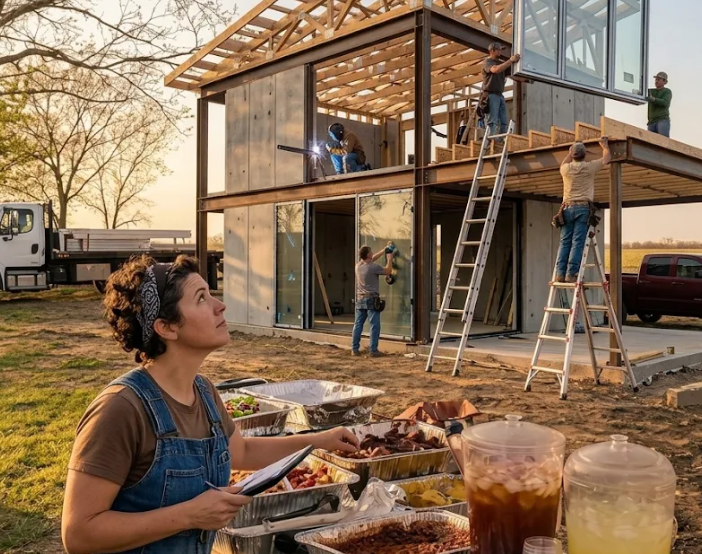
The first wooden roof truss rose into the morning sky at exactly 7:40, and I stood frozen beside a table filled with breakfast. Seventy neighbors had gathered on our Nebraska farm, determined to rebuild the barn a tornado had destroyed eleven weeks earlier. My husband, Dwayne, watched as volunteers carefully secured the enormous wooden frame. For the first time in months, I saw him smile. We’d lost three calves, valuable equipment, and a building that had stood for generations. The insurance company had issued an $86,400 payment, enough to cover much of the rebuilding expense. But my father-in-law, Vernon, had kept every dollar, leaving us wondering how we’d ever recover.
The farm legally belonged to Vernon, and although we’d contributed toward insurance premiums for more than twenty years, his name appeared on the policy. Instead of rebuilding our barn, he spent the settlement on a beautiful new workshop behind his own house, complete with heated floors and expensive equipment. Dwayne refused to confront his seventy-four-year-old father in court, so we secured a $41,000 loan for building materials. Then our eighty-two-year-old neighbor, Marv Ochs, offered to help. I began calling farmers, carpenters, church members, and friends. Within days, seventy people volunteered their time. By lunchtime, our barn was taking shape again. But when Vernon’s white pickup appeared at the end of our driveway, nobody expected what happened next.
Vernon drove past twice before finally stopping while everyone gathered for lunch. Without speaking, he walked toward an old oak support beam we’d salvaged from the destroyed barn. Carved into the wood were his childhood initials, dated 1959. Tears filled his eyes as he admitted he’d used the insurance settlement selfishly after struggling with loneliness following his wife’s passing. He apologized to Dwayne, then asked whether he could help finish the barn. That afternoon, father and son worked together again. Months later, Vernon contacted farm attorney Carol Ritter and arranged something even more surprising. He transferred ownership of our farmhouse, rebuilt barn, outbuildings, and 160 surrounding acres to Dwayne and me. He also arranged separate insurance coverage in our names, finally protecting the investment we’d spent twenty-two years maintaining. For the first time, the property we’d worked so hard to preserve legally belonged to us.
A year later, our barn stood proudly beneath its bright red roof, complete with new calf pens and a restored tractor. Dwayne and Vernon had spent winter evenings repairing that tractor together in the workshop that once symbolized their disagreement. Our son Caleb joined them most Saturdays, learning the same skills his grandfather had practiced for decades. One afternoon, Vernon arrived carrying a pan of homemade rhubarb bars prepared from his late wife’s recipe. They were slightly overdone, and he sheepishly asked me what he’d done wrong. I invited him inside to show him. As we passed the barn, he stopped and admired the building we’d raised together. The tornado had taken our old barn, but seventy generous neighbors helped us rebuild something even more valuable — a family relationship we thought we’d lost.