
My eighteen-year-old son walked through our front door two days after moving into his first apartment, and I immediately knew something was wrong. His gray Kansas City Royals hoodie was pulled over his head, his eyes were swollen, and his hands wouldn’t stop trembling. I was making our usual Thursday spaghetti dinner when he appeared in the kitchen doorway. Instead of greeting me, he quietly locked the front door and checked the deadbolt twice. Then he looked at me and asked whether anyone else was home. When I told him his father, Mike, was still at a construction job in Overland Park, he took a shaky breath. “Mom, I need to tell you something, but whatever happens, please don’t call Ben.”
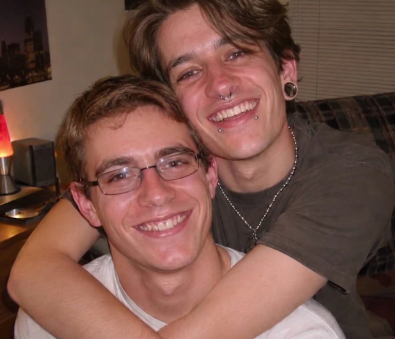
Ben Callahan had been Luke’s closest friend since they were two years old. They attended the same schools, played on the same sports teams, and even shared an apartment after graduating from high school. People regularly mistook them for brothers because they had nearly identical features. Three weeks earlier, however, something had happened at graduation that changed everything. Ben had received the results of a DNA ancestry test and discovered a connection he couldn’t explain. Luke eventually found documents at Ben’s mother’s house, including an old fertility clinic record. Now he was sitting across from me, holding two pieces of paper, and asking me to tell him the truth about something I had kept hidden for eighteen years.
I unfolded the first document and saw the result: Luke Whitman and Ben Callahan shared 24.7% of their DNA, with the relationship listed as half-siblings. The second document contained a donor profile from the Midwest Reproductive Center, identifying Donor #4127. I recognized the number immediately. Nearly nineteen years earlier, my husband and I had learned that Mike had azoospermia, a medical condition that prevented him from fathering children naturally. After months of difficult conversations, we chose donor insemination. Mike had personally selected the donor profile, and I became pregnant on our second attempt. During a fertility support group, I also discovered that my friend Dana Callahan had selected the same donor. She later gave birth to Ben, just thirteen days after Luke. We had promised each other that our children would learn the truth when they turned eighteen. But fear, family expectations, and Mike’s worries about being viewed differently kept pushing that conversation into the future. When Luke finally asked whether the documents were real, I could no longer hide behind our promises. I told him the truth: Ben was his half-brother, but Mike was still the father who had raised him.
At 6:52 that evening, Mike returned home and immediately noticed the tension in the kitchen. Luke had been afraid to face him, believing the revelation might change their relationship forever. But Mike pulled out a chair and explained that his silence had come from shame, not a lack of love. He remembered holding Luke for the first time in the delivery room, humming a song his mother had sung to him as a child. He reminded his son that he had taught him to ride a bicycle, use a hammer, play baseball, and face difficult moments. “I don’t care whose blood you have,” Mike told him. “You are my son.” Luke finally stood up, walked around the table, and embraced the man he had always called Dad. Later that evening, both families met at Dana’s house, where Luke and Ben completed their familiar forty-five-second handshake before hugging as brothers. They eventually contacted the fertility clinic, and the donor, a sixty-one-year-old chemistry teacher named Tom, responded with a letter. He explained that he never intended to replace their parents and was happy simply to answer questions about their biological background.
That Christmas, the families gathered under one roof for dinner. Luke and Ben presented Mike with a handmade walnut sign carved in his workshop. It read, “WHITMAN & CALLAHAN — Family is who stays.” Mike held it for several minutes before embracing both boys. Today, Luke continues learning woodworking from Mike, while Ben studies nursing like his mother. They still share an apartment, perform their secret handshake, and introduce each other as brothers. Sarah later admitted that the one thing she would change was the decision to keep the truth hidden for so many years. She wished they had explained their family’s story gradually, rather than allowing a DNA test to reveal it unexpectedly. The secret had created fear and uncertainty, but honesty eventually brought everyone closer. And above the front door of their home, the wooden sign remains a daily reminder that family is built through love, commitment, and the people who choose to stay.