
The moment I opened the garage door, the freezing air hit my face, and I stopped breathing for a second. There, sitting on an old Army cot beneath two thin blankets, was my 85-year-old grandfather, wearing his winter coat and wool hat. A tiny space heater stood beside him, while forty dusty clocks sat on makeshift shelves along the walls. I had flown home two days early to surprise him with a birthday cake, never imagining I would find him sleeping in a place that wasn’t even insulated. My name is Tess, and my grandfather, Sam Weller, had raised my brother Luke and me after we lost our parents when we were children. Two years earlier, after Grandpa broke his hip, Luke and his wife, Amber, offered to move into his house and take care of him. I trusted them completely and sent $600 every month to help with his expenses, but when Grandpa saw me standing in that garage, his first words were, “Please don’t make a fuss.”
I immediately took him to the hospital, where doctors discovered that he had mild hypothermia, early pneumonia, and significant weight loss. When I asked how long he had been sleeping in the garage, he quietly admitted it had been almost a year. Back at the house, Amber showed little concern, insisting that Grandpa preferred the arrangement and that caring for an elderly person was exhausting. My brother avoided looking me in the eyes. I contacted Adult Protective Services and an attorney who specialized in protecting older adults. Her name was Mrs. Akai, and she began reviewing Grandpa’s financial records and property documents. What we discovered was even more upsetting: his Army pension, Social Security payments, and the $14,400 I had sent over two years had been placed under Amber’s financial control. Records showed that money intended for his care had also helped pay for personal expenses, including a leased SUV and a vacation. Grandpa was the legal owner of the house he had purchased with Grandma Helen in 1964, and he had never agreed to give up his bedroom. When Mrs. Akai explained his rights and prepared the necessary legal notices, I realized that getting him home was only the beginning of what needed to be fixed.
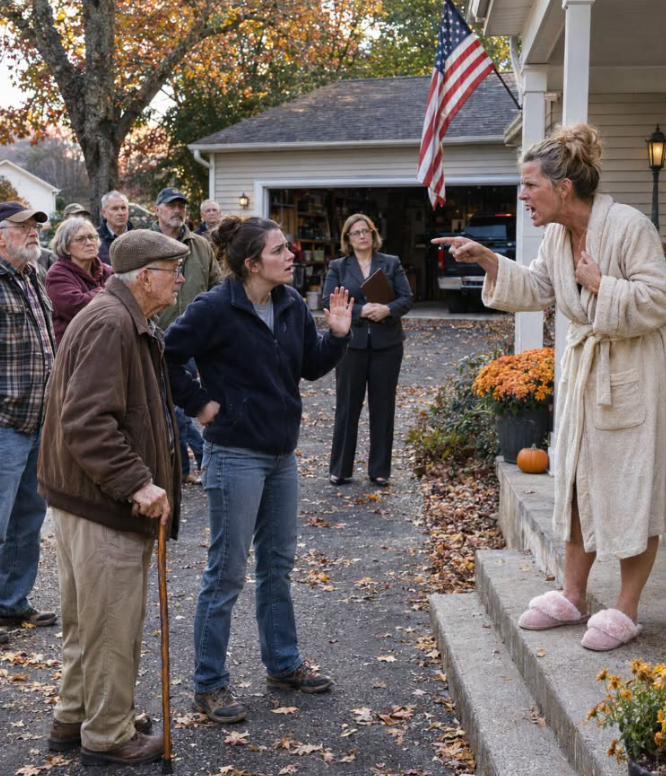
I wanted Grandpa to return to his own bedroom, surrounded by the forty clocks he had spent decades repairing. So I visited the local Veterans of Foreign Wars hall and explained what had happened to his old friends. One man named Walt simply asked, “What time?” By Sunday morning, fourteen pickup trucks had arrived outside Grandpa’s home. Fourteen elderly veterans stepped out, some using canes and one carrying an oxygen tank. Mrs. Akai and a sheriff’s deputy were also present to ensure everything remained peaceful and followed the proper legal process. The veterans helped restore Grandpa’s bedroom, carefully carried his belongings inside, and returned every clock to its familiar place. When Grandpa arrived from the hospital, Walt helped him out of the car and walked beside him toward the front door. Grandpa looked around the living room, reached into his pocket for a tiny brass key, and began winding the large clock he had received as a wedding gift. Soon, the familiar ticking filled the house again. Meanwhile, the financial investigation continued, and the legal process established that the money and property belonged to Grandpa, not the relatives who had been managing his affairs.
Luke and Amber eventually moved out, and the county continued reviewing the financial records. Amber later agreed to repay the misused funds through a court-supervised settlement. My brother stayed away for several months before returning with a small lilac bush to replace the one that had been removed from the front yard. Grandpa eventually invited him inside, although rebuilding their relationship took time and consistent effort. I requested a transfer to a hospital closer to home so I could continue working as a flight nurse while helping Grandpa with his daily needs. He turned 86 surrounded by the fourteen veterans who had helped bring his home back to life. Luke attended, too, and helped prepare the birthday celebration. That evening, Grandpa asked me to bring him the little clock he had given me when I was nine. He carefully wound it, listened to its familiar ticking, and smiled. “As long as this clock is ticking, somebody’s looking out for you,” he reminded me. I held his hand and whispered, “I know, Grandpa. It’s my turn now.”