
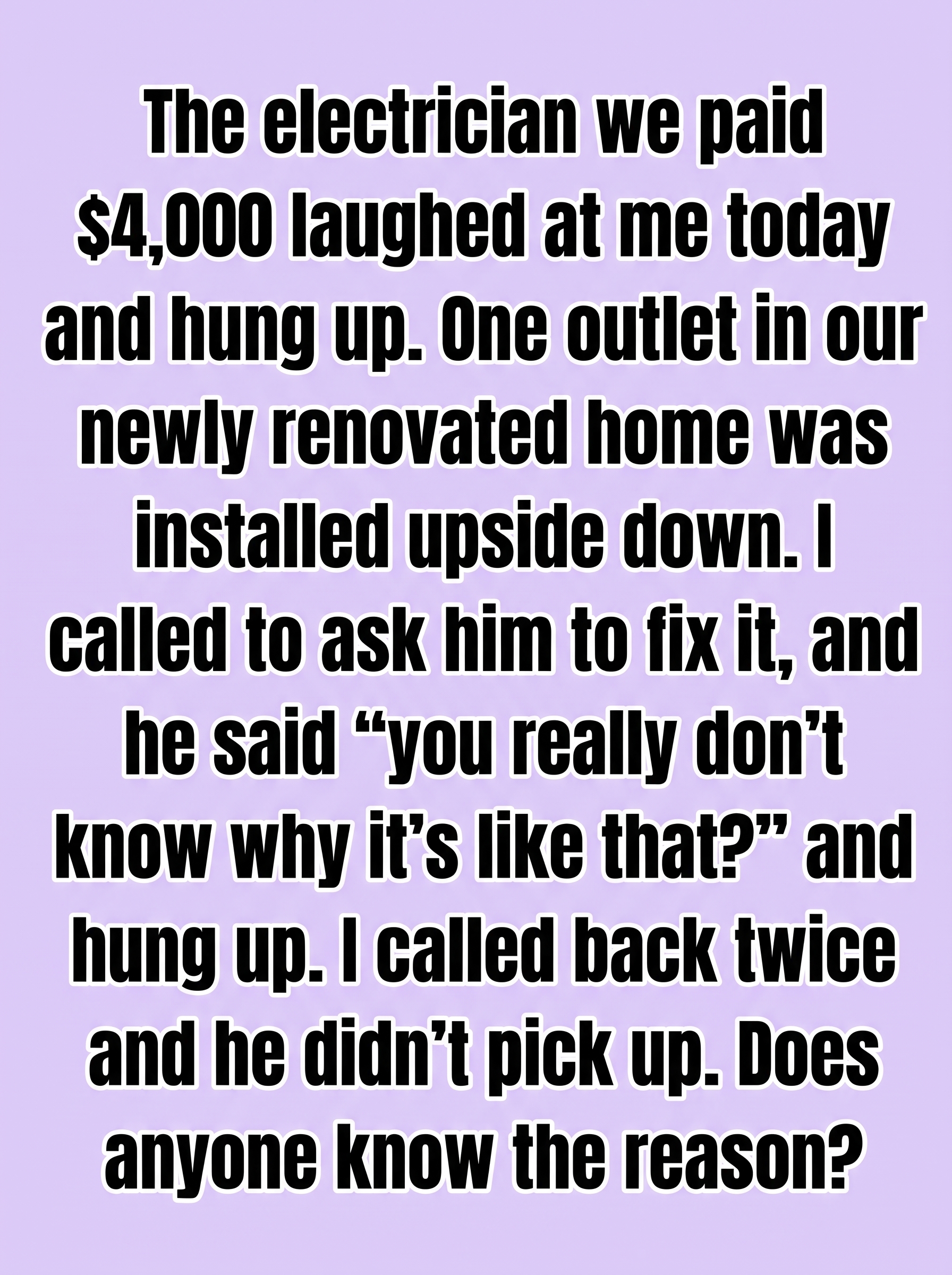
Have you ever spotted an upside-down wall outlet in your home? Seeing a plug receptacle with the round ground slot sitting at the top instead of the bottom often looks like a careless mistake. Countless homeowners assume a rushed builder simply installed the hardware backward during construction. However, licensed electricians reveal this unusual, unexpected setup is frequently an intentional, highly practical choice.
Historically, across millions of older American homes, specific wall switches were designed to control plug-in lamps before overhead lighting became standard. Rather than shutting down the entire outlet, builders used a clever, split-wired electrical circuit inside the wall box. This allowed one socket to toggle on and off while the other stayed continuously powered.
To help residents immediately identify these split-wired outlets, many pros flipped them upside down as a deliberate visual cue. Yet, national electrical codes don’t actually mandate which direction an outlet should face. So, what is the hidden truth about your home’s electrical layout, and why are some entirely upside down?
The fascinating truth is that installation habits vary widely depending on regional building trends, commercial safety preferences, and individual contractor routines. While flipping a receptacle upside down is a popular visual indicator for a switched outlet, some builders do it purely for safety. Having the ground prong at the top helps prevent fallen metal objects from bridging live prongs and creating a hazard.
Consequently, you cannot rely entirely on visual appearance to know if a receptacle is controlled by a wall switch. In many newer properties, an inverted outlet operates just like any standard continuous-power socket, while an upright outlet might secretly be wired to a switch across the room. This lack of standardization can complicate simple tasks like plugging in appliances or arranging your living room lighting.
Fortunately, the fastest and safest way to uncover the truth about your specific outlets requires zero specialized tools or costly inspections. Simply plug a standard table lamp into both the top and bottom sockets, then flip every nearby wall switch to see how they respond. Understanding this smart residential wiring quirk will save you from unnecessary troubleshooting and help you map out your home’s energy flow with absolute confidence.