
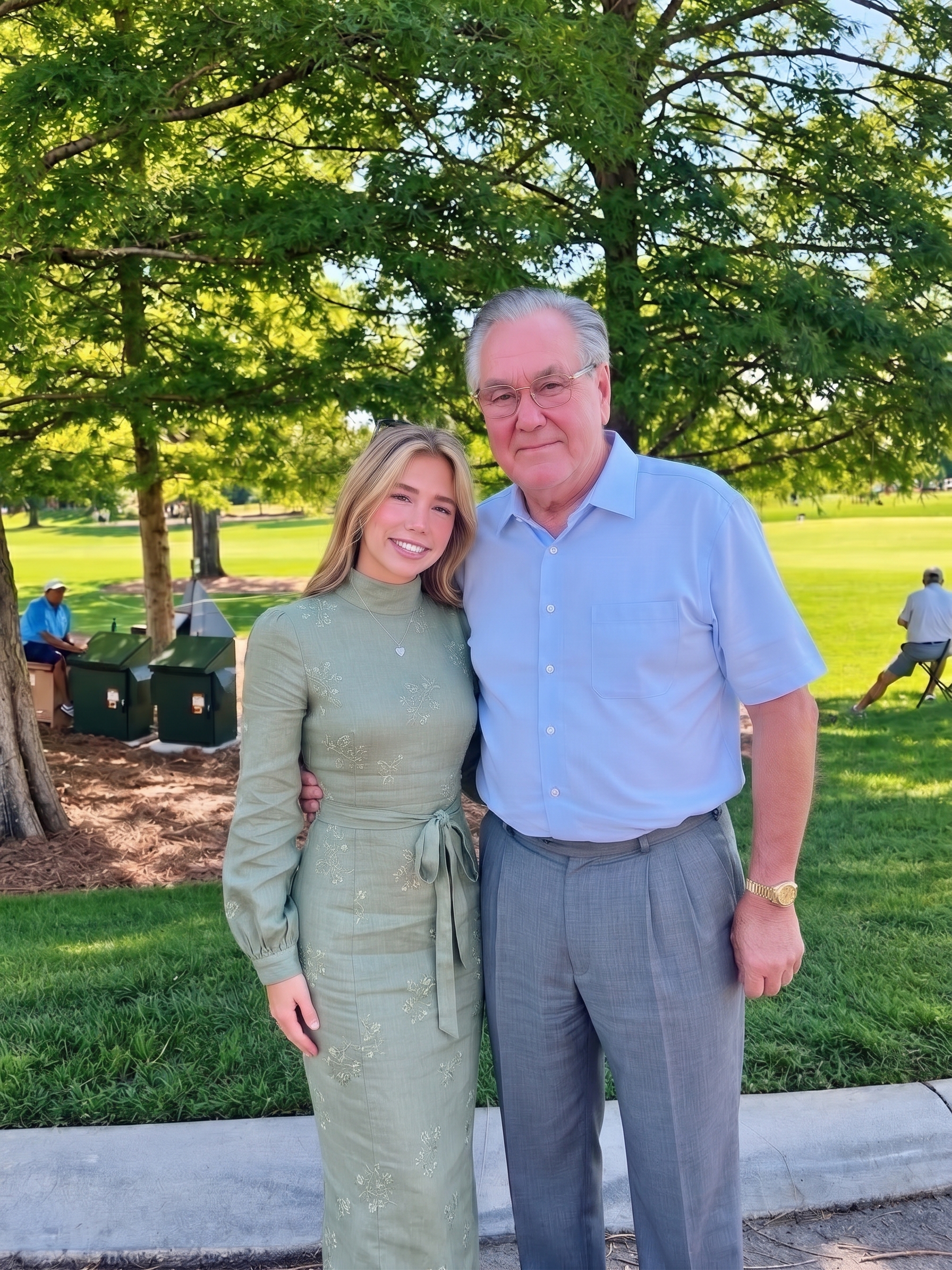
Part 1: The Bench by the Pond The late afternoon sun slanted through the oak trees at Cedarbrook Park, casting long shadows across the gravel path. I sat on the wooden bench beside Richard Bennett, my hands folded tightly over my purse, trying to make sense of the words that had just left his mouth.
“No salary,” I repeated, my voice barely rising above the rustle of the wind. “Seven years, Mr. Bennett. Seven years of staying past eight, handling your medical appointments, reorganizing your suppliers when revenue dropped, and now you’re telling me I can stay in your guest house and work for free?”
Richard, seventy-eight and leaning slightly on his walnut cane, looked tired. His silver hair caught the amber light as he reached into the inside pocket of his navy blazer and pulled out a thick cream-colored envelope.
“Emily, if you would just let me finish—”
“There’s nothing to finish,” I said, standing up so fast the bench creaked. My throat burned. I thought of my mother’s blood pressure medication sitting on our kitchen counter back in our two-bedroom apartment, and my nineteen-year-old brother, Leo, working double shifts at the warehouse just to help cover his community college tuition. “I have a family that depends on every paycheck I bring home. I respect you, Mr. Bennett. I always have. But I cannot pay my mother’s pharmacy bills with room and board.”
“Emily, please,” he said, holding the envelope toward me. “I spent three mornings this week with Arthur Vance and Mrs. Gallagher in accounting putting this together. Read it before you walk away.”
“I don’t need a lawyer’s letter to tell me I’m being let go without severance,” I replied, blinking back the tears I refused to let fall in front of him. “I’ll have my desk cleared out by Monday morning. Thank you for the seven years.”
I turned and walked briskly down the gravel path toward the parking lot, not once looking back.
Part 2: The Quiet Weekend Saturday morning felt strangely hollow. For the first time in seven years, my phone didn’t buzz at seven-thirty with Richard asking if I’d confirmed his call with the Chicago distributor or picked up his dry cleaning.
My mother, Clara, noticed immediately as I sat at the kitchen table staring at my untouched coffee.
“You didn’t go into the office today,” she said gently, setting a plate of toast beside my elbow. “Did Richard give you the weekend off?”
“Something like that,” I forced a smile. “Company’s tightening its belt, Mom. I’m going to start sending out my resume on Monday.”
Leo walked in wearing his warehouse uniform, grabbed a piece of toast, and frowned at me. “Wait—Bennett Logistics? You practically run that place. Who’s going to keep track of his contracts if you’re not there?”
“He’ll figure it out,” I said quietly.
That afternoon, I updated my resume and applied to four administrative positions. Every time I typed Seven years as Executive Assistant to the Founder, a dull ache settled in my chest. Richard hadn’t been a cruel boss. When my father passed away four years ago, Richard had quietly covered the funeral expenses and insisted it was a company bereavement benefit. When Leo needed a reliable used car to get to his night classes, Richard had sold him his late wife’s Civic for five hundred dollars.
That was what made Friday hurt so much. It hadn’t just felt like losing a job; it had felt like discovering that loyalty meant nothing when times got hard.
Part 3: Monday Morning At 8:15 on Monday morning, I walked into the quiet, wood-paneled lobby of Bennett Logistics carrying a cardboard box for my personal items. The office felt smaller than usual, the hum of the printers muted.
Before I could reach my desk, the glass door to the accounting office opened. Helen Gallagher, the head of accounting who had worked beside Richard for twenty-two years, stepped out holding a familiar cream-colored envelope.
“I’m glad you came in, Emily,” Helen said, her expression unreadable. “Mr. Bennett isn’t here yet. He had a cardiology follow-up at nine. He asked me to make sure you received this if you came to pack your things.”
“I already told him I can’t work without pay, Helen.”
“Emily,” Helen said softly, placing the envelope directly on top of my cardboard box. “You didn’t let him speak on Friday. Sit down for five minutes. Drink a cup of coffee and read the first page. If you still want to pack your desk afterward, I’ll help you carry the box to your car myself.”
Hesitating, I sat in the leather chair across from my old desk and broke the wax seal on the envelope.
Inside were two documents bound in blue legal covers, stamped with the seal of Arthur Vance, Richard’s longtime corporate attorney.
I unfolded the first page and began to read.
TRANSFER OF EQUITY AND OPERATING OWNERSHIP — BENNETT LOGISTICS, LLC.
My breath caught. I read the paragraph again, certain my eyes were playing tricks on me.
The document stated that effective immediately, Richard Bennett was retiring from active management and transferring seventy-five percent ownership of Bennett Logistics to Emily Mercer—making me the majority owner and Managing Partner.
Beneath it was a second document: a personal promissory and living arrangement agreement explaining why there was no longer a “salary.”
I flipped to the handwritten letter tucked behind the legal pages, written in Richard’s neat, slightly shaky cursive:
Emily,
If you are reading this, it means I chose the worst possible words in the park on Friday and let you walk away before explaining myself.
As you know, revenue has been down this year, and at seventy-eight, my doctor has made it clear that if I don’t step back from the stress of running this company, I won’t see eighty. My nephew in Dallas has been pressuring me for months to sell Bennett Logistics to a national liquidator—which would mean shutting down our warehouse, laying off Helen and the drivers, and erasing forty years of work.
I refused to sell to him. Instead, I asked Arthur and Helen to structure a transfer of the company to the only person who truly loves it and knows how to keep it alive: you.
When I told you on Friday that you would no longer receive a salary, it was because under the new structure, you aren’t an employee anymore—you’re the owner, drawing fifty percent of net profits directly, with an immediate $35,000 transition retainer deposited into the operating account so your mother and Leo are never short while you steer the company back into the black. And as for offering you a place to stay—my house is far too big for one old man, and I hoped that if you and your family wanted to live in the east wing while I spend winters in Florida, it would ease your rent burden.
I never meant to insult your dignity, Emily. You have carried this company on your back for seven years. It belongs to you now—if you still want it.
— Richard
Part 4: The Return to the Park I sat frozen at my desk, tears finally spilling onto the blue legal cover. Helen quietly handed me a tissue from the box on the corner of my desk.
“He practiced what he was going to say all week,” Helen murmured. “He wanted to surprise you away from the office so you wouldn’t feel pressured. When you stood up and walked away before he could open the envelope, he nearly had a fit.”
I looked at the clock on the wall. 9:45 a.m.
“Where is his cardiologist’s office?” I asked, standing up and leaving the empty cardboard box behind.
“St. Jude Medical Plaza. Three blocks east.”
I didn’t drive. I walked fast, clutching the cream envelope against my chest, until I spotted Richard’s familiar dark sedan parked near the entrance of the plaza—and just across the street, sitting on the same wooden bench at the edge of Cedarbrook Park, was Richard himself, feeding breadcrumbs to the pigeons.
He looked up as my footsteps crunched on the gravel path. For a second, his shoulders tensed, as if bracing for another goodbye.
Instead, I sat down beside him on the bench and held out a pen from my purse.
“You left out one detail in your letter, Mr. Bennett,” I said, my voice steady despite the tears still drying on my cheeks.
He blinked, looking from the pen to my face. “What’s that?”
“If I’m going to run Bennett Logistics,” I said, offering him a small smile, “you’re still coming in twice a week as Senior Advisor—and I’m the one paying your salary now.”
Richard stared at me for a long moment before a slow, genuine laugh broke across his face. He took the pen, signed the final witness line on his knee, and leaned back against the bench.
“Deal, boss,” he said quietly. “Now let’s go back to the office. We’ve got a company to run.”