
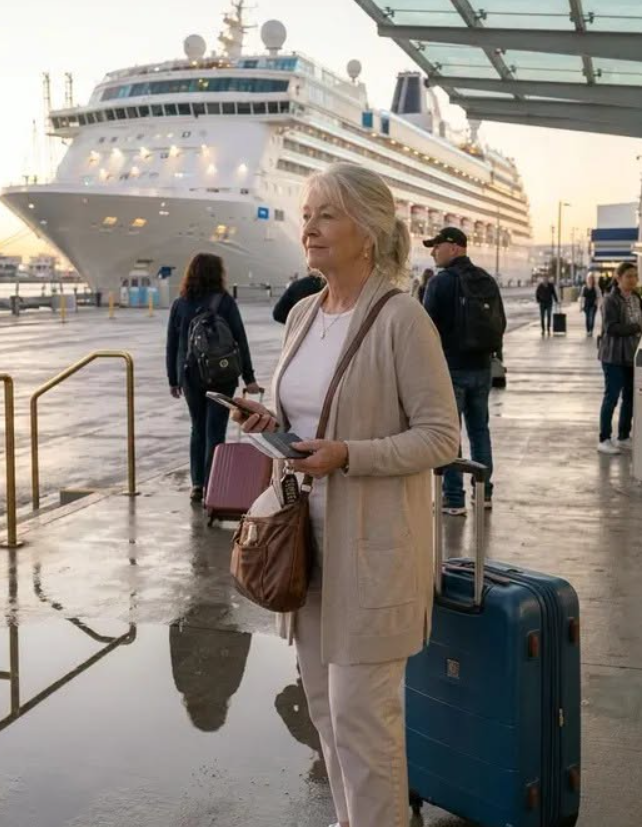
Nine days after I buried my husband, my son left three pet carriers in my living room and told me I would be caring for them while he vacationed in the Bahamas. Austin did not ask how I was sleeping or whether the empty house felt unbearable without Ernest. His wife, Chloe, placed a bag of food beside the cages, handed me written instructions, and reminded me to clean everything properly. When I quietly mentioned the funeral, she sighed and said everyone had problems. Austin kissed my forehead and told me they could always count on me. I smiled, waited until they drove away, and pulled an old blue suitcase from the closet. By sunrise, I planned to be aboard a year-long cruise—and they had no idea what else would change when I left.
For forty years, I had been the person everyone depended on. I cared for Ernest during his illness, helped Austin through financial trouble, and spent months supporting Chloe after their daughter, Maya, was born. I had even sold jewelry and used my savings without expecting recognition. Yet at Ernest’s funeral, Austin’s first private question was what I intended to do with my house. That moment stayed with me. Before his passing, Ernest had admitted that we had protected our son from responsibility for too long. He asked me not to continue making life effortless for a forty-one-year-old man. With an attorney’s help, I had already prepared the documents needed to honor that request. Austin’s careless delivery of the animals simply showed me that the time had arrived.
A neighbor helped place the pets with responsible caregivers, and I left the house spotless. On the dining table, I placed my keys beside two folders and a note telling Austin not to call with complaints but to contact his attorney. Then I took a taxi to the Port of Miami. My phone began ringing before I reached the ship, but I did not answer. For the first time in decades, I carried only my passport and my own plans. The cruise would last nearly a year and visit more than fifty ports. I felt grief, guilt, and fear as the coastline disappeared, but I also felt something unfamiliar: freedom. Eleven days later, I finally read Austin’s messages. He was furious because official documents had arrived concerning the apartment where he and Chloe had lived without paying rent for eleven years.
The apartment had never belonged to them. Ernest and I had purchased it, paid the mortgage, insurance, taxes, and repairs, then allowed them to live there freely. I was not removing them; the papers created a fair lease with ninety days before the first modest payment. A separate statement showed that our support had been worth more than $400,000, though repayment was never requested. Over the following year, Austin found extra work, Chloe returned to employment, and every payment arrived on time. Slowly, their anger became understanding. When I returned, Austin met me at the port and silently carried my blue suitcase. Later, he admitted that after his father’s funeral, he had viewed me as a resource instead of a grieving person. Leaving cost me one difficult year with my son—but it gave me something far more valuable: the respectful relationship we should have built years earlier.

