
I was still bleeding when my husband texted me from lunch with another woman and told me to call an Uber home. My shoulder had been dislocated, stitches were closing a gash on my forehead, and the passenger side of my car had been crushed inward after a pickup truck ran a light in the rain. I had written Tyler one simple message from Riverside General: I’ve been in an accident. I’m in the ER. Please come get me. His answer arrived almost immediately: “Can’t leave lunch with Charlotte right now. Her ex is stalking her. Call an Uber. Sorry, babe.” I read it three times through the spiderweb cracks in my phone screen, then typed back one word: “Okay.” Tyler did not know it yet, but eight years of marriage had just ended in twenty-three words.
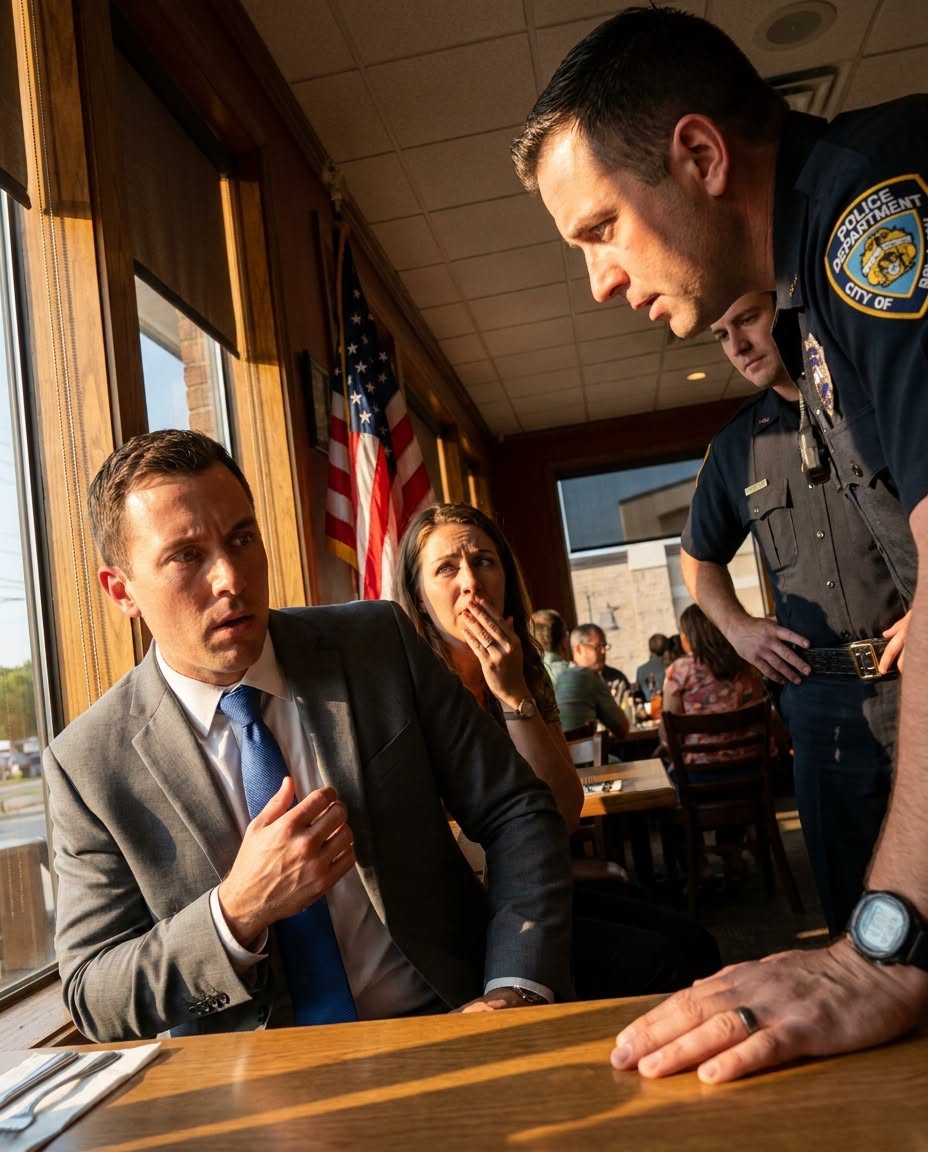
Charlotte had been his college friend, and for six months her Thursday “emergencies” had become the fixed point around which our marriage bent. Weekly lunches stretched for hours, expensive restaurant charges appeared on our credit card, and her perfume sometimes followed him into our bedroom. Tyler insisted she was vulnerable, that her ex was stalking her, that she trusted him more than anyone else. Meanwhile, I worked twelve-hour pharmacy shifts, made his breakfast every morning, and tried not to notice how often his phone stayed face down at dinner. On the day of the accident, Officer Janet Morrison and the emergency-room nurses called him repeatedly, but he sent every call to voicemail. So I told Officer Morrison exactly where he was: the Sterling Room on Fifth Street, his usual Thursday table by the window. A short time later, two uniformed officers walked into that polished dining room and informed him that his wife had been seriously injured and was waiting at the hospital. His response was not shame. It was irritation that I had “made a scene.”
What I learned afterward made the decision easier. Tyler texted four times—first apologizing, then minimizing the accident, then blaming the hospital, and finally accusing me of being dramatic. Charlotte herself messaged me later and said she had been horrified by his behavior. According to her, even after the officers explained what had happened, Tyler insisted I was exaggerating to manipulate him into leaving lunch. She cut him off immediately. Then my neighbor mentioned seeing a woman in a white BMW at our house on Tuesday afternoons while I was at work; Charlotte drove a white BMW. Whether every suspicion could be proven no longer mattered as much as what had already been established beyond argument: when I was injured, frightened, and asking for help, my husband decided someone else deserved his attention more. My brother David drove two hours to sit beside me without hesitation. By the next morning, a locksmith was changing the deadbolts and a moving company was photographing, inventorying, and packing Tyler’s belongings.
Sixty-three boxes were waiting when Tyler and his mother arrived to collect them. A formal notice gave him forty-eight hours to remove his property and directed all further communication through counsel. Twenty-two minutes was all it took to carry eight years of accumulated belongings out of the house. Tyler later begged for counseling, sent a three-page email explaining that stress and anxiety had clouded his judgment, and argued that eight years deserved another chance. But length of service is not a marital asset, and time invested does not create an automatic entitlement to forgiveness. The divorce proceeded. There was no dramatic courtroom revenge, only the ordinary legal work of separating property, changing beneficiary designations, closing joint obligations, and unwinding the life we had built together. The hardest evidence was never the restaurant receipts or the white BMW. It was the message already preserved on my phone: I had told my husband I was in an emergency room after a serious collision, and he had knowingly chosen lunch.
Six months later, I hosted a dinner in the townhouse that finally felt like mine. My brother cooked, coworkers crowded the kitchen, my seventy-three-year-old neighbor brought what she jokingly called “divorce soup,” and dinner was served on mismatched thrift-store plates Tyler would once have considered embarrassing. My shoulder had healed, the scars on my forehead had faded, and I eventually drove through the intersection I had avoided since the crash. Nothing about it looked remarkable anymore—no broken glass, no skid marks, no visible evidence that my life had divided there into before and after. On a quiet Thursday afternoon not long afterward, I came home from work, made tea, opened a mystery novel, and realized I was no longer watching the clock or wondering who needed my husband more than I did. The accident did not destroy my marriage. It simply exposed what had been failing for years. Sometimes the collision is not the ending. It is the moment you finally see the wreckage clearly enough to walk away.

