
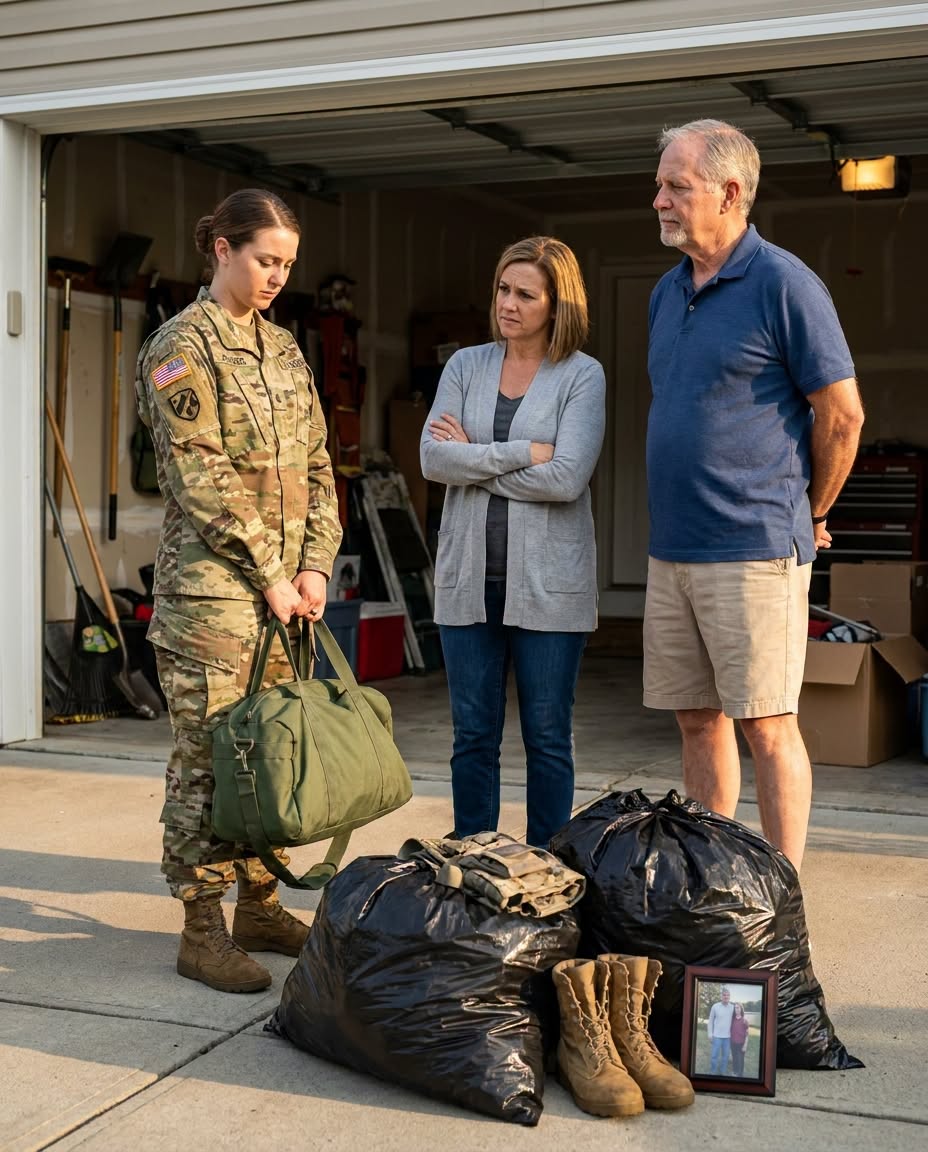
My combat boots were inside a black trash bag when I came home from nine months overseas. Eleven bags lined the hallway of the Colorado Springs house my grandfather had left to me, some split open with books, clothes, and framed photographs sticking through the plastic. The living room smelled like vanilla candles and someone else’s laundry detergent, and my grandfather’s leather chair had been replaced by a gray sectional beneath a sign that said BLESSED. My mother stood at the bottom of the stairs holding coffee and told me I had returned earlier than expected. My pregnant younger sister Chloe was sleeping in my master bedroom, her husband lived there too, and my parents had moved themselves in while I was deployed. When I asked where they expected me to sleep, my father pointed toward an unfinished basement where they had set up a cot. Then my mother touched my arm and said the same words I had heard my entire life: “Be a good sister for once.”
The house had never belonged to “the family,” no matter how often they said it that way. My grandfather Walter Hollis had placed it in a trust years earlier, and when I turned twenty-five the property was distributed to me alone and recorded in my name. Before deploying, I had given my mother a house key so my parents could collect mail and check the property, nothing more. Instead they had moved Chloe and Vance in, packed my belongings, redecorated, and begun treating the house as theirs. In the basement, behind storage bins nobody else knew to move, I opened the steel safe my grandfather had shown me when I was sixteen. The original deed and trust distribution documents were untouched. Then I checked my bank accounts and found something worse: approximately $45,000 in deployment pay and savings had been transferred out over seven months. My mother appeared in the bank records as an agent under a durable power of attorney bearing my signature—except I had never signed it.
The next morning I took everything to military legal assistance and then to a civilian real-estate attorney. While reviewing the trust file, the attorney found a sealed envelope hidden in a pocket at the back. Inside was a letter from Grandpa and a notarized affidavit from 2012. Years earlier, he wrote, my father Richard had allegedly forged his signature on a $60,000 loan secured against the same house. Grandpa had paid the debt himself rather than report his son, but he preserved bank correspondence, the disputed document, and a sworn account of what happened. That history explained why Richard had never been named as a beneficiary and why the house had ultimately gone to me. More importantly, the old questioned signature bore striking similarities to the signature on the new power of attorney, something investigators—not my lawyer alone—would need to evaluate properly. Then the title company confirmed another piece: my mother had already attempted to use the broad power of attorney to transfer the house to Chloe and Vance, but the company refused and demanded direct participation from the recorded owner.
I did not sign anything. Instead, I revoked any claimed financial authority, notified the bank of suspected fraud, preserved the account records, and had counsel alert the title company that no transfer was authorized. Civilian investigators handled the suspected theft and forgery, while military authorities separately examined my father’s threat to use professional contacts to interfere with my promotion after I refused to convey the property. My parents eventually left the house, and Chloe learned for the first time that I had not offered it to her, had not known she was pregnant, and had never agreed to fund her household. Vance admitted he knew money from my accounts was helping them but said he had believed my parents when they claimed I had authorized it. The criminal and employment matters took months, not an afternoon, and the eventual resolutions included restitution obligations and consequences for my parents without magically repairing the family. Most importantly, title to the house never changed. The trust documents, recorded deed, bank evidence, and the title company’s refusal had prevented a bad situation from becoming irreversible.
Months later, after Chloe and Vance moved into their own apartment, I finally opened the trash bags that had remained in my hallway. I put my books back on the shelves, returned my combat boots to the front door, and dragged Grandpa’s old leather chair out of the garage and back beside the window where it had sat for forty years. Chloe and I began rebuilding slowly, without pretending our childhood had not taught us very different versions of each other. When her daughter was born, she gave the baby Walter as a middle name, and I promised myself I would be the kind of adult Grandpa had been for me—the one who asked a child what she thought and waited for the answer. His letter now sits in my nightstand, but the deed remains locked in the safe beneath the basement floor. For most of my life, I thought being a good daughter and sister meant making myself easier to move. Coming home taught me something else: sometimes the most loving thing you can do is stand where you legally and rightfully belong and refuse to disappear.