
After the Supreme Court of Virginia struck down a voter-approved Democratic congressional redistricting plan on Friday, Democratic leaders in the state announced plans to appeal the decision to the Supreme Court of the United States.
The ruling marked another setback for Democrats as the party battles Republicans nationwide for an advantage heading into this year’s midterm elections. The appeal to the U.S. Supreme Court is seen as a long-shot bid, at best, to get their map reinstated.
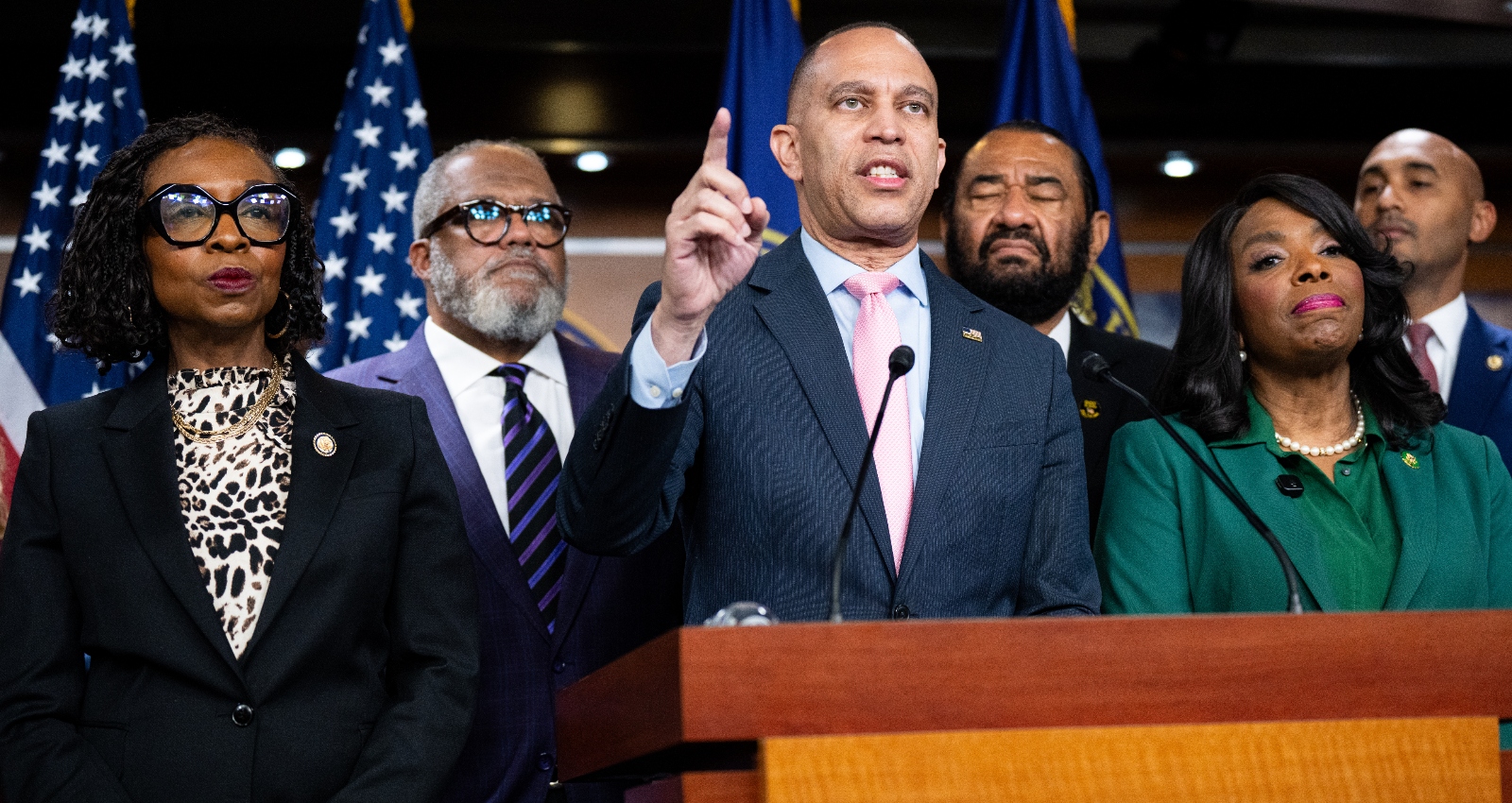
Democratic leaders, including Virginia House Speaker Don Scott and Attorney General Jay Jones, filed a motion late Friday seeking to pause the state court’s ruling while they pursue an emergency appeal before the U.S. Supreme Court. House Minority Leader Hakeem Jeffries, meanwhile, vowed the ruling “will not stand.”
In a 4-3 decision, the Virginia Supreme Court concluded that the Democratic-controlled legislature failed to follow required procedures when placing a constitutional amendment on the ballot authorizing mid-decade redistricting. Although voters narrowly approved the amendment on April 21, the court’s decision effectively invalidated the result, NBC4 reported.
Writing for the majority, Justice D. Arthur Kelsey said lawmakers presented the constitutional amendment to voters “in an unprecedented manner.” He added, “This violation irreparably undermines the integrity of the resulting referendum vote and renders it null and void.”
Democrats had hoped Virginia’s newly redrawn congressional map would help the party gain as many as four additional seats in the U.S. House as part of a broader effort to counter Republican-led redistricting initiatives backed by President Donald Trump in other states.
Friday’s ruling, coupled with a recent decision by the U.S. Supreme Court significantly narrowed key provisions of the Voting Rights Act by ruling that racially-drawn districts are unconstitutional, is expected to strengthen Republicans’ redistricting advantage ahead of this year’s midterm elections, said NBC4.
Legislative districts are typically redrawn once every 10 years following the national census to reflect population shifts. But President Donald Trump triggered an unusual wave of mid-decade redistricting efforts last year after encouraging Republican lawmakers in Texas to redraw congressional boundaries in hopes of gaining additional U.S. House seats and protecting the GOP’s narrow majority ahead of the midterm elections.
Democratic-led California later responded with voter-approved districts designed to favor Democrats, while Utah’s highest court imposed a revised congressional map that could also benefit the party. At the same time, Republicans are positioned to gain from new House maps approved in states including Florida, Missouri, North Carolina, Ohio, and Tennessee.
Virginia’s current congressional delegation consists of six Democrats and five Republicans, all elected from districts established by a court after a bipartisan redistricting commission failed to agree on a map following the 2020 census.
Under the now-blocked redistricting plan, Democrats were viewed as having a stronger opportunity to compete in all but one of the state’s 11 congressional districts.
The majority on the Supreme Court of Virginia sharply criticized the congressional map approved by Democratic lawmakers, arguing that it appeared designed to heavily favor one political party.
The justices noted that Republican congressional candidates won roughly 47% of Virginia’s statewide vote in 2024, yet the proposed map could have resulted in Democrats controlling as much as 91% of the state’s delegation in the U.S. House.
Under the Democratic-backed map, five congressional districts would have been centered in heavily Democratic Northern Virginia. Changes to four additional districts spanning Richmond, southern Virginia, and the Hampton Roads region would have weakened the influence of conservative voting blocs in those areas. Another redesigned district in western Virginia would have combined three Democratic-leaning college towns in an effort to counterbalance Republican-leaning voters elsewhere in the region.
Virginia’s seven Supreme Court justices are appointed by the state legislature, which in recent years has alternated between Democratic, Republican, and divided control. Legal analysts have said the court is not widely viewed as having a fixed ideological alignment, NBC4 reported.