
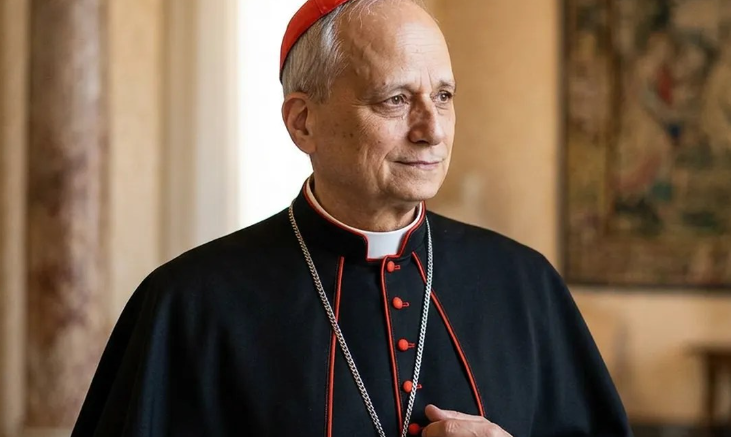
On the evening when white smoke rose above the Sistine Chapel, people gathered in St. Peter’s Square and millions watching around the world learned that the Catholic Church had elected a new pope. Shortly afterward, Cardinal Robert Francis Prevost appeared on the balcony of St. Peter’s Basilica and was introduced as Pope Leo XIV. His election marked a historic moment for the Church, as he became the first pope born in the United States. Standing before the crowd, he greeted the faithful and delivered his first message as pontiff, offering a blessing and speaking about the importance of peace, faith, and unity among people everywhere.
The election of a new pope follows a long-standing tradition within the Catholic Church. Cardinals gather in a conclave inside the Sistine Chapel, where they vote in secrecy until a candidate receives the required majority. Once a decision is reached, ballots are burned in a special stove that produces white smoke, signaling to the public that a new pope has been chosen. The announcement is then made from the central balcony of St. Peter’s Basilica with the traditional words “Habemus Papam,” meaning “We have a pope.” This moment introduces the newly elected pontiff to Catholics and observers around the world.
After his election, Robert Francis Prevost chose the papal name Leo XIV. The selection of a papal name is an important tradition that reflects continuity with the Church’s long history. The name Leo has been used by several previous popes, including Pope Leo XIII, who served from 1878 to 1903. Leo XIII was known for his influential teachings on social issues and for helping guide the Church during a period of significant global change. By choosing a traditional papal name, the new pope continues a custom followed by many of his predecessors.
Pope Leo XIV brings decades of pastoral experience to his new role. Born in the United States, he spent many years serving the Church internationally, particularly in Peru, where he worked closely with local communities and Church institutions. His service in different regions of the world reflects the global nature of the Catholic Church and the diverse communities it represents. As he begins his papacy, Catholics and observers worldwide are watching closely as he assumes leadership of one of the largest religious institutions in the world, guiding the Church’s spiritual mission and its engagement with communities across many cultures and countries.

